US Digestive Health Supplements: The 2023 Growth Niche
 By Quan Wenjun
6 min read
By Quan Wenjun
6 min read
Executive Summary#
Dietary supplement sales on a leading US marketplace reached US$ 9.6 billion in 2023, and vitamins, minerals and herbal supplements together accounted for over 60% of those sales. Digestive health supplements stood out as the most strategically attractive sub-category, with US$ 740 million in sales, as research on the gut-brain axis and consumers' own reading about it increased demand for probiotics, prebiotics and digestive enzymes. This analysis breaks down the sub-categories and explains why we believe digestive health offers the strongest entry point for brands targeting the US online supplements market.
Vitamins, Minerals and Herbal Supplements Make Up Most of the Market#
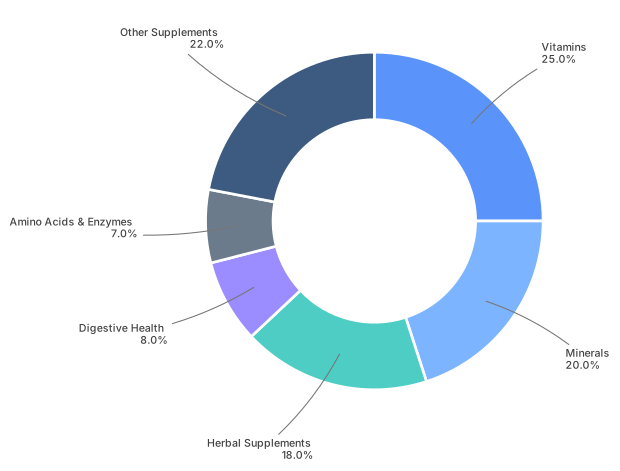
Traditional supplement categories account for most of the US$ 9.6 billion in dietary supplement sales on the marketplace. Vitamins are the largest with a 25% share of sales, followed by minerals at 20% and herbal supplements at 18%, and together they accounted for over 60% of total sales in 2023. All three benefit from well-established consumer routines, such as daily multivitamins, mineral complexes with magnesium and zinc, and plant-based wellness products such as turmeric and ashwagandha.
The scale of these categories reflects decades of consumer education and habitual buying. Repeat purchase rates remain high because consumers see vitamins and minerals as a foundation of their wellness routines and not as discretionary spending. For brands already in these segments, the main competitive levers are review volume and brand trust, both of which take considerable time and investment to build on a marketplace where listings are ranked by algorithm.
Vitamins, minerals, and herbal supplements command over 60% share
Digestive Health: The US$ 740 Million Growth Niche#
Digestive health supplements reached US$ 740 million in 2023, an 8% share of sales, which we believe makes the sub-category the most attractive growth niche on the marketplace. The segment covers probiotics, prebiotics, digestive enzymes and fibre supplements, which address a widening range of consumer health concerns beyond traditional digestive discomfort.
Awareness of the gut-brain axis has turned digestive health from a niche medical concept into a mainstream wellness topic. Peer-reviewed research linking the composition of the gut microbiome to mood regulation, immune function and cognitive performance has led many consumers to read up on the subject themselves. On social media, health influencers and functional medicine practitioners reach millions of consumers, many of whom by 2023 regarded gut health as a foundation of overall wellness.
Consumer demand in this sub-category spans several product formats and uses. Probiotics account for most search volume, while prebiotics and synbiotic formulations are gaining ground as consumers come to understand microbiome support in more detail. Digestive enzyme supplements attract a distinct group of buyers concerned with food sensitivity and nutrient absorption, while fibre supplements appeal to consumers who want gentle daily digestive support. Because the sub-category includes so many product types, brands can differentiate on the specificity of their formulations and do not have to compete on price alone.
We believe the US$ 740 million in sales is deep enough for several brands to build profitable positions without damaging price wars. In the crowded vitamins segment margins are squeezed by intense competition, while digestive health rewards brands that invest in consumer education, strain-specific clinical evidence and transparent labelling, which give them advantages that go beyond price and review volume. Brands that clearly communicate CFU counts, strain diversity and third-party testing results tend to achieve better conversion rates and customer retention than generic alternatives.
Amino Acids, Enzymes and the Long Tail#
Amino acids and enzymes hold a 7% share of sales and serve a more specialised consumer base interested in fitness performance, muscle recovery and sports nutrition. Branched-chain amino acids (BCAAs), L-glutamine and collagen peptides make up most of the volume in this segment, and they attract repeat buyers with predictable cycles of consumption.
The remaining 22%, classified as "Other Supplements", covers a wide range of specialty products, from omega-3 fatty acids and CoQ10 to mushroom extracts and adaptogenic blends, each of them a micro-niche with a dedicated but smaller pool of buyers. Although each is modest in scale, these specialty segments together account for over US$ 2 billion in annual sales and include some of the fastest-growing product types on the marketplace.
This long tail of sub-categories matters for strategy because it shows that the marketplace serves as a place where consumers discover new supplement trends. Products that start as specialty offerings can scale quickly when social media trends or new clinical research support them, and brands that use Moojing Market Intelligence data can identify these turning points before they become visible in mainstream retail channels.
The Adjacent Category Strategy for Market Entry#
Brands are highly fragmented across US online supplement sales, since the ten largest brands hold only a small share of the market between them, which creates favourable conditions for new entrants, although successful entry calls for a focused approach. Launching directly into vitamins or minerals means competing against established brands with large numbers of reviews, optimised listings and subscription customer bases that generate predictable repeat revenue.
The adjacent category strategy is a more capital-efficient route. Brands first build credibility and a loyal customer base in a high-growth niche such as digestive health, where consumers are more willing to try new brands and the number of reviews needed to compete is lower. Once a brand has built trust through strong product performance, verified reviews and educational content in digestive health, it can use that reputation to expand into adjacent categories such as vitamins and minerals, where brand authority leads to higher conversion rates.
We believe the strategy works particularly well on large online marketplaces, whose ranking algorithms reward brands that show strong engagement within one product category before they broaden their catalogue. A brand with a highly ranked probiotic listing already has the customer base, the pace of new reviews and the brand recognition it needs to launch a multivitamin line at a much lower customer acquisition cost.
Key Takeaways#
- Vitamins, minerals and herbal supplements account for over 60% of the US$ 9.6 billion in dietary supplement sales on a leading US marketplace, but the maturity of these categories limits the openings for new brands.
- Digestive health supplements reached US$ 740 million in 2023, driven by awareness of the gut-brain axis and growing consumer demand for probiotics, prebiotics and digestive enzymes.
- Brands are highly fragmented, with the ten largest holding only a small share of the market, which leaves room for new entrants across the sub-categories and especially in emerging niches.
- The adjacent category strategy, which enters through digestive health before expanding into traditional segments, is in our view the most capital-efficient route for brands targeting US online supplement sales.
- Consumer education and clinical evidence give brands a stronger competitive advantage in digestive health than in the commoditised vitamin and mineral categories.
About the Data#
This analysis is based on Moojing Market Intelligence data on the US dietary supplements category on one leading US marketplace for 2023. For the full dataset and methodology, download the complete report: 2023 Brief: U.S. Dietary Supplements Online Market Analysis.
Moojing Market Intelligence (魔镜洞察) analyses brand and category performance across leading e-commerce marketplaces internationally. For inquiries, contact info@moojing-global.com.
This content adheres to Moojing's editorial standards .


