China's Cat Market: Domestic Brands Capture 62% of Sales
 By Jotham Lim
6 min read
By Jotham Lim
6 min read
Executive Summary#
China's online cat consumer market reached CN¥ 46.75 billion over the rolling year to Q3 2024, a rise of 6.9% year-on-year (YoY) that was well ahead of the broader pet market's growth of 1.5%. Cats are strengthening their position as the most important pet type in the country[1]. Domestic brands accounted for 62% of the sales revenue of the 100 largest cat staple food brands, and their sales grew 16.9% YoY against 3.8% for imported brands. Over the same period the average price across the cat market fell 20.2%, as brands competed on volume at lower prices. This analysis looks at how the cat market is changing, how domestic and imported brands are positioned in staple food, and the new product formats that we believe will drive the next stage of growth.
Download Full Report#
Get the complete analysis with additional data, brand-level competitive landscapes, and social media trend insights.
Q3 2024 Whitepaper: China's Pet Consumer Market Analysis -->
Cat Market Sales Rise While Prices Fall#
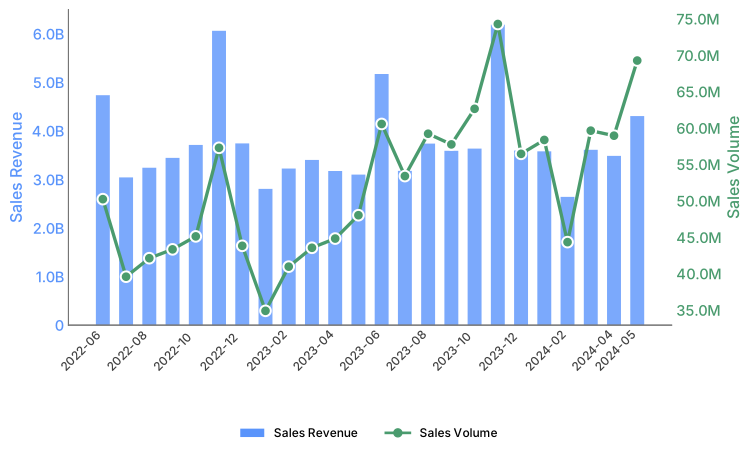
The online cat consumer market reached CN¥ 46.75 billion in sales revenue over the past rolling year, a rise of 6.9% YoY, while sales volume grew 33.9% to 720 million units[1]. Over the same period the number of stores selling cat products fell 8.0% to 147,000 and the number of products fell 11.1% to 1.65 million SKUs, which suggests that the market is consolidating even as its sales grow.
We believe the fall of 20.2% in the average price is the most important figure for brands, because with revenue up 6.9% and volume up 33.9% the market is clearly growing through volume at lower prices. Three forces lie behind this trade of price for volume:
- Domestic brands are competing hard for customers
- Marketplaces are running frequent low-price promotions in the category
- Consumers are willing to trade down on staple products
Sales in ordinary months have also strengthened, and May 2024 reached CN¥ 4.31 billion against CN¥ 3.10 billion in May 2023, a rise of 38.9% in a month without a major promotion. This suggests that demand itself is expanding and that growth does not depend only on promotional events.
Cat market reached CN¥ 46.75 billion (+6.9% YoY) as volume grew 33.9% and the average price fell 20.2%
Category Breakdown: Staple Food and Supplements Lead#
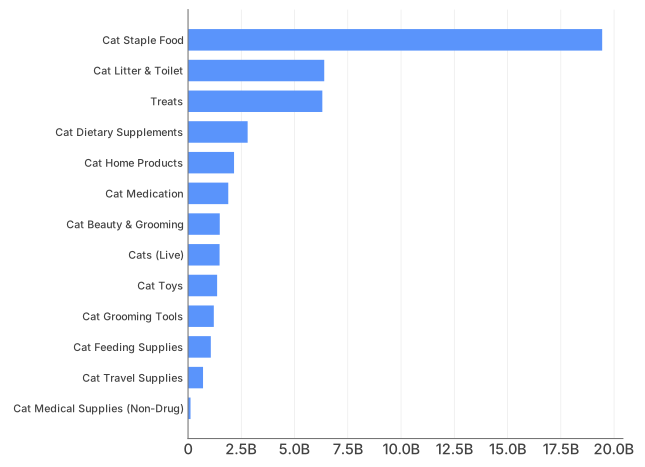
Cat staple food is the largest sub-category by a wide margin, with CN¥ 19.44 billion in sales revenue and growth of 14.4% YoY, which confirms its place at the centre of the cat consumer market[1]. Cat dietary supplements are the fastest-growing sub-category, up 16.1% YoY to CN¥ 2.80 billion, and we believe this shows preventive health products moving from a niche into the mainstream.
The mid-sized sub-categories all grew, with treats at CN¥ 6.31 billion (+11.7%), cat litter and toilet at CN¥ 6.39 billion (+4.2%) and feeding supplies at CN¥ 1.07 billion (+13.6%). Beauty and grooming, which grew 12.6%, and feeding supplies both grew faster than the cat market as a whole, which reflects a move towards more premium products in care and lifestyle categories.
Cat staple food is the largest sub-category at CN¥ 19.4 billion (+14.4% YoY), while dietary supplements grow fastest at +16.1%
Domestic Brands Compete on Value, Imported Brands on Premium Positioning#
The make-up of the cat staple food market is shifting towards domestic brands. Domestic brands made up 69 of the 100 largest brands in cat staple food and accounted for 62% of their sales revenue, after growth of 16.9% YoY to CN¥ 11.08 billion[1]. Imported brands accounted for the remaining 38%, at CN¥ 6.75 billion, after growth of 3.8% YoY.
Price explains much of the difference, since domestic brands average CN¥ 99.6, down 13.4% YoY, against CN¥ 248.1 for imported brands, down 3.1% YoY. Domestic prices are about 60% below imported prices, and we believe the gap in quality has narrowed far enough to persuade many consumers to switch. Imported brands such as Royal Canin build on brand awareness and veterinary distribution, while domestic brands compete mainly on value for money.
Sandwich Kibble: A New Product Format Drives Growth#
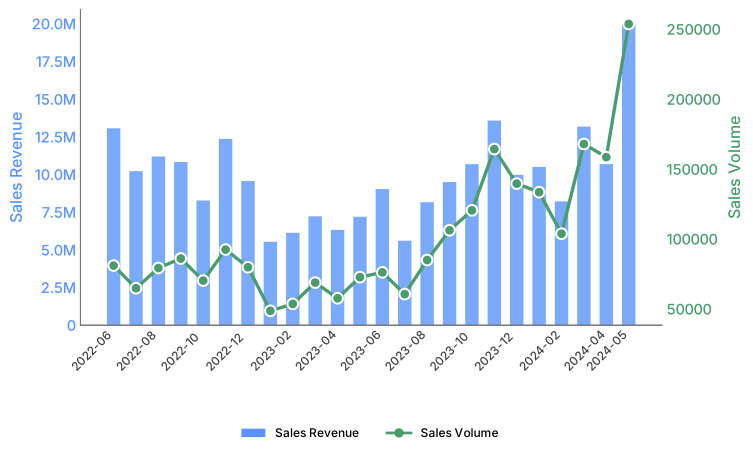
Sandwich kibble has become one of the fastest-moving new formats in cat staple food, reaching CN¥ 130 million in sales, up 19.6% YoY, while volume grew 83.6%[1]. The format combines the convenience of traditional kibble with the taste of a fresh meat filling, which addresses the common problem of cats that are picky eaters.
The format's average price fell from CN¥ 126.2 to CN¥ 82.2, down 34.9% YoY, as brands used low-priced trial products to bring new buyers into the category. Sales in the format are concentrated among a small number of brands. Brands such as Navarch have used social media marketing to build interest in sandwich kibble, which fits the growth of 513.9% in social media mentions of the format.
Sandwich kibble reached CN¥ 130 million (+19.6% YoY) with volume up 83.6%, driven by aggressive pricing and small-portion trial products
About Our Data#
This analysis draws on Moojing Market Intelligence data covering Q3 2024. Moojing gathers e-commerce and social media data from China's leading platforms, with reports generated through our team of market analysts. Our coverage spans major e-commerce and social platforms, representing a significant share of China's online retail market.
Request a free trial to explore our data platform.
Key Takeaways#
- China's online cat market reached CN¥ 46.75 billion (+6.9% YoY), with volume up 33.9% as the average price fell 20.2%
- Cat staple food is the largest sub-category at CN¥ 19.44 billion (+14.4% YoY), while dietary supplements grow fastest at +16.1%
- Domestic brands account for 62% of the sales revenue of the 100 largest staple food brands, after growth of 16.9% YoY against 3.8% for imported brands
- Sandwich kibble reached CN¥ 130 million (+19.6% YoY) as social media mentions grew 513.9%, which shows how a new product format can become a lever for growth
- The number of stores fell 8.0% and the number of SKUs fell 11.1%, which points to a market that is consolidating
More from This Report#
About the Data#
This analysis draws on Moojing Market Intelligence (魔镜洞察) data covering Q3 2024.
Moojing analyses brand and category performance across major Chinese e-commerce platforms. For full methodology and additional insights, see the complete Pet Consumer Market whitepaper.
This content adheres to Moojing's editorial standards .


