Eye & Liver Supplements: China's Fastest-Growing Health Niches
 By Jotham Lim
7 min read
By Jotham Lim
7 min read
Newer data: China's Eye Health Market Surges to CN¥ 26.5B in H1 2025
Executive Summary#
Eye health and liver health were China's two fastest-growing supplement sub-segments in Q1 2024, with eye health up 20.5% YoY and liver health up 13.0% YoY, while social media discussion of the two grew 40.5% and 50.9% respectively. We believe these are structural demand trends. They are driven by screen fatigue among working adults and parents, by a spring liver-nourishment cycle rooted in traditional Chinese medicine (TCM), and by format innovation that makes a supplement feel like a snack instead of a medicine. Renhe (仁和) built its CN¥ 29.9 blueberry lutein gummy around parents and children, with a snack format and distribution through content-led commerce, while Swisse (斯维诗) renewed its liver health range with a second-generation milk thistle formulation and multi-channel marketing. Brands that align product format, ingredient science and channel strategy are best placed to grow in both segments.
Eye Health: A Change of Format Drives 20.5% Growth#
China's online eye health supplements market reached CN¥ 12.4 billion GMV in Q1 2024, up 20.5% YoY, which made it the second-fastest-growing functional sub-category. The core driver of demand is screen fatigue, since working adults under sustained digital pressure and parents buying for school-age children are two distinct but complementary groups of buyers, and a single well-positioned product can reach both at once.
Ingredients: Beta-Carotene Grows Fastest, Lutein and Blueberry Carry Volume#
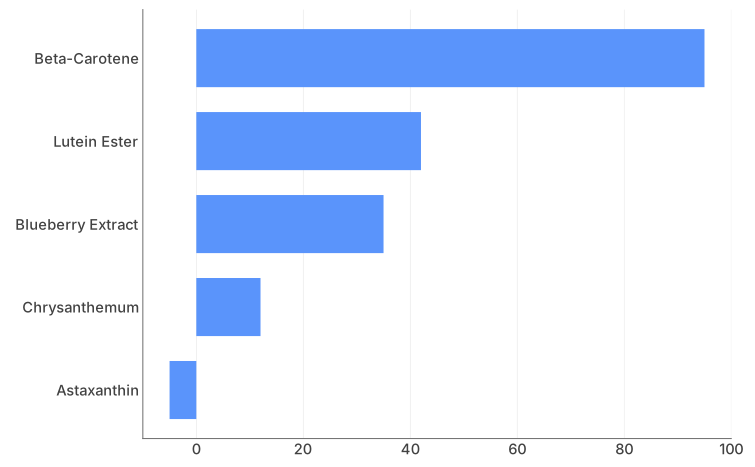
Beta-carotene posted the strongest ingredient-level growth, at +95% YoY in Q1 2024, which signals early consumer interest moving beyond the established pairing of lutein and blueberry. Lutein ester grew 42% and blueberry extract 35%, supported by new product launches. Astaxanthin was the only ingredient to decline (-5%), which suggests that interest in it for eye health has passed its peak.
Beta-carotene leads ingredient growth at +95% YoY; lutein ester and blueberry sustain volume
Dosage Format: Gummies Grow While Tablets and Sachets Fall#
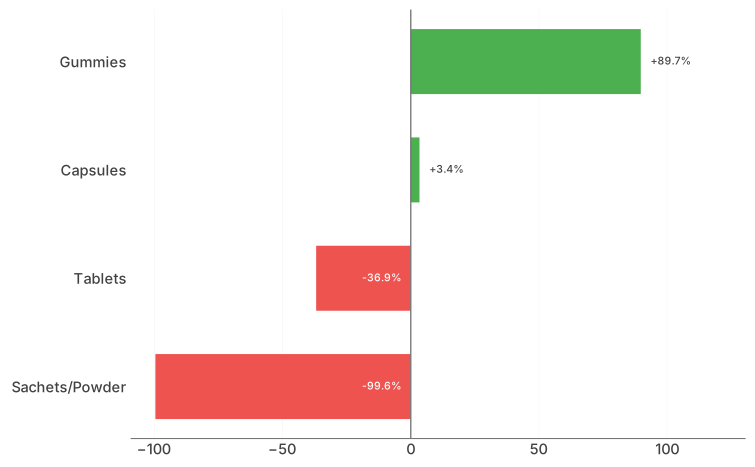
Across the market, gummy-format eye health products grew 89.7% YoY in Q1 2024, while tablets fell 36.9% and sachets 99.6%. This is the "snackification" trend in its most extreme form, in which consumers, particularly Millennials and Gen Z buying for themselves or their children, turn away from products that feel like medicine. The gap between a CN¥ 29.9 gummy bottle and a CN¥ 369 capsule is a difference of price, and also one of positioning, channel and the kind of consumer each product is built for.
Gummies grow 89.7% and sachets collapse 99.6% as format disruption reshapes eye health
Brand Case Study: Renhe and the CN¥ 29.9 Gummy#
Renhe's Blueberry Lutein Ester Gummy is built on three advantages that work together, and none of them is new on its own.
Pricing: at CN¥ 29.9 per bottle, the gummy sits far below premium alternatives such as Swisse at CN¥ 369 and Youthit at CN¥ 169. That turns eye health supplementation from an occasional premium purchase into a household routine that families buy again and again.
Channel: distribution concentrates on a content-led platform, where the product is seeded through family and mother-and-baby KOLs whose audiences are parents making decisions for their children. The product, the scenario (protecting children's eyes) and the KOLs' subject area therefore fit each other closely.
Format: fish-shaped gummies are easy to share as social content and palatable to both children and parents, and the format removes the reluctance many buyers feel towards capsules or tablets. Renhe came to supplements as a pharmaceutical brand, and it chose an open position in the market, a mass-market, child-focused, snack-format product built for content-led commerce, which it has carried out with discipline.
Liver Health: Spring Seasonality Drives 13.0% Growth#
The online liver health supplements market reached CN¥ 17.8 billion GMV in Q1 2024, growing approximately 13.0% YoY, and social media discussion of liver health grew faster than that of any other supplement sub-category. The spring season is a structural driver, because in TCM spring is the season for nourishing the liver, and Chinese consumers have carried this belief into their buying habits. Q1 also includes the Qingming holiday, a period in which liver health content and product discovery reliably draw high traffic.
Ingredients: Milk Thistle Leads Discussion, Hovenia Dulcis Grows Fastest#
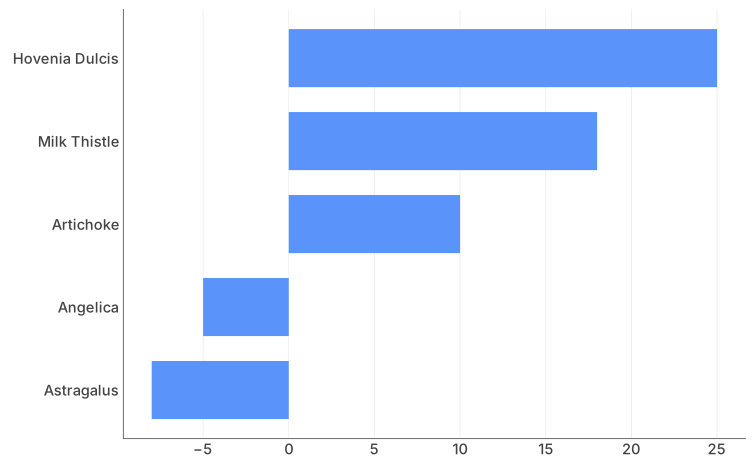
Milk thistle (奶蓟草) is the main liver health ingredient, accounting for 62.7% of ingredient-level social media discussion, and it is the core ingredient in the liver health ranges of Swisse and By-Health (汤臣倍健). Its growth of 18% YoY shows that an established ingredient can keep growing when total demand is expanding. Hovenia dulcis posted the strongest growth, at +25% YoY, and Beijing Tongrentang (北京同仁堂) is among the brands positioning it by blending TCM heritage with modern supplement formats. The traditional TCM ingredients angelica (-5%) and astragalus (-8%) declined, which reflects a consumer shift towards internationally recognised ingredients that brands market on scientific research.
Hovenia dulcis leads growth at +25%; milk thistle dominates with 62.7% of discussion share
Social Media and Consumer Demographics#
Liver health discussion on social media centres on daily life: 56.9% of posts are about usage scenarios, among them late nights (39.1%), social drinking (32.5%) and overtime work (18.4%). Brands that build their content around these familiar situations consistently do better than brands that lead with clinical ingredient claims. The liver health audience is 61.5% male, concentrated in the 31 to 35 and 50+ age brackets, the reverse of the female-majority audiences of most supplement segments. We believe this is a valuable positioning opportunity for brands willing to develop communication aimed at men.
Brand Case Study: Swisse's Three-Channel Liver Health Strategy#
Swisse built its liver health brand in Q1 2024 by combining product innovation, celebrity-led social seeding and offline experiential marketing into one campaign.
On product, Swisse upgraded its flagship milk thistle liver tablet to a second-generation formulation, adding choline and broccoli seed to strengthen its "purify and liver-protect" positioning. The upgrade gives existing users a credible reason to switch to the new version and gives media and KOLs a news hook, and it renews the brand's communications while keeping the trust it has built in milk thistle.
On social, Swisse concentrated its investment on Weibo (微博) through the celebrity endorsers Dilraba Dilmurat and Zhou Ye, and sponsored the iQIYI variety show Riding the Wind 2024 (乘风2024). The sponsorship aligned the brand with its secondary target audience of women aged 20 to 35 who are interested in "inner beauty" as well as functional liver protection.
On experiential, the offline "Swisse Full-Power Party" staged the late-night usage scenario directly. By holding a brand event in the most common liver health context, Swisse generated organic social content and turned a product benefit into an association with a lifestyle. We believe the strategy works because each of these elements reinforces the others.
Key Takeaways#
- Eye health grew 20.5% YoY to CN¥ 12.4 billion GMV, a structural demand trend driven by screen fatigue among working adults and parents' concern for their children's eyesight.
- Gummies were the growth format in eye health in Q1 2024, up 89.7% YoY while tablets fell 36.9%, and the market is moving away from tablets and sachets.
- Renhe's CN¥ 29.9 blueberry lutein gummy combines mass-market pricing, distribution through content-led commerce and seeding by mother-and-baby KOLs, a playbook that brands entering a supplement sub-segment from an adjacent category can repeat.
- Liver health grew 13.0% YoY while its social media discussion grew 50.9%; spring is a structural seasonal driver, and the late-night scenario (39.1% of discussion) leads consumer discovery and purchase intent.
- Milk thistle accounts for 62.7% of liver health ingredient discussion, and hovenia dulcis (+25% YoY) offers the most accessible growth opportunity for brands seeking to differentiate on ingredients from the established milk thistle products.
About the Data#
This analysis draws on Moojing Market Intelligence (魔镜洞察) data on China's health supplements market in Q1 2024. Market data covers three leading Chinese online marketplaces, and social media data is drawn from major Chinese social platforms. All figures are in Chinese Yuan (CN¥) and reflect online channels only.
More from This Report#
Download the Full Report#
This content adheres to Moojing's editorial standards .
Frequently Asked Questions
Eye health and liver health. Eye health reached CN¥ 12.4 billion at +20.5% year on year and liver health CN¥ 17.8 billion at about +13.0%, with social discussion growing 40.5% and 50.9% respectively. We believe both are structural demand trends. Eye health rides screen fatigue among working adults and parental concern for school-age children, two distinct demand pools a single well-positioned product can address at once, while liver health rides a traditional Chinese medicine seasonal cycle in which spring is the liver's season, reinforced by the Qingming holiday falling inside the quarter.
Gummies are displacing other formats. Gummy-format products grew 89.7% year on year while tablets fell 36.9% and sachets 99.6%, which is snackification in its most extreme form, as consumers, particularly younger buyers purchasing for themselves or their children, turn away from products that feel like medicine. The gap between a CN¥ 29.9 gummy bottle and a CN¥ 369 capsule is one of price, and also one of positioning, channel and the kind of consumer each product is built for. On ingredients the pattern is more conservative: beta-carotene grew fastest, by 95%, lutein ester (42%) and blueberry extract (35%) carried volume, and astaxanthin was the only one to contract, by 5%.
Three compounding advantages, none novel on its own. Pricing: at CN¥ 29.9 per bottle it sits far below premium alternatives at CN¥ 369 and CN¥ 169, which turns eye health supplementation from an occasional premium purchase into a repurchasable household routine. Channel: distribution concentrated on a content-led platform, seeded through family and mother-and-baby creators whose audiences are parents deciding for children, which gives a precise fit between product, scenario and creator domain. Format: fish-shaped gummies are shareable as social content and palatable to children and parents alike, removing the compliance friction of a capsule.
It is male-led, which inverts the usual supplement profile. The liver health audience is 61.5% male, concentrated in the 31-35 and 50+ brackets, the opposite of the female-dominated segments around it, and we believe this is an under-served positioning opportunity for brands willing to build communication aimed at men. The content that works is scenario-first: 56.9% of posts centre on usage contexts, with late nights at 39.1%, social drinking at 32.5% and overtime work at 18.4%, and brands anchoring there consistently outperform ones leading with clinical ingredient claims. On ingredients, milk thistle holds 62.7% of discussion and still grew 18%, while hovenia dulcis grew fastest, by 25%, and the traditional ingredients angelica (-5%) and astragalus (-8%) are giving way to internationally recognised alternatives that brands market on scientific research.


