Brand vs Consumer Focus Gap in China's Eye Protection Lamps
 By Jessie Wang
5 min read
By Jessie Wang
5 min read
Newer data: China's Eye-Protection Lamp Market: CN¥ 6.0B Online in 2025
Executive Summary#
A critical misalignment exists between how brands advertise eye protection lamps and what consumers actually prioritize. Brands lead with functionality (32.7%) and usage scenarios (26.3%), while consumers demonstrate strongest concern for appearance design (30.5%) and lighting effects (28.0%), which together account for 58.5% of e-commerce review discussion. With appearance design receiving only 0.4% of brand advertising voice volume, this perception gap represents a significant strategic opportunity for brands willing to rebalance their messaging.
Download Full Report#
Get the complete analysis with competitive intelligence across five leading eye protection desk lamp brands, influencer strategy benchmarking, and platform-specific advertising playbooks.
What Brands Emphasize: Technical Specifications Dominate#
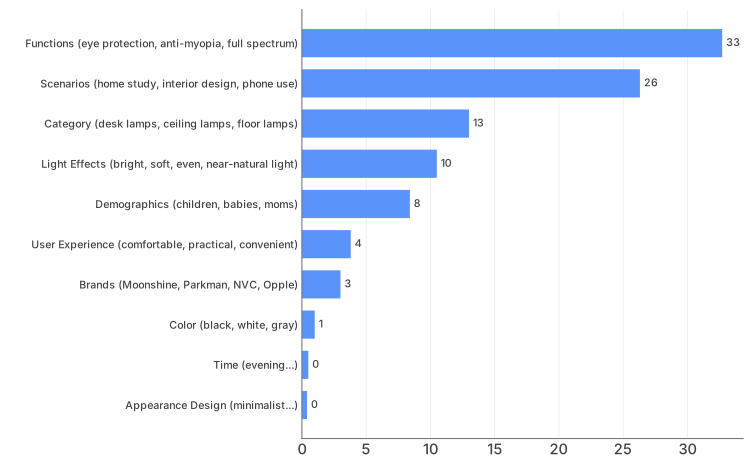
Functional messaging commands 32.7% of social media advertising voice volume, focused on technical specifications such as eye protection, anti-myopia features, full-spectrum lighting, and anti-blue-light technology. Usage scenarios rank second at 26.3%, typically depicting study, home office, and interior design contexts. Together, these two dimensions account for 59.0% of all brand advertising.
Product category mentions follow at 13.0%, while light effects receive 10.5%. Content aimed at particular groups of buyers, such as children, babies and mothers, accounts for 8.4%. Appearance design, despite being the top consumer priority, receives a negligible 0.4% of brand advertising voice volume. This underinvestment creates a gap that competitors can exploit.
Brands emphasize functionality (32.7%) and scenarios (26.3%) in advertising
What Consumers Care About: Design and Light Quality Lead#
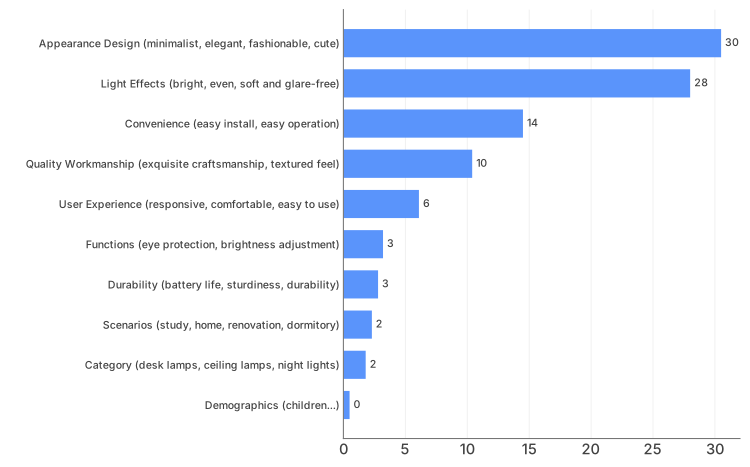
Appearance design leads consumer e-commerce review discussion at 30.5%, followed by light effects at 28.0%. These two experiential dimensions together account for 58.5% of consumer priorities, far ahead of the functional parameters that brands put first in their advertising. Convenience (easy installation, easy operation) ranks third at 14.5%, and quality workmanship adds another 10.4%.
The functional parameters that brands emphasize most heavily, such as eye protection and brightness adjustment, account for only 3.2% of consumer review discussion. Brands devote 32.7% of advertising to functionality, while consumers allocate only 3.2% of their review attention to the same dimension.
Consumers prioritize appearance design (30.5%) and light effects (28.0%) in reviews
Why the Gap Exists: Cognitive Thresholds and Experiential Proxies#
Technical specifications such as full-spectrum lighting and anti-blue-light technology carry high cognitive thresholds. Consumers struggle to evaluate these claims pre-purchase because the benefits are not immediately visible or testable. Instead, they rely on experiential proxies:
- Appearance design serves as the primary pre-purchase quality signal, as consumers judge product quality through aesthetics before reading technical specifications
- Lighting effects represent the definitive post-purchase quality validation, as consumers assess lamp quality through the actual lighting experience during use
- Convenience and workmanship act as secondary quality indicators that reinforce or undermine initial impressions
This dynamic explains why consumers dedicate 58.5% of review discussion to design and light effects while largely ignoring the technical parameters brands promote. The specifications may matter, but consumers evaluate them through experiential outcomes rather than technical claims.
The Audience Shaping These Preferences#
Understanding who drives the conversation explains the preference patterns. Home decor and parenting represent the two dominant interest categories among the eye protection lamp audience, at 12,997 and 10,638 voice volume respectively. Digital and technology interests rank third at 7,723, reflecting the tech-forward nature of modern eye-care lighting products.
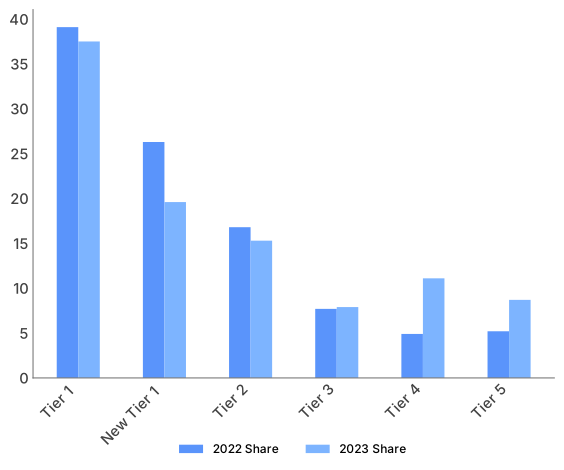
Geographic shifts reinforce the design-first priority. Tier 4 and Tier 5 city audiences grew from a combined 10.1% to 19.8%, nearly doubling their representation. These consumers, often making their first premium lighting purchase, rely heavily on visual cues and aesthetics when evaluating products online, which makes appearance-focused advertising content more important still.
Tier 4-5 cities show rising interest while Tier 1 share moderates
Strategic Implications: Bridging the Perception Gap#
Three actions can address this misalignment:
- Rebalance advertising emphasis: increase appearance-focused content to align with the 30.5% consumer priority, using product photography, color options, and design-forward lifestyle imagery
- Translate functionality into experience: shift from technical specification claims ("full-spectrum, anti-blue-light") to experiential demonstrations ("soft, even light that reduces eye strain")
- Leverage aesthetics as a gateway: use product design appeal to attract new audiences, then educate on technical advantages through post-engagement content sequences
We believe brands that bridge this perception gap, by translating technical specifications into visually compelling design stories, are likely to convert better. In this category, consumers ultimately judge quality through the lighting experience during actual use and through product aesthetics.
Key Takeaways#
- Brands invest 32.7% of advertising voice volume in functionality; consumers dedicate only 3.2% of review discussion to the same dimension
- Appearance design (30.5%) and light effects (28.0%) together account for 58.5% of consumer e-commerce review priorities
- Appearance design receives only 0.4% of brand advertising voice volume, a 76x underinvestment relative to consumer interest
- Technical specifications face a cognitive threshold that limits consumer comprehension pre-purchase
- Tier 4-5 city audiences nearly doubled to 19.8%, bringing design-first evaluation habits that amplify the perception gap
More from This Report#
About the Data#
This analysis draws on Moojing Market Intelligence data covering January to December 2023, with social media voice volume drawn from MoListening across Douyin (TikTok), Xiaohongshu (Little Red Book), and Weibo, complemented by e-commerce review analysis. Moojing analyses brand and category performance across major Chinese e-commerce and social media platforms. For full methodology and additional brand-level insights, see the complete Eye Protection Lamp Social Media Advertising Analysis.
This content adheres to Moojing's editorial standards .


