Probiotics Consumer Gaps: Marketing vs. Buyer Reality
 By Jessie Wang
5 min read
By Jessie Wang
5 min read
Newer data: Probiotics Expand Beyond GI: Emotional Wellness Surges 160%
Executive Summary#
Probiotics brands are investing heavily in ingredient marketing, yet ingredient awareness among consumers on e-commerce platforms stands at just 1.1%[1], which shows a basic gap between what brands spend their marketing on and what actually drives purchases. Our analysis of 14,012 consumer posts and e-commerce reviews from major Chinese social platforms and two leading Chinese marketplaces shows that gut health management accounts for 67-84% of benefit mentions in consumer discussion. Natural and clean ingredients, meanwhile, are the main purchase concern in e-commerce feedback, at 24.2%. This gap analysis offers practical guidance for brands that want to align their marketing with the factors that actually drive consumer decisions.
Download Full Report#
Get the complete analysis with additional data, methodology details, and brand-level insights.
Gut Health Dominates: 67-84% of Consumer Benefit Discussions#
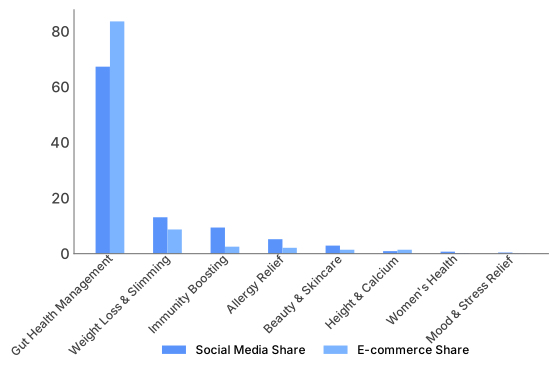
Gut health management is by far the benefit consumers mention most, at 67.3% on social media and 83.6% on e-commerce platforms[1]. The higher share in e-commerce reflects the nature of reviews, in which consumers describe the digestive results they noticed after using a product. Social media discussion is more varied, with weight management (13.1%), immunity (9.4%) and allergy relief (5.2%) also receiving meaningful attention.
The difference between the two channels' gut health shares suggests that, while social media discussion covers a broader range of hoped-for health benefits, purchase decisions remain firmly tied to digestive results. We believe brands marketing newer benefits such as skincare (2.9%) or mood and stress relief (0.4%) should still build their messaging on credibility in gut health before they widen the claims they make.
Gut health management accounts for 67-84% of consumer benefit discussions across channels
The Product Form Paradox: Social Buzz vs. Actual Sales#
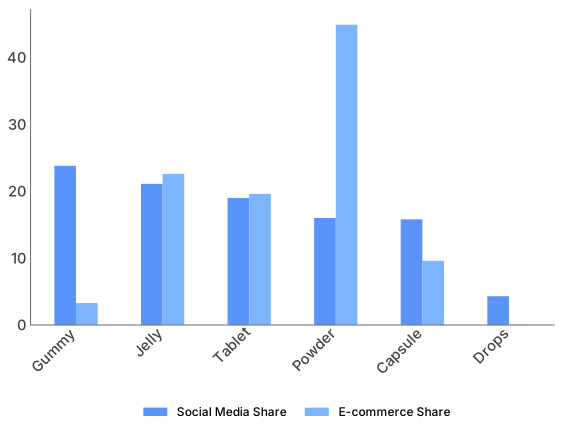
Product forms are discussed very differently on social media and in e-commerce reviews. Gummies lead social media mentions at 23.8% but account for only 3.3% of e-commerce reviews[1], which indicates strong consumer curiosity that has not yet turned into a proportionate volume of purchases. Powder, by contrast, accounts for 44.9% of e-commerce reviews but ranks only fourth on social media at 16.0%.
Jelly has the most even presence across the two channels (21.1% on social media and 22.6% in e-commerce), which suggests it has turned social media interest into purchases. Together with the format's +5,785% YoY sales growth this makes jelly, in our view, the most promising emerging dosage form for growth in the near term.
The main differences between product forms are:
- Gummies: a high share of social media discussion (23.8%) but a low share of e-commerce reviews (3.3%)
- Powder: a lower share of social media discussion (16.0%) but the largest share of e-commerce reviews (44.9%)
- Jelly: an even share across channels, supported by +5,785% YoY revenue growth
- Drops: a wide difference between channels (4.3% on social media, 0.05% in e-commerce), which reflects their niche positioning for infants
Gummies lead social media discussions; powder dominates e-commerce reviews at ~45% share
The Ingredient Awareness Gap Between Brands and Consumers#
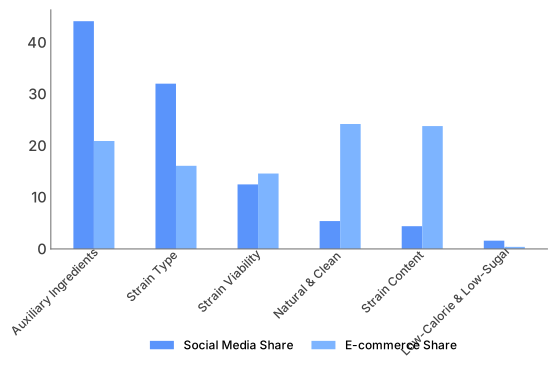
Natural and clean ingredients are consumers' main concern in e-commerce reviews at 24.2%, yet brands give only ~4% of their ingredient marketing to this subject[1]. They concentrate instead on strain types (32.0% of ingredient mentions on social media) and auxiliary ingredients (44.1%). In e-commerce reviews, consumers put safety, naturalness and quantifiable strain content (23.8%) first, which are the attributes that receive the least marketing attention.
The same gap appears in the marketing of individual strains. The single most promoted strain accounted for 30.4% of all ingredient marketing mentions, and approximately 90% of those mentions came from brand promotional posts, while consumers seldom mentioned the strain in their own discussion or reviews. We believe this shows how difficult it is for strain-led marketing to build ingredient awareness among consumers.
Natural and clean ingredients are consumers' top concern, but brands focus marketing on strain types
About Our Data#
This analysis draws on Moojing Market Intelligence data covering MAT2023. Moojing gathers e-commerce and social media data from China's leading platforms, and its reports are prepared by our team of market analysts. Our coverage spans major e-commerce and social platforms, representing a significant share of China's online retail market.
| Metric | Coverage |
|---|---|
| Consumer Posts | 14,012 organic social media posts |
| E-commerce Reviews | Product reviews from two leading Chinese marketplaces |
| Social Platforms | Major Chinese social platforms |
| Data Period | March 2022 - February 2023 |
Request a free trial to explore our data platform.
Key Takeaways#
- Gut health management leads consumer discussion at 67-84% of benefit mentions, which confirms the core value of probiotics to consumers
- Gummies account for 23.8% of social media discussion but only 3.3% of e-commerce reviews, which shows a conversion gap for snack-like formats
- Natural and clean ingredients are consumers' main concern in e-commerce reviews (24.2%), yet brands give only ~4% of their ingredient marketing to this subject
- The most promoted strain accounted for 30.4% of ingredient marketing but was seldom mentioned by consumers, which shows the gap between strain marketing and consumer awareness
- Jelly is the most evenly balanced format across channels (21.1% on social media, 22.6% in e-commerce), which makes it the strongest innovation opportunity in the near term
More from This Report#
References#
- Moojing Market Intelligence, Q1 2023 Probiotics Dietary Supplements Report
About the Data#
This analysis draws on Moojing Market Intelligence data covering MAT2023 (rolling annual period ending January 2023). Consumer perception data covers 14,012 organic social media posts and e-commerce reviews from March 2022 to February 2023, drawn from major Chinese social platforms and two leading Chinese marketplaces. For full methodology and additional insights, see the complete Probiotics Dietary Supplements whitepaper.
This content adheres to Moojing's editorial standards .


