China's Unsweetened Tea Surges 30% With Huge Growth Headroom
 By Jotham Lim
4 min read
Newer data: Beverage Efficacy Claims Grew 26.6% in China in H1 2026
Executive Summary#
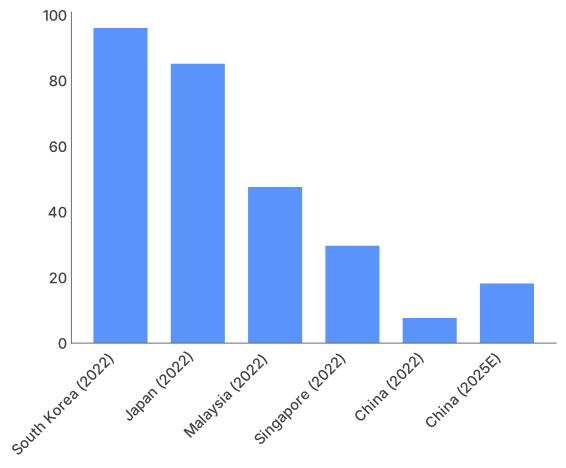
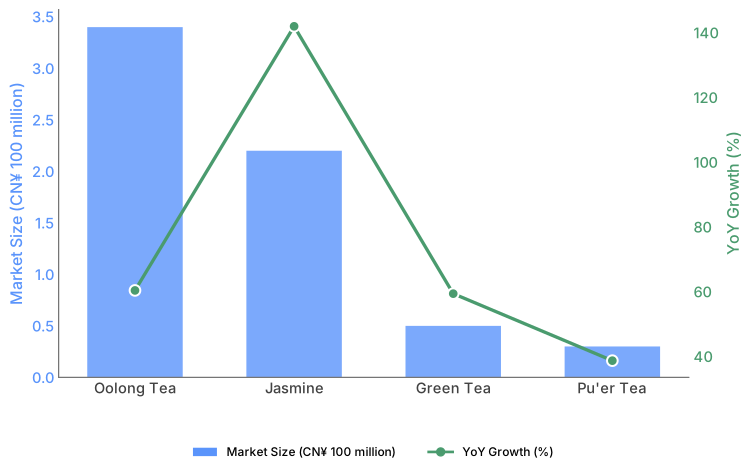
Online sales of unsweetened tea on two leading Chinese marketplaces reached approximately CN¥ 590 million, with +30.0% year-on-year (YoY) growth. Unsweetened tea still accounts for only 7.7% of China's ready-to-drink tea, against 96.1% in South Korea and 85.2% in Japan. Jasmine was the fastest-growing flavour at +142% YoY, and new large-format packaging suggests that some consumers are starting to buy unsweetened tea as a household staple. This analysis examines the health drivers behind the category, the room it has left to grow, and the flavour and packaging innovations that are shaping one of China's most clearly defined beverage growth opportunities.
Download Full Report#
Get the complete analysis covering tonic products, unsweetened tea, and dairy packaging innovations across China's health-driven food and beverage market.
Download the Full Q3 2023 Food & Beverage Packaging Whitepaper ->
Health Drivers Create a Structural Tailwind#
Rising health consciousness and China's growing diabetes population are creating sustained demand for sugar-free beverages. China's 141 million diabetes patients represent the world's largest diabetic population, and prevalence has stayed above the global average, at 10.6% against 9.8% in 2021. Together with the much larger number of pre-diabetic and health-conscious consumers, this gives unsweetened beverages a large addressable market that we believe will keep expanding.
Growth in sweetened tea has already levelled off, since historical data shows the segment posted a -3.6% Compound Annual Growth Rate (CAGR) from 2017 to 2022 and fell 2.3% in 2022. Unsweetened tea grew at a 5.3% CAGR over the same period and is projected to sustain a 10.2% CAGR through 2027, which means that most of the future growth of ready-to-drink tea is likely to come from unsweetened products.
Key structural drivers include:
- China's diabetes population growing from 90 million (2011) to 141 million (2021)
- Sweetened tea projected to grow at a CAGR of only 0.8% (2022-2027), against 10.2% for unsweetened tea
- Asia-Pacific accounting for 71.8% of global unsweetened tea sales, which shows how well the product suits the region's tea-drinking culture
Large Growth Headroom Compared With Regional Peers#
Benchmarking China against other Asian tea-drinking markets shows how much room the category still has. Unsweetened tea's share of China's ready-to-drink tea stands at just 7.7%, and we believe this gap reflects the long-standing popularity of sweetened ready-to-drink tea more than any cultural resistance to unsweetened tea.
China's unsweetened tea share at 7.7%, against 96.1% in South Korea
Jasmine Flavour Emerges as the Breakout Story#
Oolong tea remains the largest flavour by sales at CN¥ 340 million, while jasmine grew 142% YoY to CN¥ 220 million. Jasmine appeals to consumers in two ways, since its naturally aromatic, floral flavour offers a gentler entry point for consumers moving away from sweetened teas, and it works well as a blending ingredient, which lets brands build differentiated product lines.
Jasmine grows 142% YoY to CN¥ 220 million; oolong is the largest flavour at CN¥ 340 million
Larger Formats Point to a Change in How Consumers Buy#
Nongfu Spring's Oriental Leaf offers a useful example of packaging strategy in the category. The brand added a 900ml bottle to its range, and the large format took a much bigger part of its sales within a single year. We believe this shows that consumers are beginning to buy unsweetened tea for the home as well as on impulse.
Key Takeaways#
- China's online unsweetened tea sales reached approximately CN¥ 590 million at +30.0% YoY, while the category holds only 7.7% of ready-to-drink tea against 96.1% in South Korea
- Jasmine flavour grew 142% YoY, making it the fastest-growing variety and a gentle entry point for new consumers
- Large 900ml formats are gaining ground, which suggests a shift from impulse purchase to pantry staple
- Sweetened tea's -3.6% CAGR (2017-2022) indicates that most future growth in ready-to-drink tea will depend on unsweetened products
About the Data#
This analysis draws on Moojing Market Intelligence data covering August 2022 to July 2023 on two leading Chinese marketplaces, supplemented by Euromonitor market sizing data. Moojing analyses brand and category performance across major Chinese e-commerce platforms. For full methodology and additional insights, see the complete Food & Beverage Packaging whitepaper.
This content adheres to Moojing's editorial standards .


