China's CN¥ 36B Hygiene Market Pivots to Safety
 By Jessie Wang
6 min read
By Jessie Wang
6 min read
Executive Summary#
China's domestic online disposable hygiene products market reached CN¥ 36.10 billion in January-August 2025, growing 10.7% year-on-year (YoY), as the average price fell 9.1% and unit sales rose 16.8%. Sanitary pads were the fastest-growing category at +23.9% YoY, helped by a shift in where consumers buy them, as content-led commerce took a larger part of the category's online sales. Meanwhile, the 2025 CCTV 3.15 Consumer Rights Gala exposed the sale of refurbished sanitary pads, which turned consumers' attention firmly toward safety credentials. Medical-grade and sterilization-grade products went on to exceed CN¥ 1 billion in sales with growth of more than 100% YoY, which is changing how brands compete across the category.
Download Full Report#
Get the complete analysis with additional data on Southeast Asian market expansion, brand-level rankings, consumer feedback metrics, and social media discussion trends.
Volume Growth Outpaces Price Declines#
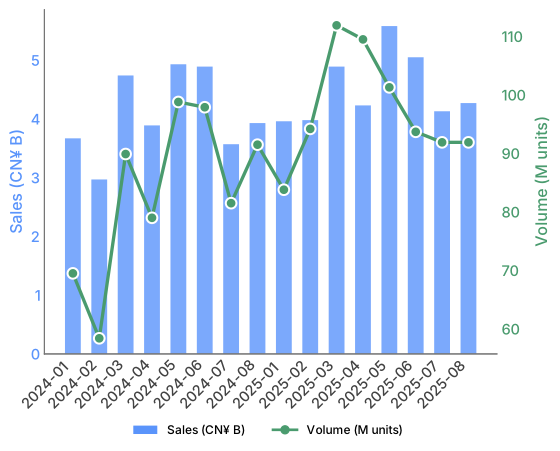
China's online disposable hygiene products market grew on the strength of lower prices. In January-August 2025, total sales reached CN¥ 36.10 billion on 780 million units sold, with volume up 16.8% YoY. The overall average selling price (ASP) fell 9.1% to CN¥ 46.0, and we believe the lower price stimulated demand without weakening the market, since cheaper units made the category accessible to new groups of consumers and widened its audience.
The monthly figures show sustained growth with clear seasonal peaks. Sales in May 2025 reached CN¥ 5.58 billion, up from CN¥ 4.93 billion in May 2024, while the promotional periods around the 618 shopping festival and Double 11 continued to bring large spikes in volume. Unit sales stayed above 90 million per month through most of 2025, including the months without a major promotion, which suggests that consumers who first bought during discount events have stayed on to buy again.
Domestic online market maintains CN¥ 36 billion momentum as volume growth outpaces price decline
Diapers, Sanitary Pads and Adult Diapers Are Moving in Different Directions#
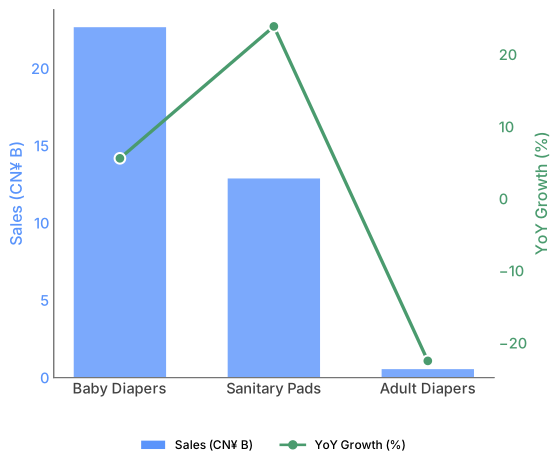
The market's core segments are moving in sharply different directions. Baby diapers remain the largest segment at CN¥ 22.66 billion, growing a steady 5.6% YoY while their ASP rose 8.5%, which reflects successful premiumization supported by strong brand loyalty. Sanitary pads are the main source of growth at CN¥ 12.88 billion and +23.9% YoY, driven by changes in how consumers shop and by product innovation. Adult diapers fell 22.5% to CN¥ 554 million, which shows how far actual use of the products lags behind the needs of China's ageing population.
Prices differ widely between the segments. Baby diapers have the highest ASP at CN¥ 61.0, while sanitary pads sit at CN¥ 32.4 as a high-frequency, high-volume consumable. The ASP of adult diapers, at CN¥ 57.2, is close to that of baby diapers, which suggests that the category mainly serves early adopters willing to pay for premium products and has yet to reach a mass market. Price cuts of 12.6% in the adult segment did not stimulate demand, and we believe the category's main challenge is low awareness and the stigma attached to the products, more than their price.
Sanitary pads surge +23.9% to CN¥ 12.88 billion while adult diapers contract -22.5% amid low market penetration
Sanitary Pad Sales Move Toward Content-Led Commerce#
The largest change in how consumers buy hygiene products came in sanitary pads, where content-led commerce took a larger part of online sales over the period, while established marketplaces remain an important channel for regular replenishment.
We believe the change reflects how consumers discovered and evaluated sanitary products in 2025. Content-led commerce is well suited to product demonstrations, to showing safety credentials and to influencer-led education about the category. These are particularly effective for a personal care product whose purchase depends on the user's experience, comfort and concerns about safety.
For brands, this means moving marketing resources toward content creation, live streaming and short-video marketing, which in 2025 did more to drive sanitary pad sales growth than search optimization and banner advertising.
Safety Scandal Reshapes Consumer Priorities#
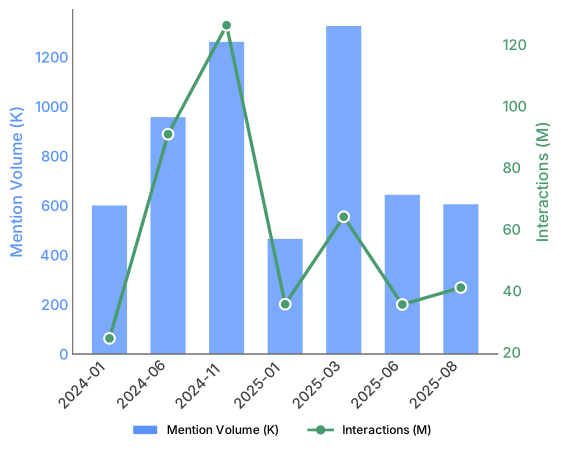
The 2025 CCTV 3.15 Consumer Rights Gala exposed the sale of refurbished sanitary pads, which brought a sharp change in consumer behaviour. Social media mentions rose to 1.325 million in March 2025, above the November 2024 Double 11 peak of 1.261 million. Consumers' attention moved from promotional offers to product safety and to checking that products are genuine.
This concern for safety drove the market's fastest-growing product concepts. Medical-grade and sterilization-grade sanitary pads exceeded CN¥ 1 billion in sales, growing more than 100% YoY.
Beyond safety, product innovation is moving in three directions, which are ease of use (Velcro pant-type designs), efficacy ingredients (B5, cranberry, probiotics, camellia and snow lotus) and new materials (silk, bamboo fiber and suspension core technologies). Examples include TaoTaoOxyCotton (淘淘氧棉), which positions its pads on the national sterilization-grade standard, and Fuyanjie (妇炎洁), which uses snow lotus in its products. We believe that brands which combine safety credentials with functional differentiation are best placed to gain share.
3.15 Gala scandal drives March 2025 social media spike to 1.3 million mentions
Strategic Implications#
We believe China's disposable hygiene market in H1 2025 is at a turning point, and brand decision-makers should pay attention to the following:
- Platform strategy should follow content commerce. The growth of content-led commerce in sanitary pads shows that by 2025 live streaming and short-video marketing drove much of the growth in the category. Brands without content creation capabilities may find it harder to hold their share.
- Safety credentials became a basic requirement in 2025. The 3.15 scandal has raised consumer expectations of product authenticity and manufacturing standards for the long term, and brands without verifiable safety certifications have less time to catch up.
- Adult diapers are a long-term opportunity. The 22.5% fall in sales despite China's ageing population indicates that the category's challenge is awareness and acceptance of the products, more than their price. We believe brands willing to invest in long-term consumer education are well placed to benefit as demand grows with the population's age.
Related Insights#
About the Data#
This analysis draws on Moojing Market Intelligence's proprietary e-commerce transaction data, covering major Chinese online platforms. Transaction data is analysed at SKU level across major Chinese online platforms. Social media data is drawn from major Chinese social platforms. All year-on-year comparisons use consistent category definitions. For methodology details, see the full whitepaper.
[1] Data covers January-August 2025 across mainstream Chinese e-commerce platforms.
This content adheres to Moojing's editorial standards .


