China's Eye Health Market Surges to CN¥ 26.5B in H1 2025
 By Quan Wenjun
5 min read
By Quan Wenjun
5 min read
Executive Summary#
China's online eye health market reached CN¥ 26.54 billion in MAT2025, up 32.7% year on year. A myopia population projected at 190 million under the age of 20, longer hours of screen time and sustained government policy on myopia together lift demand across the whole category. Lamps and lighting accounted for the largest share of sales at CN¥ 17.4 billion (+52% YoY), while personal care products, meaning eye patches, steam eye masks and eye wash, grew fastest at 44.1% year on year. Social media discussion of eye health approached 20 million posts, and although overall volume fell, discussion on one major community-led platform grew. Women accounted for 71.7% of eye health discussion, and myopia and prolonged use of electronic devices together triggered nearly 60% of eye care demand.
Download Full Report#
Get the complete analysis with ingredient trends, pharmaceutical market dynamics, brand-level data, and strategic opportunity assessments.
A Myopia Crisis at Scale Drives Structural Demand#
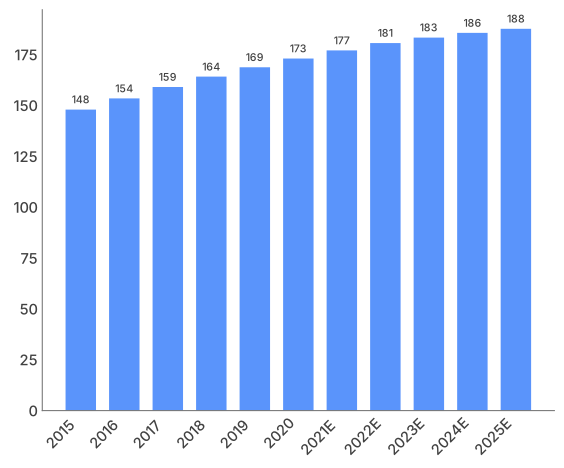
Nearly 190 million Chinese under the age of 20 are projected to have myopia by 2025, which makes them one of the world's largest addressable populations for preventive and corrective eye care. The myopia rate among senior high school students stands at 81.2%, and the steepest rise in prevalence comes between primary school (36.7%) and junior high (71.4%), the years in which academic workloads grow heavier and screen time increases.
The Chinese government has responded with an increasingly comprehensive policy framework. Since 2018, national regulations have set standard protocols for the prevention and control of myopia, and these were consolidated in the 2024 edition of the Guidelines for Prevention and Control of Myopia. The policy has raised eye health from an individual concern to a stated national priority, which we believe gives companies in the category a favourable environment for demand.
Myopia prevalence among China's under-20 population projected to reach 190 million by 2025
Seven Categories, One Growth Wave#
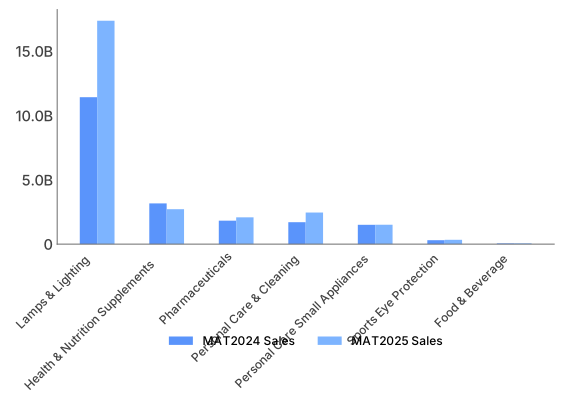
The market's growth of 32.7% year on year is well ahead of the growth rate of health and wellness e-commerce overall, and the category-level data shows lamps and lighting as the largest category by sales and personal care as the fastest-growing. Supplements were the one category of the seven to contract, at -14.2%.
Lamps and lighting dominates eye health market with CN¥ 17.4 billion sales, growing 52% YoY
Community Platforms Gain in Eye Health Discussion#
Social media discussion of eye health approached 20 million posts across major Chinese social platforms. Although aggregate volume fell 13.9% year on year, discussion on one major community-led platform grew 11.1%, which we read as engagement concentrating in community-based settings where consumers share their experience of products and treatments.
Female-Led, Screen-Driven: The Eye Health Consumer#
Social media data shows an audience in which women account for 71.7% of discussion volume, almost unchanged from 71.5% in MAT2024. The 31-35 age group is the largest single cohort at 25.2%, and the 26-35 range accounts for 43.1% of all participants. This is the age at which screen exposure, career demands and early parenthood come together, and at which eye health becomes a personal concern for many consumers for the first time.
Five distinct audience segments appear in the discussion: parents looking for scientific ways to prevent myopia; night-owl workers buying steam eye masks and lutein supplements; school students exploring blue-light protection and OK lenses; office workers using celebrity-endorsed eye patches together with fish oil; and older consumers sharing their experience of treatment for cataracts and macular degeneration.
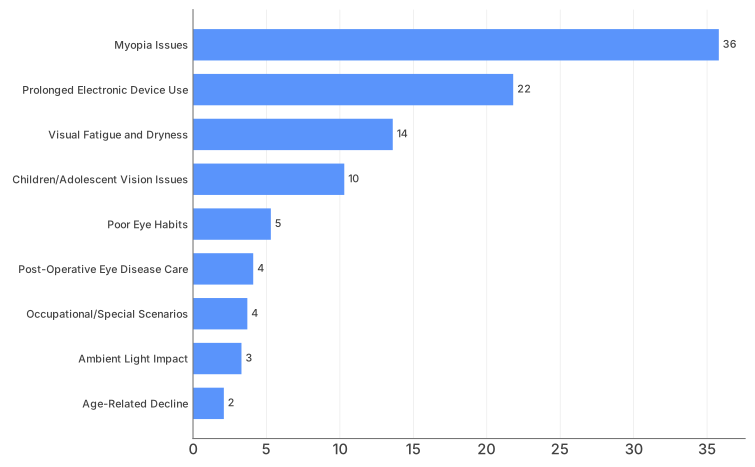
Myopia and electronic device use account for nearly 60% of eye care demand triggers
Key Takeaways#
- China's online eye health market reached CN¥ 26.54 billion in MAT2025, growing 32.7% year on year across seven product categories.
- Lamps and lighting were the largest category at CN¥ 17.4 billion (+52% YoY), personal care grew fastest at 44.1% year on year, and supplements were the only category to contract, at -14.2%.
- Eye health discussion on one major community-led platform grew 11.1% while overall volume fell, which points to a shift towards community-based health engagement.
- Women (71.7%) and the 26-35 age cohort (43.1%) make up most of the eye health audience, driven by lifestyles built around screens and by parents' concern for their children's eyesight.
- Myopia and prolonged use of electronic devices together trigger nearly 60% of eye care demand, which makes digital screen exposure the market's structural driver of growth.
About the Data#
This analysis draws on Moojing Market Intelligence's proprietary e-commerce transaction data covering major Chinese online platforms, public social media data from major Chinese social platforms, and analysis of consumer reviews. The primary comparison period is MAT2025 (June 2024-May 2025) vs. MAT2024 (June 2023-May 2024). Moojing analyses brand and category performance across major Chinese e-commerce platforms.
This content adheres to Moojing's editorial standards .
Frequently Asked Questions
CN¥ 26.54 billion in MAT2025, up 32.7% year on year and well ahead of health and wellness e-commerce overall. The driver is structural rather than cyclical: nearly 190 million Chinese under age 20 are projected to have myopia by 2025, one of the world's largest addressable populations for preventive and corrective eye care. The prevalence curve shows where intervention demand concentrates: 36.7% in primary school rising to 71.4% in junior high and 81.2% in senior high, a jump that coincides with heavier academic workloads and more screen time.
Lamps and lighting dominate at CN¥ 17.4 billion, growing 52% year on year, the largest slice of the market by a wide margin, and evidence that buyers treat eye health as an environmental problem first. Personal care products, meaning eye patches, steam eye masks and eye wash, post the fastest growth at +44.1%. Supplements are the one category to contract, at -14.2%, and that is worth sitting with: the ingestible route is giving up ground while environmental and topical routes gain. A brand planning entry should read it as consumers preferring interventions they can see working over ones they take on trust.
Female-led and screen-driven. Women account for 71.7% of eye health discussion, essentially unchanged from 71.5% a year earlier. The 31-35 age group is the largest single cohort at 25.2%, with 26-35 accounting for 43.1% of all participants. That is the point where screen exposure, career demands and early parenthood intersect and eye health becomes personally salient. Five distinct segments show up in the conversation: parents pursuing scientific myopia prevention; night-owl workers buying steam eye masks and lutein; students exploring blue-light protection and OK lenses; office workers using eye patches and fish oil combinations; and older consumers sharing treatment experiences for cataracts and macular degeneration.
Myopia and prolonged electronic device use, which between them account for nearly 60% of eye care demand triggers. That makes digital screen exposure the market's structural growth driver rather than a contributing factor, and it should shape both product and message. Policy reinforces it: national regulations for myopia prevention and control have been in place since 2018 and were consolidated in the 2024 edition of the guidelines, elevating eye health from an individual concern to a stated national priority. Overall social discussion approached 20 million posts, and although aggregate volume fell 13.9%, discussion on one major community-led platform grew 11.1%, which suggests that engagement is concentrating rather than fading.


