Breakout Ingredients Reshaping China's Food-Medicine Homology Market
 By Quan Wenjun
5 min read
By Quan Wenjun
5 min read
Executive Summary#
China's food-medicine homology ingredient market is going through a structural rebalancing. Bird's nest (CN¥ 7.54 billion), goji berry (CN¥ 3.61 billion) and ejiao (CN¥ 3.24 billion) still had the largest sales in 2024, but growth moved toward emerging ingredients. Astragalus grew 75.2% year on year (YoY), chicken's gizzard-membrane (ji nei jin) grew 55.0%, polygonatum 45.6% and angelica 42.5%. At the other end, ginseng fell 48.8% and cordyceps 30.6% across the marketplaces covered, which suggests that consumers are moving away from traditional prestige ingredients toward accessible alternatives aimed at specific conditions.
Download Full Report#
For the complete ingredient ranking data, health segment breakdowns and growth rate analysis across the 20 leading ingredients, download the full whitepaper.
Download the Full 2025 Food-Medicine Homology Whitepaper →
The 20 Leading Ingredients: Scale and Momentum#
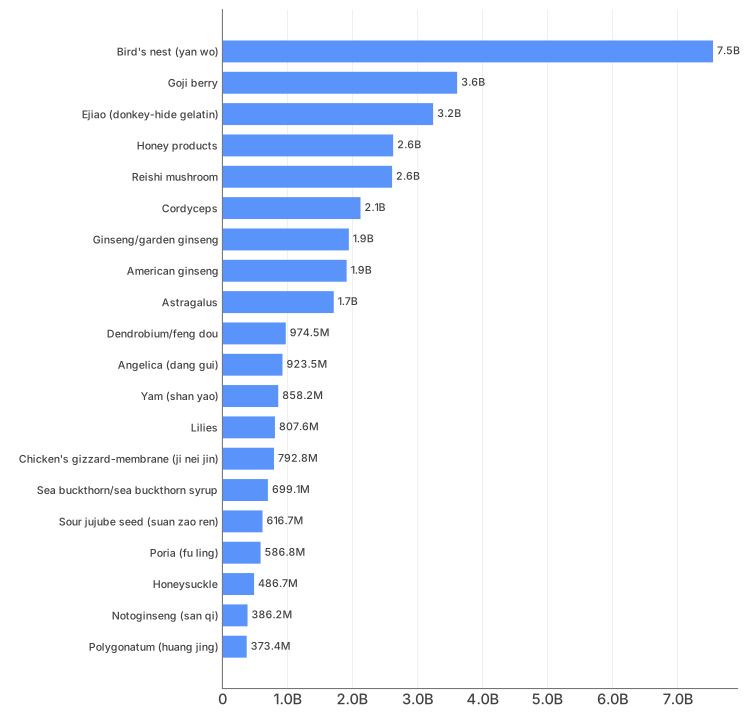
Bird's nest is the largest ingredient by sales at CN¥ 7.54 billion, more than double goji berry in second place. The three largest ingredients together account for CN¥ 14.39 billion, a premium tier built on established consumer trust and demand for gifts.
The growth, however, sits in the mid-tier and emerging ingredients. Astragalus ranks ninth by absolute sales at CN¥ 1.71 billion, but it grew fastest among the 20 leading ingredients. Chicken's gizzard-membrane (ji nei jin), traditionally used for digestive health, reached CN¥ 793 million, and polygonatum reached CN¥ 373 million.
Sales of the 20 leading ingredients: bird's nest leads at CN¥ 7.54 billion
Qi and Blood Nourishment: The Largest Segment Rebalances#
The qi and blood nourishment segment, the largest in the food-medicine homology category, contracted to CN¥ 25.85 billion, down 4.3% YoY, but the headline figure hides wide differences inside the segment. Within the segment, polygonatum grew fastest at 45.6%, followed by astragalus (+19.9%) and ejiao (+16.2%). We believe these three ingredients point to a "premiumisation from below", in which consumers upgrade to ingredient-specific formulations without paying the ultra-premium prices of cordyceps (−30.6%) or ginseng (−48.8%).
The contraction is concentrated in high-price, low-frequency traditional tonic products, while affordable daily wellness products within the qi and blood category continue to grow, in line with the wider market's shift from premium gifting toward everyday health maintenance.
For portfolio strategy, the data supports a barbell approach, which keeps a presence in stable, high-volume ingredients (bird's nest, goji berry, ejiao) while scaling the high-growth emerging ingredients that are likely to drive the segment's future growth.
Three Highs: The Fastest-Growing Health Segment#
The "three highs" segment, named for high blood pressure, high blood sugar and high blood lipids, grew fastest of the health segments at 14.9% YoY in 2024, reaching CN¥ 4.55 billion. Growth accelerated from 9.6% in 2023, which suggests the segment has entered a phase of rapid adoption.
Growth rates vary widely between the ingredients in this segment. Honeysuckle grew 131.2%, more than doubling its sales, and cinnamon grew 98.9% as interest in metabolic health ingredients rose, while hawthorn (+63.1%), eucommia bark (+56.5%) and gastrodia (+53.2%) also grew strongly.
The high blood sugar sub-segment is the largest at over CN¥ 1.5 billion with 25.7% YoY growth. With more than 140 million adults in China living with diabetes, according to the International Diabetes Federation, we believe this sub-segment is one of the strongest investment opportunities in the food-medicine homology market.
Liver Care: TCM Alternatives Challenge Western Supplements#
The liver care segment exceeded CN¥ 9.1 billion at 6.6% YoY growth, which makes it the second-largest health segment, and its main trend is a shift in consumer preference from Western-origin ingredients toward TCM alternatives.
Within liver care, white peony root grew 210.8% YoY, reishi mushroom 47.7% and goji berry 16.8%. Milk thistle, the largest ingredient in the segment at CN¥ 2.76 billion, fell 13.7%, and kudzu root fell 50.8%, across the marketplaces covered.
Sleep Aid: Ingredient Diversification Beyond Sour Jujube Seed#
The sleep aid segment reached CN¥ 624 million. Sour jujube seed accounts for 81% of its ingredient sales at CN¥ 505 million but grew only 0.9%, while newer ingredients grew far faster.
Chrysanthemum grew 181.8%, schisandra 178.5%, longan meat 113.1% and reishi mushroom 101.7%. TCM traditionally associates these four ingredients with calm and sleep, and they are appearing in new formats such as functional teas and sleep sprays.
With 36% of consumers identifying sleep problems as a primary health concern, we believe the segment has considerable room to grow. Multi-ingredient formulations that combine sour jujube seed with the fast-growing newer ingredients may capture the next stage of that growth.
Strategic Implications for Brands and Investors#
The ingredient-level data points to three strategic priorities. First, portfolios can be diversified away from shrinking premium ingredients toward high-growth alternatives that are closely aligned with specific health conditions. Second, multi-ingredient formulations are worth developing, particularly in the three highs and sleep aid segments, where consumers look for complementary combinations. Third, investment in ingredient education is justified, given that 62% of consumer attention focuses on ingredient information above all other purchase factors.
Brands that identify and scale high-growth ingredients early, before they mature into stable mid-growth categories, are well placed to grow in China's online food-medicine homology market, which reached CN¥ 56.78 billion in 2024.
More from This Report#
- China's CN¥ 56.78 Billion Food-Medicine Homology Market in 2025
- Ready-to-Eat Tonics and Gift Boxes Drive China's TCM Product Revolution
About the Data#
This analysis draws on Moojing Market Intelligence's proprietary transaction data from major Chinese online platforms. Ingredient classification references the National Health Commission's official food-medicine homology ingredient lists. All growth rates are calculated on a year-on-year basis using consistent category definitions across the 2022-2024 period.
This content adheres to Moojing's editorial standards .
Frequently Asked Questions
The two lists differ. Bird's nest leads sales at CN¥ 7.54 billion, more than double second-placed goji berry at CN¥ 3.61 billion, with ejiao at CN¥ 3.24 billion, and the three together reach CN¥ 14.39 billion, a premium tier built on established trust and demand for gifts. The growth sits below them: astragalus ranks only ninth by sales at CN¥ 1.71 billion but grew fastest, by 75.2% in 2024, while chicken's gizzard-membrane grew 55.0% to CN¥ 793 million, polygonatum 45.6% to CN¥ 373 million and angelica 42.5%. At the other end, ginseng fell 48.8% and cordyceps 30.6% across the marketplaces covered.
Qi and blood nourishment contracted 4.3% to CN¥ 25.85 billion, but the total hides wide differences between its ingredients. Inside the segment, polygonatum grew 45.6%, astragalus 19.9% and ejiao 16.2%, while the ultra-premium ingredients cordyceps and ginseng fell. We believe this is premiumisation from below, in which consumers upgrade to ingredient-specific formulations without paying cordyceps or ginseng prices. The contraction is concentrated in high-price, low-frequency traditional tonic products, while affordable daily wellness products in the same segment keep growing, in line with the wider market's shift from premium gifting to everyday health maintenance. That supports a barbell portfolio, which keeps the stable high-volume ingredients and scales the emerging ones.
The "three highs" segment, named for high blood pressure, high blood sugar and high blood lipids, grew 14.9% to CN¥ 4.55 billion in 2024, up from 9.6% growth in 2023, which suggests it has entered a phase of rapid adoption. Growth rates vary widely between its ingredients: honeysuckle grew 131.2%, cinnamon 98.9%, hawthorn 63.1%, eucommia bark 56.5% and gastrodia 53.2%. The high blood sugar sub-segment alone exceeds CN¥ 1.5 billion, growing 25.7%, and with more than 140 million adults in China living with diabetes, according to the International Diabetes Federation, we believe it is one of the strongest opportunities in the food-medicine homology market.
Liver care and sleep, and in both segments growth is moving away from the largest ingredient. Liver care exceeded CN¥ 9.1 billion, growing 6.6%, and inside it white peony root grew 210.8%, reishi 47.7% and goji 16.8%, while milk thistle, the segment's largest ingredient at CN¥ 2.76 billion, fell 13.7% and kudzu root fell 50.8%. Consumers are shifting from Western-origin liver ingredients toward traditional alternatives. Sleep shows the same shape: sour jujube seed still holds 81% of ingredient sales at CN¥ 505 million but grew only 0.9%, while chrysanthemum grew 181.8%, schisandra 178.5%, longan meat 113.1% and reishi 101.7%, appearing in functional teas and sprays. With 36% of consumers naming sleep problems as a primary concern and the segment at CN¥ 624 million, we believe it has considerable room to grow.


