China Health & Beauty H1 2023: The Shift to Skin Health
 By Jessie Wang
4 min read
By Jessie Wang
4 min read
Executive Summary#
Health & beauty products took a larger share of beauty sales on a leading Chinese marketplace in the rolling year from March 2022 to February 2023. Their share of total beauty sales rose from 24.5% to 25.2% on sales of CN¥ 42.92 billion, while sales in the segment and in the wider beauty category came under pressure. During the June 618 and November Singles' Day promotions, health-positioned products posted positive year-on-year (YoY) growth. Consumer demand moved toward skin health improvement, natural ingredients and clean formulations, which we believe gives a lasting advantage to brands that can support their health claims with evidence.
Download Full Report#
Get the complete analysis with additional data on clean beauty, Chinese herbal ingredients, adaptogens, and superfood skincare trends.
Health & Beauty Takes a Larger Share of Beauty Sales#
Health & beauty products are taking a growing share of what consumers spend on beauty, even though sales came under pressure over the period. The segment's share of total beauty sales on the marketplace rose from 24.5% to 25.2% over the observation period. In the off-peak months of H2 2022 it regularly reached 26-30%, with October 2022 recording the highest non-promotional share at 30.0%, which we believe points to genuine demand that does not depend on promotions.
Sales peak in November, when health skincare sales reached CN¥ 10.79 billion in November 2022, nearly four times the typical monthly baseline. The June 618 festival brings a second peak, with health skincare sales of CN¥ 6.10 billion in June 2022. These patterns suggest that health-conscious consumers time their purchases around the major e-commerce festivals.
Health-Positioned Products Held Up Best in the Promotions#
From H2 2022 onwards, health & beauty consistently held up better than the overall beauty market, and the gap was widest during the main shopping festivals. In the June 618 festival, health-positioned products grew 4.4% YoY while the wider beauty category came under pressure.
Consumer Demand Shifts Toward Health-First Skincare#
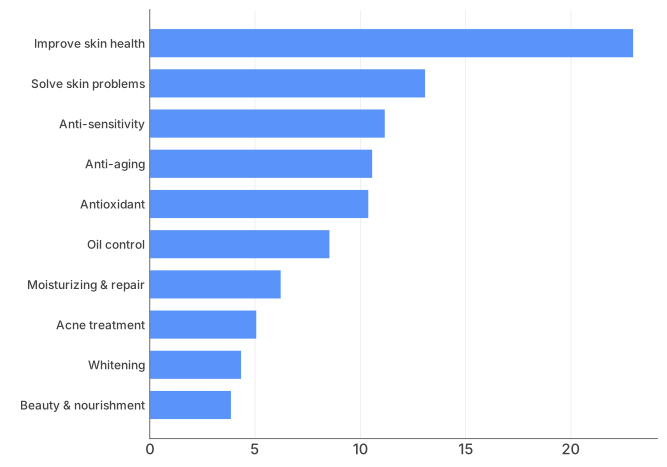
Chinese skincare consumers increasingly judge products on health and safety as well as on how they look. Our analysis of consumer demand across functional, ingredient and category dimensions shows a market oriented toward measurable improvements in skin health and toward transparency about ingredients.
Improving skin health leads consumer functional demands at 22.9%
Strategic Implications for Brands#
The gap between health & beauty and the wider beauty market points to a clear priority for brands. Products that credibly deliver health benefits, through ingredient transparency, clinical validation and alignment with wellness trends, are well placed to outperform the broader beauty market both while the category is under pressure and once that period has passed.
Natural ingredients account for the largest share of consumer ingredient demand at 33.9%, followed by additive-free at 25.6%. Together the two account for 59.5% of ingredient preference mentions, which makes ingredient purity and naturalness the basic expectations for health & beauty products. We believe brands that lead with clean formulations, invest in engaging consumers on content platforms such as Xiaohongshu (小红书) and support every health and efficacy claim with scientific evidence will take a disproportionate share of growth.
Key Takeaways#
- Health & beauty's share of beauty sales on a leading Chinese marketplace rose to 25.2%, on sales of CN¥ 42.92 billion, while sales in the category came under pressure
- Health-positioned products grew 4.4% YoY during the June 618 festival, when the wider beauty category was under pressure
- Improving skin health leads consumer functional demands at 22.9%, signalling a shift from reactive to proactive skincare
- Natural ingredients (33.9%) and additive-free (25.6%) together account for 59.5% of consumer ingredient preference mentions
- October 2022 recorded the highest non-promotional share for health & beauty, at 30.0%
About the Data#
This analysis draws on Moojing Market Intelligence sales data from a leading Chinese marketplace covering March 2022 to February 2023, and on Moojing Social Listening for consumer demand. For full methodology and additional insights, see the complete Health & Beauty whitepaper.
This content adheres to Moojing's editorial standards .


