Liver Health Supplements Lead China's Nutritional Boom at +108.1% YoY
 By Quan Wenjun
5 min read
By Quan Wenjun
5 min read
Executive Summary#
Liver nutrition products were the standout nutritional health category of Q1 2023, with milk thistle-based supplements reaching CN¥ 458 million (+108.1% YoY) on two leading Chinese marketplaces.[1] The broader nutritional health segment grew strongly in most of its sub-categories, with protein and collagen products the largest at CN¥ 2.15 billion (+68.4% YoY) and other dietary supplements at CN¥ 1.87 billion (+112.9% YoY). This analysis examines why Chinese consumers aged 25-40, in particular overtime workers and people who stay up late, are spending on liver care. It also looks at how a "cautious but quality-focused" approach to spending creates opportunities for formulations that are backed by science.
Download Full Report#
Get the complete analysis with additional data, methodology details, and brand-level insights across all seven consumer segments.
Nutritional Health Delivers the Strongest Segment Performance#
The nutritional health segment delivered the strongest overall performance among the seven tracks analysed in the Q1 2023 whitepaper, with most of its ten largest sub-categories growing year-on-year (YoY). Protein powder, amino acids and collagen products were the largest sub-category at CN¥ 2.15 billion (+68.4% YoY), driven by protein powder marketed for immunity and collagen sold for oral beauty. Other dietary supplements followed at CN¥ 1.87 billion (+112.9% YoY), supported by products related to ginseng saponins, while vitamins, minerals and calcium/iron/zinc/selenium supplements came third at CN¥ 1.46 billion (+59.5% YoY).
Milk Thistle Leads the Liver Care Ingredient Race#
Within the liver care market, milk thistle was the main ingredient, with CN¥ 458 million in Q1 2023 sales (+108.1% YoY), although the range of ingredients extends well beyond this single compound:
- Celery seed products grew the fastest, by 296.5% YoY
- Balsamic-based supplements grew 7,174.1% YoY from a small base
- Crystal ball probiotics grew 129.5%, with the strongest growth in social media voice at 480.9% YoY
- Turmeric, cassia and milk thistle have become the mainstream protective ingredients
The data indicate that the liver nutrition market may hold greater potential as consumer awareness grows. Marketing built around ingredients worked particularly well in this segment, because consumers increasingly research specific bioactive compounds instead of relying on brand reputation alone, which creates opportunities for brands that can explain the science behind their formulations clearly.
Consumer Demographics: Who Buys Liver Supplements?#
Analysis of social media discussion shows that people who stay up late make up the largest consumer group in liver care discussion at 51%, followed by overtime workers at 33% and general health-conscious individuals at 12%. The post-80s and post-90s generations are the most engaged, influenced by lingering anxiety from the pandemic and by frequent media reports of young professionals whose health suffered from overwork and lack of sleep.
We believe this pattern suggests that liver care marketing should be built around everyday lifestyle scenarios instead of traditional healthcare positioning. The typical buyer is a professional aged 25-40 who works long hours and keeps irregular sleep schedules, and who sees liver health supplements as a practical response to the stress of daily life.
On product efficacy, consumers most often mention the following desired outcomes:
- Detoxification: 54% of efficacy mentions
- Improved eyesight: 31% of mentions
- Mood enhancement: 13% of mentions
The Slow-Effect Problem: Understanding Consumer Pain Points#
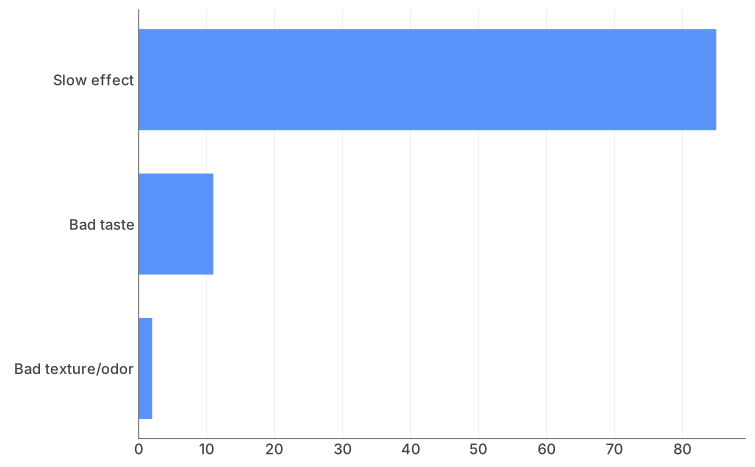
Consumer dissatisfaction in the liver care market is concentrated on a single issue, which makes the direction for product improvement unusually clear.
Slow product efficacy dominates consumer dissatisfaction in liver care supplements
Broader Nutritional Health: A Market Reshaped by Health Consciousness#
The growth of the nutritional health sector reflects a lasting change in consumer attitudes to health. During the pandemic, health consciousness moved from a niche interest to a mainstream priority, which raised demand across the whole range of supplements. Q1 2023 showed that the change has lasted, since spending on health supplements kept growing after pandemic restrictions ended.
The "cautious but quality-focused" consumer mindset of Q1 2023 particularly benefited the supplement category. According to McKinsey's 2023 Chinese consumer report, the top purchasing factors across both food and non-food categories were "safety and natural formulation," "desired efficacy, flavor, or design," and brand-related attributes.[2] Consumers became more deliberate about how they spent, and they looked actively for products that offer real quality and functional efficacy.
Key Takeaways#
- Milk thistle liver supplements grew 108.1% YoY to CN¥ 458 million, the largest ingredient in the liver nutrition category
- People who stay up late (51%) and overtime workers (33%) drive liver care demand, which skews towards consumers aged 25-40
- Slow product efficacy accounts for 85% of negative feedback, which gives brands a clear opportunity to differentiate
- The broader nutritional health segment grew strongly, with protein and collagen products up 68.4% and other dietary supplements up 112.9%
More from This Report#
## About the Data
This analysis draws on Moojing Market Intelligence data covering Q1 2023. Moojing analyses brand and category performance across major Chinese e-commerce platforms. For full methodology and additional insights, see the complete Consumer Trends whitepaper.
This content adheres to Moojing's editorial standards .


