Quercetin Grew 105% as Novel Ingredients Reshape Supplements
 By Jessie Wang
5 min read
By Jessie Wang
5 min read
Executive Summary#
Post-pandemic health consciousness drove strong growth in China's nutritional health segment during H1 2023, and novel ingredients grew fastest: quercetin rose 105.5% YoY to CN¥ 536 million, lysine grew 1,248% YoY and spermidine rose 1,117% YoY. Protein, vitamin and overseas cardiovascular supplement categories each exceeded CN¥ 6 billion in Gross Merchandise Value (GMV), which shows that targeted supplementation has moved from a niche into the mainstream. This analysis looks at the ingredient-driven growth, the rise in quercetin demand after COVID, the consumers who buy it and the gap between the brands discussed on social media and the brands that sell best online.
Download Full Report#
Get the complete analysis with additional data, methodology details, and brand-level insights across all seven consumer segments.
A Broad-Based Nutritional Health Boom#
Growth in the nutritional health segment was broad in H1 2023, and most of its ten largest sub-categories grew year on year (YoY).[1] Protein powder, amino acids and collagen products were the largest group by GMV at CN¥ 8.71 billion (+59.5% YoY), followed by vitamins, minerals and calcium/iron/zinc/selenium supplements at CN¥ 6.73 billion (+60.2% YoY). Overseas cardiovascular nutritional supplements reached CN¥ 6.08 billion (+73.1% YoY), which reflects greater consumer concern for heart health after the pandemic.
The growth reached well beyond the established categories, and emerging ingredients with smaller bases grew very quickly:
- Lysine (supporting children's development): CN¥ 1.03 billion at +1,248.1% YoY
- Spermidine: CN¥ 485 million at +1,117.3% YoY
- Bitter melon extract: CN¥ 196 million at +2,855.0% YoY
- CLA (conjugated linoleic acid): CN¥ 145 million at +432.4% YoY
- GABA: CN¥ 347 million at +151.0% YoY
We believe these figures describe a market in which consumers are willing to try novel, ingredient-specific supplements when health claims and social media education support them. Overseas oral beauty supplements and overseas endocrine supplements came under pressure over the same period, which suggests that spending moved deliberately toward cardiovascular, immune and development-focused products.
Quercetin: The Post-COVID Respiratory Health Ingredient#
Quercetin became a breakout ingredient, with sales on two leading Chinese marketplaces reaching CN¥ 536 million (+105.5% YoY). Its social media voice grew 201.8% YoY, the highest growth in the nutritional health segment.[1] This flavonoid antioxidant, found naturally in leafy greens, tomatoes and berries, gained commercial traction through its association with respiratory health, a strong motivation for consumers after the widespread COVID infections.[2]
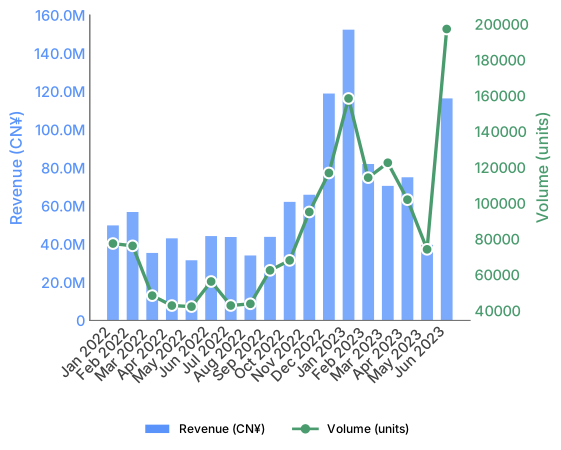
Quercetin revenue rose from about CN¥ 40-60 million a month through most of 2022 to CN¥ 119 million in December 2022 and CN¥ 152 million in January 2023, more than three times its earlier level. The rise coincided with the relaxation of COVID restrictions and the wave of respiratory infections that followed. Sales settled in the following months, but a renewed rise to CN¥ 116 million in June 2023 suggests lasting demand beyond the first response to the pandemic.
Quercetin sales surged from late 2022 as post-COVID lung health awareness peaked
Tier 1 City Consumers and the Brand Perception Gap#
Interest in quercetin was concentrated in Tier 1 cities and provinces, Beijing, Guangdong and Shanghai, where health awareness and spending power are both high. Female users accounted for approximately 58% of social media discussion. The core consumers fall into two groups: adults aged 31 to 35, salaried professionals buying for themselves, and consumers over 50, whose purchases reflect the older generation's concern for declining lung function and cardiovascular health.
The brands that consumers discuss most on social media are not the same as the brands with the largest e-commerce sales. Social media discussion centred on cross-border and specialty brands such as Synext, Sorlife and Fairvital, which suggests that these brands have strong mindshare among engaged, health-curious consumers. We believe the gap gives brands with large e-commerce sales a reason to invest in content marketing, while brands with a strong social presence have an opportunity to turn that awareness into sales.
Pain Points: Efficacy Expectations and Trust Signals#
Analysis of negative reviews found that product pain points were concentrated in two areas. Consumption effect accounted for 74% of negative feedback, with consumers mainly reporting that the product did not relieve their cough or that respiratory problems did not clearly improve in the short term. Adverse reactions accounted for 14% of complaints, including allergic-type reactions, stomach pain and constipation.
Other issues that reduced trust included:
- Questionable ingredient content: labels claiming 1,000mg per capsule but actual content appearing lower
- Place-of-origin misrepresentation: products labeled as imported but actually produced domestically
- Oversized tablet formats that posed difficulty for some consumers
These pain points show that the supplement industry has to manage efficacy expectations while keeping its labeling transparent. We believe brands that disclose ingredient concentrations honestly, make realistic benefit claims and assure quality will be best placed to keep demand as post-COVID health awareness matures.
Key Takeaways#
- Quercetin sales rose 105.5% YoY to CN¥ 536 million, driven by post-COVID respiratory health concerns
- The novel ingredients lysine (+1,248% YoY) and spermidine (+1,117% YoY) show that consumers are willing to try targeted supplements
- Tier 1 city consumers aged 31-35 and 50+ are the core quercetin consumers
- A gap between the brands discussed on social media and the brands with the largest e-commerce sales creates an opportunity for both established and emerging brands
- Efficacy expectations account for 74% of negative feedback, which makes transparent labeling a competitive differentiator
More from This Report#
## About the Data
This analysis draws on Moojing Market Intelligence data covering H1 2023. Moojing analyses brand and category performance across major Chinese e-commerce platforms. For full methodology and additional insights, see the complete Consumer Trends whitepaper.
This content adheres to Moojing's editorial standards .


