Pet Humanization in China: From Conversation to Commerce
 By Quan Wenjun
7 min read
By Quan Wenjun
7 min read
Executive Summary#
Get the Full Report: Download the complete analysis for detailed data, methodology, and pages of insights.
Pet humanization in China has produced ten distinct sub-verticals — but only three have crossed the threshold from social conversation into measurable commerce. Pet apparel and luxury commands USD 38.2 million in 2025 e-commerce GMV against 236 thousand multi-platform posts; pet home and furniture converts a modest 13 thousand posts into USD 19.8 million GMV; pet insurance is the smallest by volume (5 thousand posts) yet carries the highest forward growth profile (19.3% projected CAGR through 2033, per IMARC Group).
The leisure verticals tell a different story. Pet dining (410 thousand posts) and pet travel (257 thousand) lead the conversation hierarchy, but neither has yet produced trackable e-commerce GMV at scale. Layered above the entire map, ten luxury houses have launched pet collections in the China market — a leading indicator that the category has earned portfolio-extension status from the world's most disciplined brand stewards.
For brand strategists, the practical read is to map opportunity by both conversation density and commerce conversion — and to position now in the verticals where one is materially ahead of the other.
The Sub-Vertical Map: Conversation Sizes, Commerce Conversion#
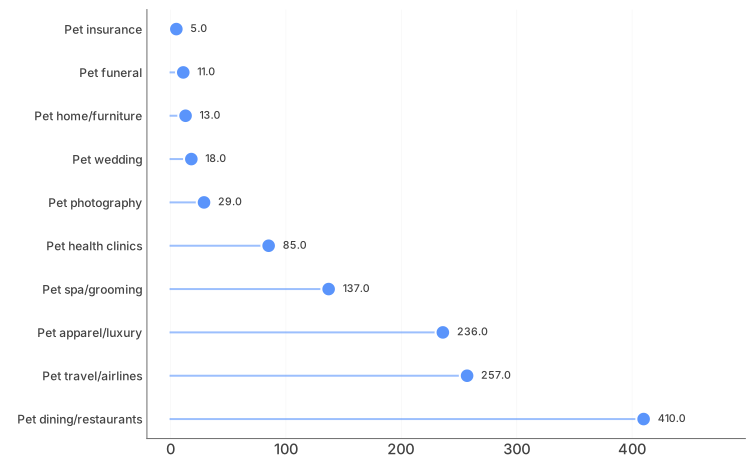
Pet humanization extends well beyond food and supplies. Pets now anchor adjacent consumption categories from dining to insurance to funeral services, and each sub-vertical occupies a distinct point on the conversation-to-commerce conversion curve. The chart below sizes the social-conversation footprint of each sub-vertical in 2025; the commerce-conversion read sits in the analysis that follows.
Pet dining leads conversation; pet apparel leads commerce
What Is Already Converting (Apparel, Home/Furniture)#
Two humanization verticals have already crossed into measurable e-commerce. Pet apparel and luxury delivers USD 38.2 million in trackable 2025 GMV on 236 thousand posts — a conversion ratio that reflects mature commerce infrastructure and consumer willingness to spend on aesthetic and identity-signalling pet products. Pet home and furniture converts a much smaller 13 thousand posts into USD 19.8 million GMV, suggesting low-volume but high-ticket purchasing: fewer conversations, higher basket values per buyer.
Both verticals share a structural enabler: they fit naturally inside existing e-commerce taxonomies. Pet apparel sells through fashion and accessory infrastructure; pet furniture rides on home-goods discovery patterns. Brands entering either sub-vertical can leverage proven category playbooks without re-engineering the path to purchase. Apparel houses with established fashion pipelines and home-goods brands with established furniture pipelines have the shortest distance to a viable pet line.
What Is Waiting (Dining, Travel — Conversation Without Commerce Yet)#
Pet dining (410 thousand posts) and pet travel (257 thousand) lead the conversation hierarchy, but neither has yet produced trackable e-commerce GMV at scale. The reason is structural: both verticals are experience-led services rather than product-led commerce, and value capture sits inside venue and service operators rather than e-commerce platforms.
Pet dining has emerged as a particularly active leisure sub-vertical, with independent operators and major chains carving out share through pet-friendly venue formats. Pet travel growth is being driven by a parallel infrastructure expansion: pet-permitting airlines, pet-friendly hotel programs, and dedicated pet transport services. The conversation density signals consumer demand that has not yet been met by mature commercial infrastructure — the partnership and sponsorship opportunity is open for brands willing to underwrite venue, content, or loyalty programs that bridge social interest to repeat consumption.
Pet spa and grooming (137 thousand posts) and pet health clinics (85 thousand) sit one tier down on conversation but represent the operational backbone of pet-services consumption. Health clinics carry meaningfully lower Net Sentiment Ratio than the leisure verticals, reflecting consumer friction around veterinary cost transparency — a friction point that creates room for service-design innovation and bundled-pricing models.
Pet Insurance: Smallest Today, Highest CAGR Forecast#
Pet insurance generates only 5 thousand 2025 posts — the smallest footprint in the humanization map. But it carries the single most compelling forward-growth profile in the set: a 19.3% projected CAGR through 2033, per IMARC Group analysis. That trajectory translates an early-stage conversation footprint into structural category importance over the next decade, particularly as pet healthcare costs rise and per-pet annual veterinary spend climbs in tier-1 and tier-2 cities.
For insurers and adjacent financial-services brands, pet insurance is the rare case where being early to a low-conversation category is the strategically correct posture. The conversation density will follow the product infrastructure, not lead it.
Pet Luxury as Leading Indicator#
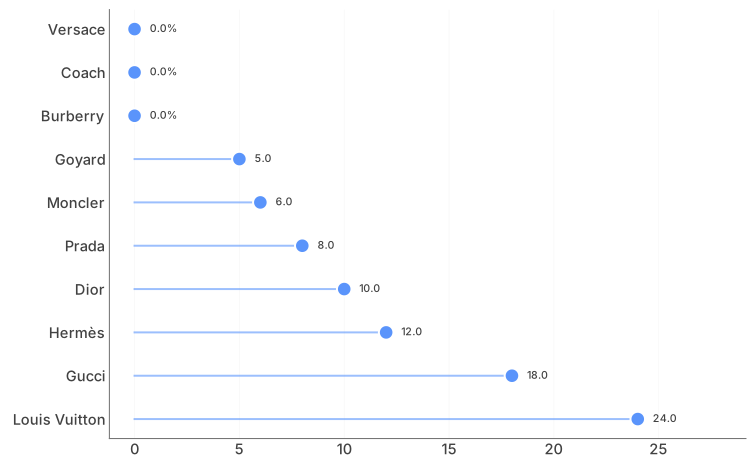
Layered above the humanization sub-verticals, the entry of major luxury houses into pet collections is the strongest signal that the category has earned portfolio-extension status. Ten luxury houses have launched dedicated pet collections in the China market between 2019 and 2023.
Louis Vuitton leads luxury pet assortment in China
Implications for Adjacent-Category Brands#
The humanization sub-vertical map yields a three-part operating read for brands evaluating the China pet opportunity.
First, commerce-ready verticals reward fast entry: apparel, home/furniture, and the emerging insurance category have functioning distribution infrastructure today, and brands with adjacent capabilities can plug in with minimal re-engineering.
Second, conversation-heavy verticals reward partnership economics: dining, travel, spa, and grooming sustain six-figure post volumes that brands can monetise through venue partnerships, content sponsorship, and loyalty integration rather than direct product launches.
Third, luxury and life-cycle verticals reward narrative investment: pet luxury, pet wedding, pet photography, and pet funeral carry outsized cultural-positioning weight. Brands that show up here earn permission to participate in the broader humanization narrative on terms the consumer accepts.
Key Takeaways#
- Pet apparel and home/furniture have crossed the conversation-to-commerce threshold: USD 38.2 million and USD 19.8 million in 2025 GMV respectively, with established e-commerce infrastructure to support continued scaling.
- Pet dining (410K posts) and travel (257K) lead conversation but await commerce infrastructure: the partnership and sponsorship opportunity is open for brands willing to underwrite the bridging infrastructure.
- Pet insurance is the highest-CAGR forward bet: 5 thousand posts today, but a +19.3% projected CAGR through 2033 makes early positioning structurally correct.
- Ten luxury houses have already validated the category: Louis Vuitton leads with 24 SKUs; the negative Net Sentiment Ratio is a price-justification challenge, not a rejection of pet luxury as a category.
About the Data#
Moojing Market Intelligence research draws on multi-platform social-listening analysis across mainstream e-commerce platforms and content channels in China. Sub-vertical conversation volumes are aggregated across 2025; pet apparel and pet home/furniture GMV figures reflect trackable e-commerce volumes for 2025. Pet insurance CAGR projection sourced from IMARC Group through 2033. Luxury house SKU counts reflect China market availability as of 2025; NSR calculated across the seven brands with measurable footprints.
More from This Report#
This article is part of our report series:
Download the Full Report#
Get the complete analysis with detailed data, methodology, and additional insights.
This content adheres to Moojing's editorial standards .


