China Singles Day 2022: Premiumization Reshapes Spending
 By Jessie Wang
4 min read
By Jessie Wang
4 min read
Executive Summary#
Total sales across the Tier 1 categories during China's 2022 Singles Day (Double 11) festival on two leading Chinese marketplaces were almost flat year on year at CN¥ 301.6 billion. The average selling price rose 7.57% to CN¥ 158.74 per item.[1] Shoppers bought fewer items but spent more on each one, which we read as a move towards premium purchases that held even while the wider economy was under strain.[2] This analysis looks at which categories grew, how the spread of festival campaigns across more marketplaces changed the picture, and what the data suggests about the future of China's e-commerce promotions.
Download Full Report#
Get the complete analysis with additional data on all 30 top categories, five high-growth consumer scenarios, and Xiaomi ecosystem competitive intelligence.
Why Total Sales Were Almost Flat#
Several structural forces held the headline figure back, and weaker consumer sentiment was only one of them. Sustained pandemic control measures dampened discretionary spending in general, although the effect differed from one category to the next. More marketplaces, among them content-led ones, ran Double 11 campaigns of their own for the first time, so shoppers' festival spending was spread across more channels. The festival was also shorter in 2022, running from 24 October to 11 November against 20 October to 11 November in 2021, which left less time for transactions.
Sales volume came under more pressure than revenue, at 1.9 billion units, and the difference between the two shows that the shoppers who did take part traded up, particularly in high-value categories. This fits a preference for quality over quantity that has been building among Chinese consumers since 2020.
The main figures for the 2022 festival were:
- Cumulative sales: CN¥ 301.6 billion, almost flat year on year
- Cumulative volume: 1.9 billion units
- Average selling price: CN¥ 158.74 (+7.57% YoY), up from CN¥ 147.57 in 2021
Category Growth Shows Where Consumers Put Their Money#
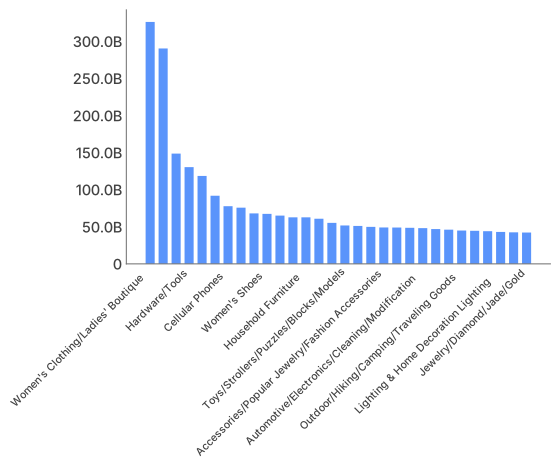
The category data shows spending moving towards the home, health and outdoor recreation. Among the 30 largest categories by sales in January to October 2022, residential furniture grew 17.4%, health food and dietary supplements 18.7%, outdoor and camping goods 16.6%, and laundry and toiletry products 0.5%.
The 30 largest categories by sales, January to October 2022
Domestic Brands Gain Ground#
Chinese domestic brands gained ground among the larger brands in many categories during the festival, which we believe reflects growing consumer confidence in local products.
Among the 16 categories with more than CN¥ 2 billion in Double 11 sales, jewelry grew the fastest, at +108% YoY over the festival period. We believe this shows consumers concentrating their spending where they saw lasting value, such as investment-grade jewelry, and buying more deliberately in discretionary categories such as fashion.
Key Takeaways#
- Total Double 11 sales on two leading Chinese marketplaces were almost flat at CN¥ 301.6 billion, while the average selling price rose 7.57% to CN¥ 158.74
- Health food (+18.7%) and residential furniture (+17.4%) were among the large categories that grew in January to October 2022
- More marketplaces ran their own Double 11 campaigns, which spread festival spending across more channels
- Chinese domestic brands gained ground among the larger brands in many categories
- Jewelry grew 108% YoY over the festival, the fastest of the categories with more than CN¥ 2 billion in sales
About the Data#
This analysis draws on Moojing Market Intelligence data covering Q4 2022. Moojing analyses brand and category performance across major Chinese e-commerce platforms. All sales data covers two leading Chinese marketplaces unless otherwise specified. Double 11 comparison periods: 20 October - 11 November 2021 versus 24 October - 11 November 2022. For full methodology and additional insights, see the complete Singles Day E-commerce Review whitepaper.
This content adheres to Moojing's editorial standards .


