China's Brain Nutrition Market Grows 50.6% to CN¥ 11.9B
 By Jessie Wang
6 min read
By Jessie Wang
6 min read
Executive Summary#
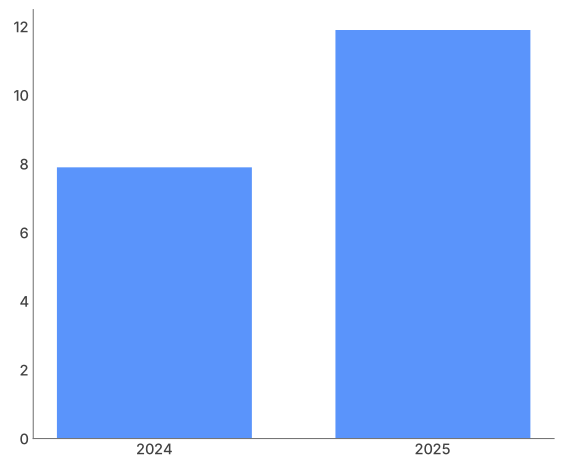
China's online Brain Nutrition market grew 50.6% year-on-year (YoY) in 2025 to CN¥ 11.9 billion, up from CN¥ 7.9 billion in 2024. Over the same period, social media mentions of "Brain Nutrition" rose 303.4% as the category moved from niche supplementation into mainstream consumer wellness. Omega-3 accounts for 71.9% of segment sales (CN¥ 8.57 billion), and the fastest-growing products are built around specific groups of consumers, such as GABA (gamma-aminobutyric acid) chewable tablets for children aged 4-18. Sales are spread across many brands, international and domestic, and we believe the market remains open to new entrants with a clear target audience.
Download Full Report#
Get the complete analysis with additional data on all Health & Wellness functional segments, methodology details, and brand-level insights.
A CN¥ 4 Billion Category Expansion in One Year#
The Brain Nutrition segment added CN¥ 4.0 billion in absolute value in a single year, which is nearly the size of the entire Anemia Improvement market. Moojing's analysis attributes the growth to several sources of demand at once. Parents invested in their children's cognitive development for academic performance, professionals looked for an advantage in demanding jobs, and an ageing population grew concerned about memory loss and neurodegeneration.
The 303.4% rise in social media mentions shows that the category has reached mainstream awareness, with content about "brain fog", "focus enhancement" and "memory improvement" leading consumers who had not used these products before to try them for the first time.
Brain Nutrition market grows 50.6% from CN¥ 7.9B to CN¥ 11.9B in one year
Three Demand Scenarios Define the Market#
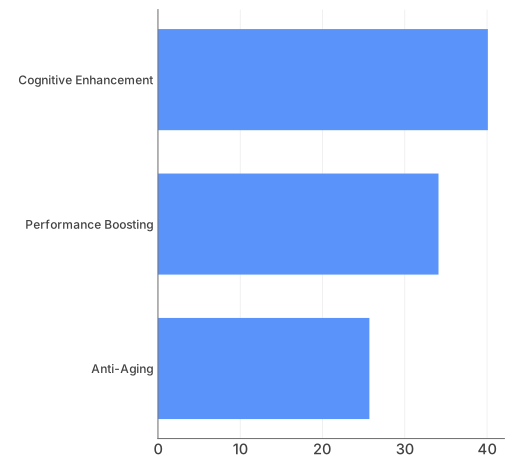
Cognitive Enhancement is the largest scenario at 40.1%, centred on improving learning capacity and driven by academic and career pressures. Two sub-themes lead within it, "improve focus" (30.7%), which serves students preparing for exams, and "enhance learning capacity" (30.5%), which reflects parents buying supplements for their children's cognitive development.
Performance Boosting at 34.1% reflects demand from people under pressure at work who want to keep their cognitive function up and fight fatigue. Its "stress relief" (23.7%) and "improve sleep" (13.4%) sub-themes show that in 2025 consumers looked to these products for recovery and stress management as well as for stimulation.
Anti-Aging at 25.7% completes the picture, driven by middle-aged and senior consumers concerned about memory loss.
Cognitive enhancement accounts for 40.1% of Brain Nutrition demand scenarios
A Fragmented Market Open to Domestic and International Brands#
Sales in Brain Nutrition are spread across many brands, with international and domestic brands both well represented, and we believe the category is still at an early stage at which no single approach has established itself. One domestic brand, Yangnengjian (养能健), has built its business on a single product line, GABA Chewable Tablets for children aged 4-18, sold mainly through Douyin (抖音). Its approach combines a narrowly defined audience in the parents of school-age children, a convenient format in citrus-flavoured chewable tablets and a channel suited to educational content marketing.
Omega-3 Leads Ingredients as Dosage Form Preferences Shift#
Omega-3 reached CN¥ 8.57 billion (+35.2% YoY), which is 71.9% of the Brain Nutrition market. CoQ10 (coenzyme Q10), growth factors and collagen/peptides were the fastest-growing emerging ingredients at approximately +150%, while amino acids, PQQ (pyrroloquinoline quinone) and herbals declined. This suggests that consumers are moving from generic "brain nutrition" products toward targeted functional ingredients for demanding cognitive work.
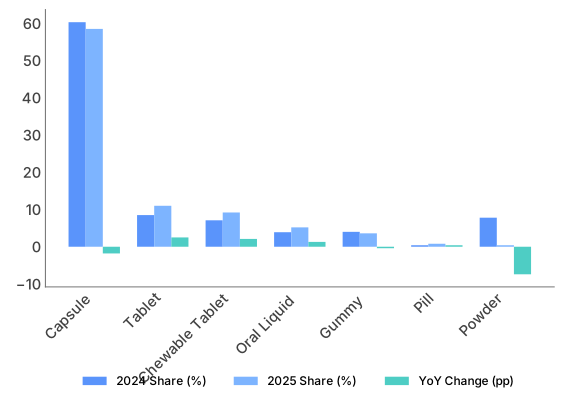
Capsules remain the mainstream format at 58.5% of sales, although their share fell 1.8 percentage points (pp) year-on-year as consumers spread their purchases across more formats. Tablets gained 2.5pp to 11.0% and chewable tablets gained 2.1pp to 9.2%, which reflects the preference of children and adolescents for formats that are easy to take and do not need water.
The largest shift was in powder, whose share fell from 7.8% to 0.4% (-7.4pp), which indicates that consumers strongly prefer pre-portioned formats to loose powder that has to be measured and mixed. Oral liquid gained 1.3pp to 5.2%, supported by children's liquid supplements from brands such as inne and Nuoteland.
High-growth products share several characteristics:
- Combining multiple nutrients (GABA + minerals + vitamins)
- Emphasizing "zero additives, zero allergens" safety claims
- Prioritizing chewable tablets and capsules for portability and convenience
Capsules hold 58.5% of sales while tablets and chewables gain ground
Consumers Buy for Scenarios, Judge on Efficacy#
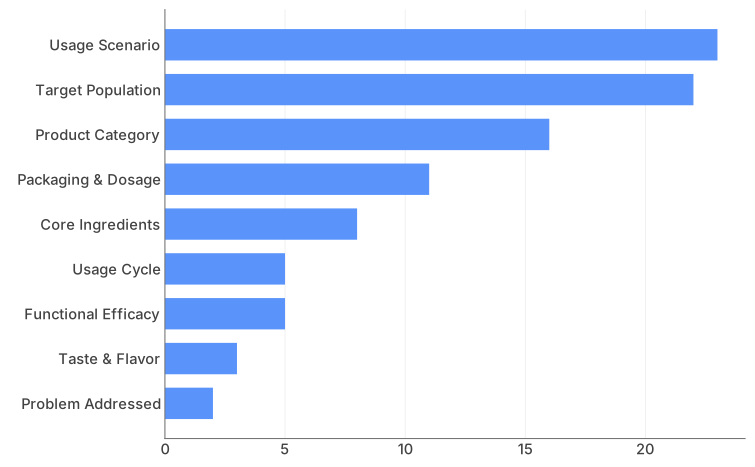
Usage scenario (23%) and target population (22%) together drive 45% of Brain Nutrition purchase decisions, which shows that Chinese supplement buyers choose these products according to their circumstances and the group they belong to, and much less according to ingredients. The main pain points follow the same groups, with "overtime/late nights" for professionals, "study/exam prep" for students and "insomnia/fitness/hair loss" for general consumers.
"Core ingredients" (8%) and "functional efficacy" (5%) come low in the list of purchase factors, which is notable given how complex the ingredients of brain nutrition products are. We believe this means consumers rely on brand and format signals more than on detailed knowledge of ingredients, so brands that describe their products by outcomes such as "better focus" and "deeper sleep" have an opportunity over those that lead with DHA, Omega-3 or CoQ10.
Scenario and target population drive 45% of Brain Nutrition purchase decisions
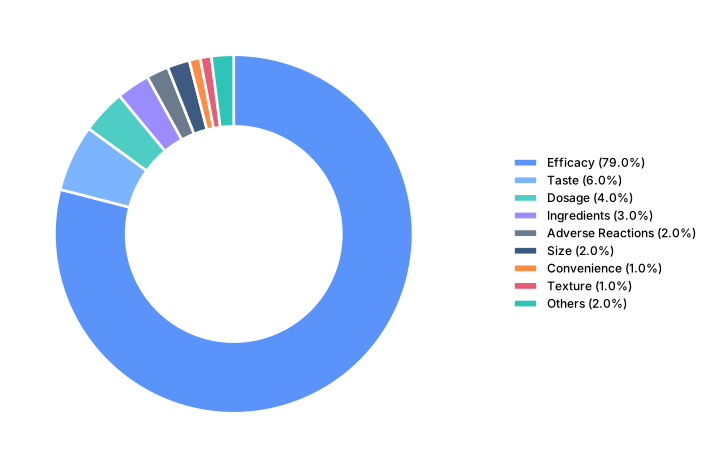
Efficacy accounts for 79% of Brain Nutrition consumer feedback
More from This Report#
## About the Data
This analysis draws on Moojing Market Intelligence data covering China's online Health & Wellness market for the full calendar year 2025 (January-December 2025). Moojing Market Intelligence (魔镜洞察) analyses market dynamics across consumer categories and brands on major Chinese e-commerce platforms. Social media engagement data covers Weibo (微博), Douyin, and Xiaohongshu (小红书). For full methodology and additional functional segment analyses, see the complete Health & Wellness whitepaper.
This content adheres to Moojing's editorial standards .
Frequently Asked Questions
Online sales grew 50.6% year on year in 2025 to CN¥ 11.9 billion, up from CN¥ 7.9 billion, which added CN¥ 4.0 billion in a single year. Social media mentions of the category grew 303.4% over the same period, as the segment moved from niche supplementation into mainstream consumer wellness. Three demand drivers converge: parents investing in children's cognitive development for academic performance, professionals seeking an edge in high-pressure work, and an ageing population concerned about memory loss.
Three distinct scenarios, each with its own demographic. Cognitive enhancement is the largest at 40.1%, and within it the leading sub-themes are improving focus at 30.7%, which serves students preparing for exams, and enhancing learning capacity at 30.5%, which reflects parents buying for children. Performance boosting takes 34.1%, and its leading sub-themes, stress relief at 23.7% and improving sleep at 13.4%, show that in 2025 consumers looked to these products for recovery as well as stimulation. Anti-ageing rounds it out at 25.7%, driven by middle-aged and senior consumers concerned about memory loss.
Omega-3 dominates ingredients at 71.9% of segment sales and CN¥ 8.57 billion (+35.2%), while CoQ10, growth factors and collagen peptides lead the emerging tier at roughly +150% and amino acids, PQQ and herbals contracted, which suggests that consumers are moving from generic brain nutrition toward targeted functional ingredients. Formats are diversifying faster than ingredients. Capsules remain mainstream at 58.5% but lost 1.8 percentage points of share; tablets gained 2.5 points to 11.0% and chewables 2.1 points to 9.2%, reflecting the children and adolescent segment's preference for formats needing no water. The sharpest move was in powder, whose share fell from 7.8% to 0.4%, a fall of 7.4 points, which suggests that consumers prefer pre-portioned formats to anything that has to be measured and mixed.
Lead with the outcome the product delivers. Usage scenario at 23% and target population at 22% together drive 45% of purchase decisions, while core ingredients account for only 8% and functional efficacy 5%, so buyers approach the category through their circumstances and the group they belong to much more than through ingredients. That is notable given how ingredient-complex these products are, and we believe it means simple messages about better focus or deeper sleep will work better than claims about DHA, Omega-3 or CoQ10. Efficacy still accounts for 79% of post-purchase feedback, so the product has to deliver even though efficacy is not what sells it. The market is also open, with sales spread across many brands and both international and domestic brands well represented.


