Pet Tech, AI Toys, and Trail Running Fuel China Growth
 By Jessie Wang
5 min read
By Jessie Wang
5 min read
Executive Summary#
China's highest-growth consumer verticals in 2025 share a common driver: consumers investing in emotional, health, and lifestyle value beyond traditional product utility. Smart pet appliances surged 32.5% YoY to CN¥ 5.89 billion, the health & wellness market exceeded CN¥ 200 billion at +21.4% growth, and trail running shoe sales soared 122.7%. This analysis examines the four cross-industry categories redefining consumer spending priorities and identifies the strategic opportunities within each.
Download Full Report#
Get the complete analysis with additional data, methodology details, and brand-level insights across home appliances, kitchen & bath, and emerging business opportunities.
Download the Full Q4 2025 Business Opportunities Whitepaper →
Smart Pet Appliances: CN¥ 5.89 Billion and Growing#
The smart pet appliance market has emerged as one of 2025's most dynamic growth stories. Online sales reached CN¥ 5.89 billion in the first three quarters, surging 32.5% YoY, driven by pet owners who want to make daily care more efficient and to check on their pets remotely. Smart product penetration has reached 49.3%, approaching parity with non-smart alternatives and signaling an imminent tipping point toward smart-default product expectations.
The market has consolidated around three core categories:
- Air purifiers: CN¥ 1.938 billion, dominant due to dual utility for pet odor management and general household air quality
- Smart feeders and water fountains: CN¥ 403 million, enabling automated feeding schedules and fresh water circulation
- Smart litter boxes: CN¥ 370 million, reducing the most labor-intensive aspect of cat ownership
However, the industry faces critical challenges. 63% of consumers cite lack of product interoperability as their primary frustration, followed by smart technology bottlenecks at 57% and poor pet experience at 51%. These pain points reveal a clear strategic direction: the next phase of market growth depends on ecosystem integration that connects feeders, litter boxes, cameras and health sensors into a unified pet care platform rather than standalone devices. Brands that solve interoperability first will capture disproportionate market share as the category matures.
AI Toys: The Emotional Companionship Blue Ocean#
Growing demand for emotional companionship across different social groups has given rise to a new AI-powered industry. Equipped with large language models, AI toys achieve natural, diverse human-toy interaction through voice recognition, facial recognition, expression analysis, and natural language processing. Over the past two years, children's AI emotional companionship plush toys achieved nearly 4x growth, evolving from a niche segment with single-digit product listings to a multi-million-yuan market with over 200 SKUs.
The fundamental value shift is from "physical companionship" to "smart emotional companionship." AI toys extend beyond children to adult use cases:
- Student companions providing study support and motivation
- Pet interaction simulators for apartment dwellers
- Elderly care companions addressing isolation
- Gen Z (known as Post-95s/Post-00s in China) collectibles combining AI interaction with lifestyle expression
Traditional toys offer passive interaction, fixed content, and leisure entertainment. AI toys deliver interactive engagement, dynamically generated content, personalized learning, emotion recognition and emotional support, which we believe gives consumers a different kind of value. For brands and investors, the "content + interaction" model opens new market space where the product's value grows with use rather than depreciating.
Health and Wellness: A CN¥ 200 Billion Preventive Health Market#
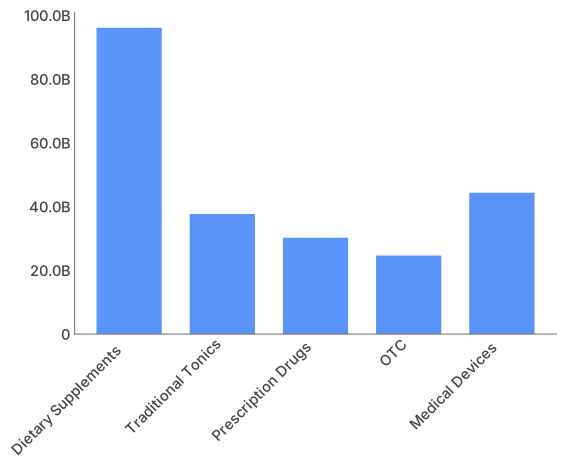
The online health & wellness market has grown continuously since 2013, with the pandemic catalyzing lasting changes in consumption habits. Growth continues at +21.4% in 2025, with total market scale exceeding CN¥ 200 billion. Population aging, rising chronic disease prevalence, and health awareness upgrades drive sustained expansion. The popularization of "preventive health" philosophy is shifting spending from treatment to prevention.
Prescription drugs post strongest growth at +41.5%, while dietary supplements lead market scale
Trail Running Drives the Outdoor Equipment Surge#
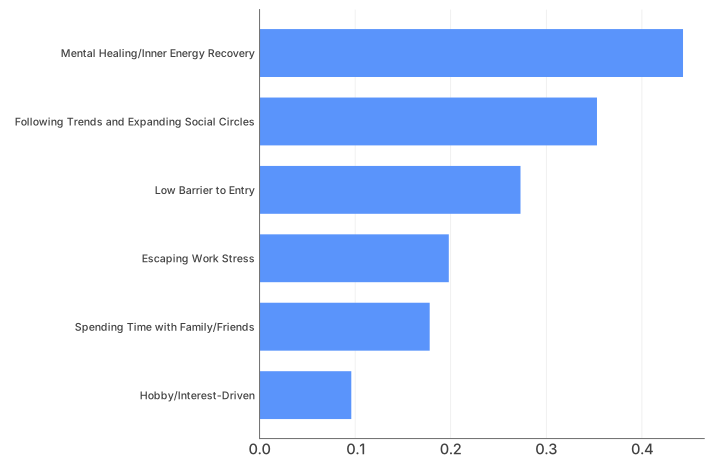
The outdoor activity boom continues reshaping consumer spending priorities, with trail running emerging as the most dynamic segment. Social media volume for trail running rose 60% YoY, hiking rose 262% and cycling grew 52%, while camping volume fell 21%, as consumer interest moved from passive to active outdoor pursuits.
Mental healing drives 44.3% of outdoor participation, ahead of social and convenience factors
Key Takeaways#
- Smart pet appliances reached CN¥ 5.89 billion at +32.5% YoY, with 63% of consumers demanding better product interoperability
- AI emotional companionship plush toys achieved nearly 4x growth in two years, with over 200 SKUs now available
- The health & wellness market exceeded CN¥ 200 billion at +21.4% growth, with sleep management sustaining over +50% YoY
- Trail running shoe sales soared 122.7% YoY, driven by mental healing motivations (44.3% of outdoor participation)
- All four verticals share a common driver: consumers investing in emotional and lifestyle value beyond product utility
More from This Report#
About the Data#
This analysis draws on Moojing Market Intelligence data covering January 2024 through September 2025. Moojing analyses brand and category performance across major Chinese e-commerce platforms. For full methodology and additional insights, see the complete Business Opportunities Outlook whitepaper.
This content adheres to Moojing's editorial standards .
Frequently Asked Questions
Consumers investing in emotional, health and lifestyle value beyond a product's traditional utility. Four categories illustrate it: smart pet appliances at CN¥ 5.89 billion and +32.5%, health and wellness above CN¥ 200 billion at +21.4%, AI emotional-companionship toys at nearly 4x growth in two years, and trail running shoes at +122.7%. None of those is winning on a functional specification that did not exist before. Each is winning because it attaches to something the buyer feels rather than something the product does.
Fragmentation between devices, not demand. Smart product penetration has already reached 49.3%, approaching parity with non-smart alternatives, so the category is near a tipping point toward smart being the default expectation. The constraint is that the products do not work together: 63% of consumers name lack of interoperability as their primary frustration, ahead of smart technology bottlenecks at 57% and poor pet experience at 51%. The three core categories, air purifiers at CN¥ 1.938 billion, smart feeders and water fountains at CN¥ 403 million and smart litter boxes at CN¥ 370 million, each solve one job in isolation. Whoever connects feeders, litter boxes, cameras and health sensors into one platform captures disproportionate share as the category matures.
A shift from physical companionship to smart emotional companionship, which changes what the product is worth over time. Children's AI emotional-companionship plush toys grew nearly 4x in two years, from a niche with single-digit listings to a market with over 200 SKUs. Traditional toys offer passive interaction, fixed content and leisure entertainment; AI toys deliver interactive engagement, dynamically generated content, personalised learning and emotion recognition. The audience also extends well past children, to student companions, pet-interaction simulators for apartment dwellers, elderly care companions addressing isolation, and younger collectors combining AI interaction with lifestyle expression. The commercial consequence is that a content-plus-interaction model appreciates with use where a traditional toy depreciates.
A rotation from passive to active pursuits, motivated by mental health rather than sport. Social volume for trail running rose 60% and hiking 262%, and cycling grew 52%, while camping fell 21%, as consumers move out of the sit-still outdoor activities and into the effortful ones. Trail running shoe sales followed at +122.7%. The stated motivation is the part worth designing around: mental healing drives 44.3% of outdoor participation, ahead of social and convenience factors. A product marketed on technical specification alone is answering a question that fewer than half these buyers are asking.


