China Fashion & Footwear 2022: Premiumization Lifts Prices
 By Jessie Wang
5 min read
By Jessie Wang
5 min read
Newer data: China Online Fashion Sales Hit CN¥ 695B as Shoppers Trade Up
Executive Summary#
Fashion and footwear sales on a leading Chinese marketplace reached CN¥ 492.96 billion in 2022. Although the category came under pressure as consumers cut back, every sub-category raised its average selling price (ASP), which points to a clear shift toward premium products. Outdoor segments grew against the trend, with outdoor clothing up 22.5% and outdoor footwear up 20.5%. Domestic brands accounted for 59.5% of the sales of the 100 largest brands by January 2023.
Download Full Report#
Get the complete analysis covering nine major segments, cross-border channel insights, and brand spotlight comparisons.
Consumer Caution Weighed on Fashion Spending in 2022#
Fashion and footwear came under pressure in 2022, as major industry layoffs in late 2021 and recurring pandemic outbreaks left consumers cautious about spending. The November Singles' Day event, usually the strongest moment of the year for fashion spending, was also subdued. The 618 mid-year festival gave only a brief lift, which we believe drew forward demand that consumers would otherwise have spent later in the year and so did not mark a genuine recovery.
The pressure was heaviest in the mainstream segments, including women's clothing, men's clothing, watches and men's fashion shoes. Outdoor clothing, by contrast, grew 22.5% and outdoor footwear grew 20.5%, which we believe reflects a lasting shift among Chinese consumers toward outdoor recreation.
Premiumization Across Every Sub-Category#
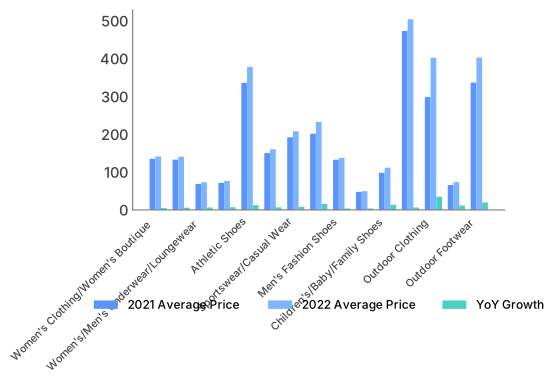
All 15 fashion and footwear sub-categories raised their average selling prices in 2022, even as the number of items sold came under pressure. We believe this reflects the way consumers in this category tighten their belts, buying fewer items but choosing better-made, higher-priced products when they do buy. In nearly every sub-category the pressure on volumes was greater than the pressure on revenue.
Outdoor clothing recorded the largest increase, with its average price rising 34.8% from CN¥ 298.7 to CN¥ 402.8 on the back of upgrades in functional fabrics and technical features. Outdoor footwear followed with a rise of 19.8%, from CN¥ 336.8 to CN¥ 403.3. Among the mainstream categories, bags and leather goods recorded the highest price increase at 15.6%, while the average price of athletic shoes rose 12.5% to CN¥ 378.5. The smallest increases were in accessories, at 3.8%, and men's fashion shoes, at 3.6%, which are categories where shoppers remain sensitive to price and brands find it harder to stand apart.
Outdoor Clothing average price surges 34.8% as premiumization sweeps all Fashion & Footwear sub-categories
Specialist Brands Build on a Focused Proposition#
Scale alone did not protect fashion and footwear brands from the broad downturn of 2022. We believe a clearly defined specialism gives consumers a reason to choose a brand at a time when they are buying fewer items. Several brands have built their positions in this way, and their strategies show the range of approaches that work in the category:
- Romon, as a specialist in men's business wear
- Bananain, through its focus on premium underwear
- New Balance, through its retro-athletic positioning
- FILA, through a premium-sporty image that sets it apart from mass-market sportswear
Domestic Brands Gain a Structural Share Advantage#
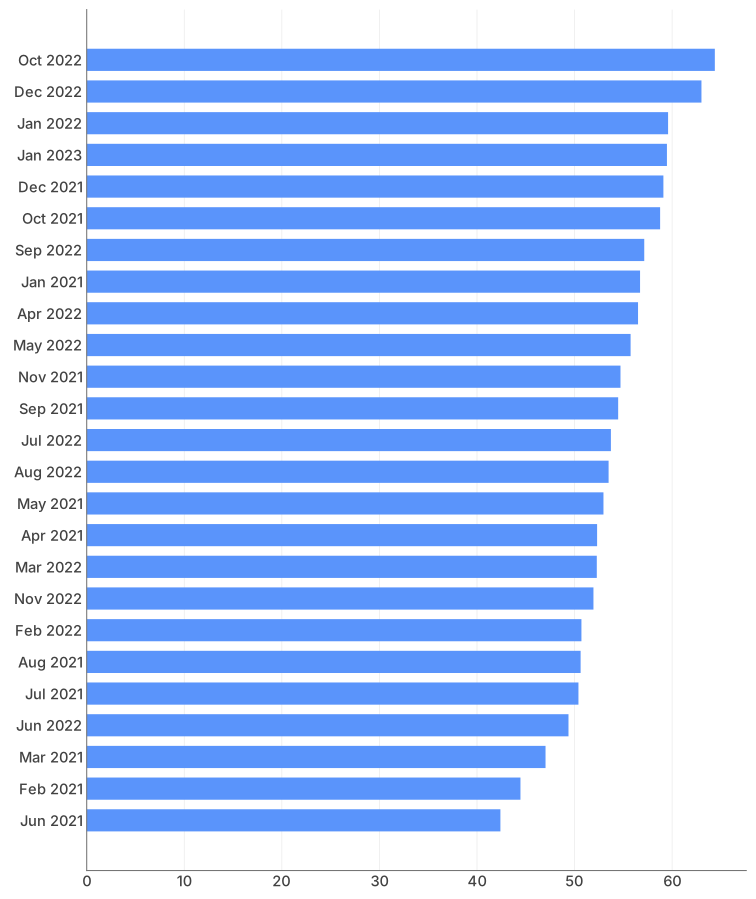
Domestic brands accounted for 59.5% of the sales of the 100 largest brands by January 2023[3]. We believe the shift reflects both the growing competitiveness of domestic brands and the greater exposure of higher-priced imported brands to cuts in consumer spending. In the 2022 Singles' Day event, sales of the 100 largest domestic brands reached CN¥ 18.21 billion.
Two patterns stand out in the monthly figures. Overseas brands do better during the major promotional events, when discounting lowers the price barrier to international labels, and they took 57.6% of the sales of the 100 largest brands during the 618 festival in 2021. Domestic brands hold a larger share outside the promotional peaks, and their share reached 64.4% in October 2022, the highest in the period studied, at the time of greatest economic uncertainty. We believe uncertainty leads consumers toward familiar brands at domestic price points, and that this advantage is widening over time.
Domestic brands account for 59.5% of sales among the 100 largest Fashion & Footwear brands by January 2023
Key Takeaways#
- Fashion and footwear sales on a leading Chinese marketplace reached CN¥ 492.96 billion in 2022, in a year when cautious consumer spending put the category under pressure
- All 15 sub-categories raised their average selling price, and outdoor clothing recorded the largest increase, with its average price rising 34.8%
- Outdoor clothing (+22.5%) and outdoor footwear (+20.5%) grew their revenue against the trend of the wider category
- A focused specialism, such as Romon's in men's business wear or Bananain's in premium underwear, gives consumers a clear reason to buy when they are buying fewer items
- Domestic brands accounted for 59.5% of the sales of the 100 largest brands by January 2023, with their highest shares outside the promotional seasons
## About the Data
This analysis draws on Moojing Market Intelligence (魔镜洞察) data for one leading Chinese marketplace, covering the 2023MAT period (February 2022 to January 2023). For full methodology and additional insights, see the complete Fashion & Footwear whitepaper.
This content adheres to Moojing's editorial standards .


