China Health & Wellness Market Hits CN¥ 75.2B Online
 By Jessie Wang
5 min read
By Jessie Wang
5 min read
Executive Summary#
China's health & wellness industry generated CN¥ 75.2 billion in online sales in the period from March 2023 to February 2024, while social media mentions of the category peaked at 34.5 million posts in January 2024. Engagement, however, fell 35% from its September 2023 peak, which we believe signals a lasting change in how Chinese consumers interact with health content online. This analysis examines the dual-peak seasonal pattern in sales and the widening gap between content creation and engagement, and it sets out what these trends mean for brands competing across six rising wellness segments.
Download Full Report#
Get the complete analysis with additional data, methodology details, and segment-level insights across dietary supplements, probiotics, TCM ingredients, infant nutrition, joint health, and functional foods.
E-Commerce Sales: A Dual-Peak Seasonal Pattern#
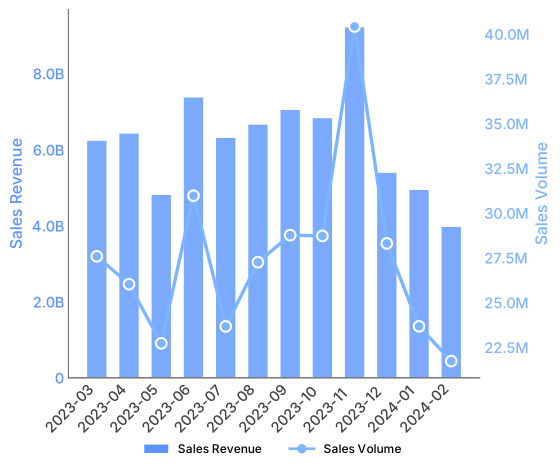
China's online health & wellness market follows a pronounced dual-peak seasonal pattern that shapes brands' planning calendars. November 2023 was the strongest month, with sales revenue reaching CN¥ 9.2 billion and volume passing 40.4 million units. Double 11 shopping festival promotions and consumers stocking up drove the peak.
June 2023 was the secondary peak at CN¥ 7.4 billion in revenue and 31.0 million units, which reflects the growing importance of the 6.18 mid-year shopping festival in the health supplement category. The trough in February 2024 (CN¥ 4.0 billion) coincides with the Chinese New Year holiday, when slower logistics hold back transactions.
Key seasonal dynamics include:
- November sales and volume were both 47% above the monthly average
- September's strong revenue (CN¥ 7.0 billion) on moderate volume suggests that higher-value products take a greater share of wallet outside the major promotions
- May 2023 was a quieter month at CN¥ 4.8 billion, consistent with the post-spring lull before brands prepare for the mid-year festival
For brands, we believe this calls for a commercial strategy in two parts. The major festival periods serve volume-driven customer acquisition, while the off-peak months, when consumers give more weight to product quality than to promotional mechanics, suit building premium positioning.
November sales peaked at CN¥ 9.2 billion as seasonal promotions drove a +47% volume surge
Social Media: Rising Mentions, Falling Engagement#
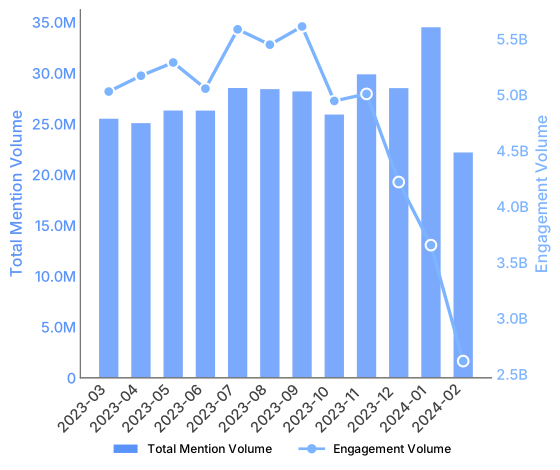
Social media attention to health & wellness topics reached an all-time high of 34.5 million posts in January 2024, while total engagement fell sharply. Content creation grew 35% while engagement fell 35%, from the September 2023 peak of 5.6 billion interactions to 3.7 billion in January 2024. We read this divergence as a change in how content performs on social platforms.
July to September 2023 was the engagement peak, at 5.4 to 5.6 billion interactions a month, which coincided with summer wellness trends and preparation for the new school year. The decline that followed gathered pace through Q4 2023 and into early 2024, with engagement falling to 4.2 billion in December and to 2.6 billion in February 2024.
This pattern points to changes in platform algorithms and to content saturation. As more creators produce health-related content, the reach of each post shrinks, so engagement per post falls even as total output grows. Brands and professionals that are investing more in health content may also be crowding out the organic, personal-story content that has historically earned higher engagement rates.
Mention volume peaked at 34.5 million posts in January 2024, while engagement fell 35% from its peak
Strategic Implications for Health & Wellness Brands#
The data describes a market that runs on two separate cycles, with e-commerce sales following the promotional calendar and social media engagement following the quality of content. We believe brands that plan for both cycles are best placed to reach the widest market.
The fall in engagement calls for a shift towards content quality over quantity. Consumer attention remains strong, as rising mentions show, but earning active engagement requires a different approach, particularly expert-validated information, peer testimonials and interactive formats that invite participation in place of passive consumption.
The six segments covered, namely dietary supplements, probiotics, traditional Chinese medicine (TCM) ingredients, infant nutrition, joint health products and functional foods, each show their own growth pattern. The gap between rising mention volume and falling engagement volume suggests that consumers increasingly look for information-rich content and professional-grade health guidance over material they simply scroll past.
Key Takeaways#
- China's health & wellness e-commerce generated CN¥ 75.2 billion in online sales (March 2023 to February 2024)
- November 2023 peaked at CN¥ 9.2 billion and 40.4 million units, driven by Double 11 promotions
- Social media mentions reached 34.5 million posts in January 2024, an all-time high
- Engagement fell 35% from the September 2023 peak, which we read as a sign of content saturation
- Brands need to move from content quantity to quality, since expert-validated and interactive formats are the ones that win engagement
About the Data#
This analysis draws on Moojing Market Intelligence data covering March 2023 to February 2024. Moojing analyses brand and category performance across major Chinese e-commerce platforms, and the social media data is drawn from major Chinese social platforms. For full methodology and additional insights, see the complete Health & Wellness whitepaper.
This content adheres to Moojing's editorial standards .
Frequently Asked Questions
CN¥ 75.2 billion in online sales across the March 2023 to February 2024 period. The shape of the year matters more than the total. November 2023 was the strongest month at CN¥ 9.2 billion on more than 40.4 million units, roughly 47% above the monthly average on both measures, driven by the November shopping festival and consumer stockpiling. June 2023 was the secondary peak at CN¥ 7.4 billion on 31.0 million units, and February 2024 the trough at CN¥ 4.0 billion, when the Chinese New Year holiday slows logistics and transactions with it.
Run two commercial tracks rather than one. The festival peaks are volume and customer-acquisition moments where promotional mechanics decide the outcome. The off-peak months behave differently: September delivered strong revenue at CN¥ 7.0 billion on only moderate volume, which points to higher-value products taking a greater share of wallet outside promotions. May 2023, by contrast, came in soft at CN¥ 4.8 billion in the post-spring lull. A brand that only shows up for the peaks competes purely on price; one that also builds premium positioning in the quiet months has something else to trade on when the peaks arrive.
Because output is growing faster than attention. Mentions reached an all-time high of 34.5 million posts in January 2024, with content creation up 35%, while engagement fell 35% from the September 2023 peak of 5.6 billion interactions to 3.7 billion in January 2024. Engagement stood at 4.2 billion in December and fell to 2.6 billion by February 2024. As more creators publish health content, individual post reach diminishes and per-post engagement falls even as aggregate output grows. Part of the effect is self-inflicted: brands and professionals increasing their content investment crowd out the organic personal-story content that historically earned the higher engagement rates.
Quality over volume, in a specific sense. Consumer attention to the category is still rising, so the demand side is intact; what has stopped working is producing more of the same. The formats still earning engagement are expert-validated information, peer testimonials and interactive content that invites participation rather than passive scrolling. Across the six segments the analysis covers, namely dietary supplements, probiotics, TCM ingredients, infant nutrition, joint health and functional foods, the same divergence appears, which suggests a platform dynamic rather than a category one. Publishing more posts into that environment reliably lowers the return on each of them.


