Infant Formula PGC-UGC Gap Exposes Trust Deficit
 By Jessie Wang
4 min read
By Jessie Wang
4 min read
Executive Summary#
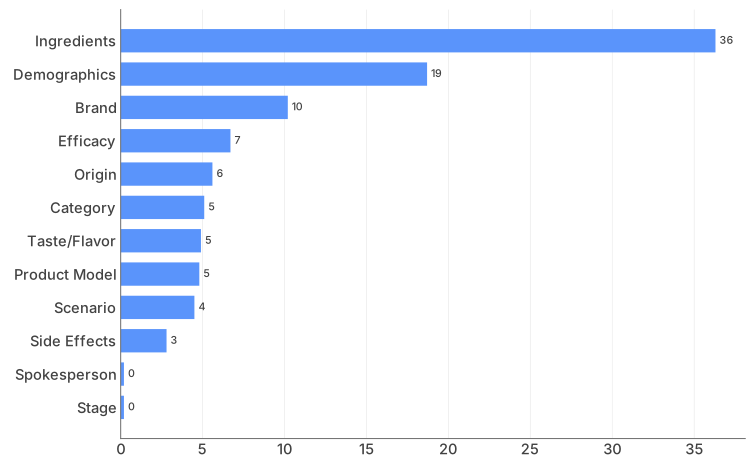
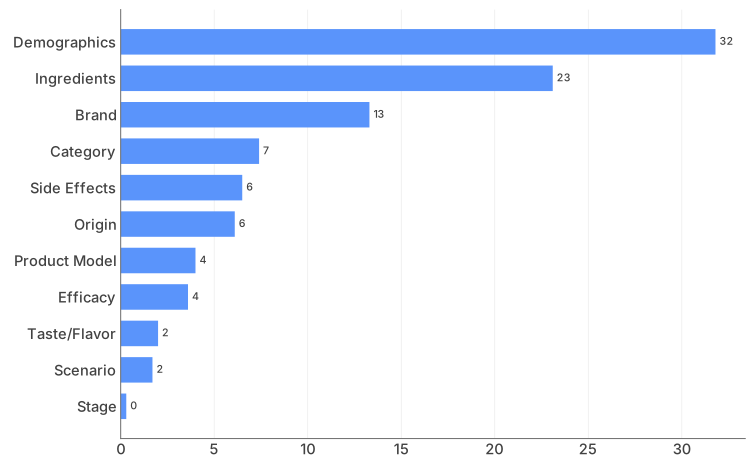
Professional Generated Content (PGC) in China's infant formula market prioritizes ingredients at 36.3% of attention share, while User Generated Content (UGC) focuses on demographics (31.8%) and raises side-effect concerns at 2.3 times the PGC rate (6.5% vs. 2.8%). This divergence exposes a fundamental trust gap between brand messaging and consumer reality -- with "allergy" (8,247 mentions), "constipation" (6,916 mentions), and "diarrhea" (5,044 mentions) ranking prominently in parent discussions. This analysis examines the PGC-UGC disconnect, ingredient awareness tiers, and emerging formulation opportunities.
Download Full Report#
Get the complete analysis with additional data, methodology details, and segment-level insights across dietary supplements, probiotics, TCM ingredients, infant nutrition, joint health, and functional foods.
The PGC-UGC Disconnect: Ingredients vs. Demographics#
The contrast between professional and consumer content reveals a fundamental market tension: brands communicate through ingredient innovation while parents evaluate through lived experience. PGC posts prioritize the "ingredients" dimension at 36.3%, featuring advanced formulation components like OPO, ARA, HMO, and A2 protein. UGC posts place "demographics" at the top at 31.8%, primarily referencing the developmental stage of the parent or baby.
This inverted priority structure reflects how real parents frame formula discussions. Parents ask "what formula is best for my 6-month-old?" rather than "which formula has the highest HMO concentration?" The disconnect creates both a challenge and an opportunity for brands willing to bridge the gap.
PGC content leads with ingredients at 36.3%, reflecting brands' innovation-forward communication strategy
The Side-Effect Trust Gap: 6.5% vs. 2.8%#
The side effects dimension received 6.5% attention in UGC compared to just 2.8% in PGC -- a +132% differential that highlights where brand messaging falls short. Consumer-generated content disproportionately addresses negative product experiences that brands systematically underproduce in their professional content.
UGC prioritizes demographics (31.8%) and raises side-effect concerns at 2.3x the PGC rate
Consumer Ingredient Awareness: A Three-Tier Structure#
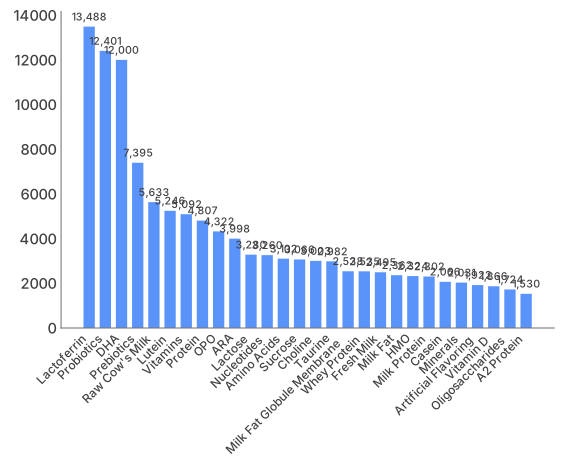
Consumer awareness of infant formula ingredients follows a clear three-tier structure that shapes brand strategy. The top tier -- lactoferrin (13,488 mentions), probiotics (12,401), and DHA (12,000) -- represents foundational ingredient literacy that the majority of Chinese parents have internalized. These ingredients function as baseline expectations rather than differentiators.
The mid-tier -- prebiotics (7,395), raw cow's milk (5,633), lutein (5,246), and vitamins (5,092) -- reflects secondary awareness where consumers recognize the ingredient name and general benefit but may not deeply understand formulation differences. Lutein's strong showing indicates growing parental awareness of eye-health ingredients, likely influenced by rising screen-time concerns.
The emerging tier reveals the frontier of consumer education. HMO garnered only 2,324 UGC mentions despite significant PGC promotion, and A2 protein recorded just 1,530 mentions. The gap between professional emphasis and consumer uptake represents the precise opportunity for brands that can translate complex ingredient science into accessible consumer narratives.
Lactoferrin, probiotics, and DHA each exceed 12,000 UGC mentions, establishing the baseline consumer literacy tier
PGC Strategy: Where Professional Promotion Leads#
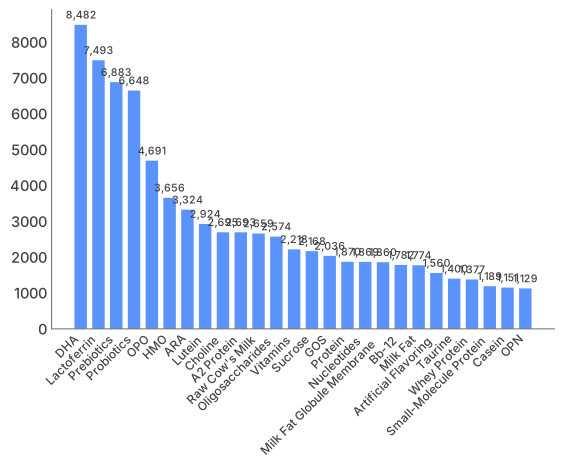
DHA led PGC rankings at 8,482 mentions, maintaining its position as the most-promoted ingredient. HMO's sixth-place ranking at 3,656 PGC mentions represents disproportionate professional attention relative to its consumer awareness (ranked 21st in UGC at 2,324 mentions). We read this as the clearest evidence that brands actively invest in HMO education to build future demand.
DHA leads PGC at 8,482 mentions; HMO ranks 6th at 3,656, gaining disproportionate professional attention
Key Takeaways#
- PGC prioritizes ingredients (36.3%) while UGC prioritizes demographics (31.8%) -- a fundamentally inverted priority structure
- UGC side-effect attention (6.5%) is 2.3 times the PGC rate (2.8%), exposing a trust gap brands must address
- Allergy (8,247 mentions), constipation (6,916), and diarrhea (5,044) dominate parent safety concerns
- Lactoferrin, probiotics, and DHA each exceed 12,000 UGC mentions as baseline consumer expectations
- HMO and A2 protein lag in consumer awareness despite heavy professional promotion -- key education investment targets
More from This Report#
About the Data#
This analysis draws on Moojing Market Intelligence data covering March 2023 to February 2024. Moojing analyses brand and category performance across major Chinese e-commerce platforms. Social media data covers mainstream platforms including Weibo, Douyin, and Xiaohongshu, with extended coverage across Bilibili, Kuaishou, WeChat, and Zhihu. For full methodology and additional insights, see the complete Health & Wellness whitepaper.
This content adheres to Moojing's editorial standards .


