Male Mood-Probiotic Share Surges to 44.5% in China
 By Jotham Lim
5 min read
By Jotham Lim
5 min read
Executive Summary#
Mood-regulating probiotics are breaking out of their female-dominated niche in China: male discussion share surged from 29.4% to 44.5% year-on-year, a +15.1 percentage point increase that represents one of the most significant demographic shifts in any health supplement category. Meanwhile, the children's attention/focus concept achieved an extraordinary +16,000% YoY growth in social media mentions, and category awareness diffused from Tier 1 cities into lower-tier markets. This analysis examines the demographic, geographic, and symptom-driven forces reshaping China's mood-probiotic landscape.
Download Full Report#
Get the complete analysis with additional data, methodology details, and segment-level insights across dietary supplements, probiotics, TCM ingredients, infant nutrition, joint health, and functional foods.
Gender Shift: Men Enter the Mood-Probiotic Conversation#
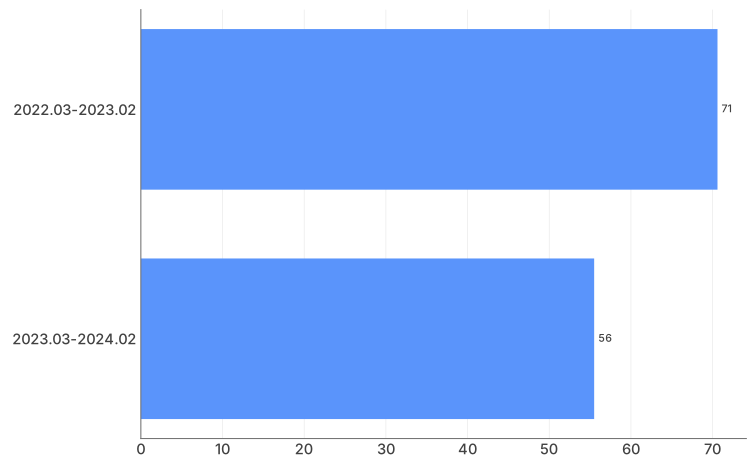
The gender composition of mood-regulating probiotic discussions underwent a structural shift during the March 2023 to February 2024 study period. Male discussion share surged from 29.4% to 44.5%, an increase of 15.1 percentage points, while female share fell from 70.6% to 55.5%.
This surge reflects several converging trends: growing societal acceptance of mental wellness discussions among men, increased media coverage linking gut microbiome health to mood regulation, and the expansion of probiotics from a feminine-coded supplement category into mainstream wellness. Men are not merely consuming mood probiotics but actively discussing them on social media, suggesting genuine engagement rather than passive purchasing.
Brands that historically positioned mood-regulation probiotics primarily for female consumers faced, by February 2024, a rapidly growing male audience with potentially different preferences:
- Performance-oriented positioning (stress management, cognitive clarity) may resonate more strongly with male consumers
- Packaging aesthetics and messaging may require adaptation for gender-inclusive appeal
- First-movers that develop male-targeted mood-probiotic campaigns stand to capture an audience where brand loyalty has not yet consolidated
Male mood-probiotic discussion share surged 15.1 percentage points YoY to 44.5%
Geographic Diffusion: From Tier 1 to Lower-Tier Markets#
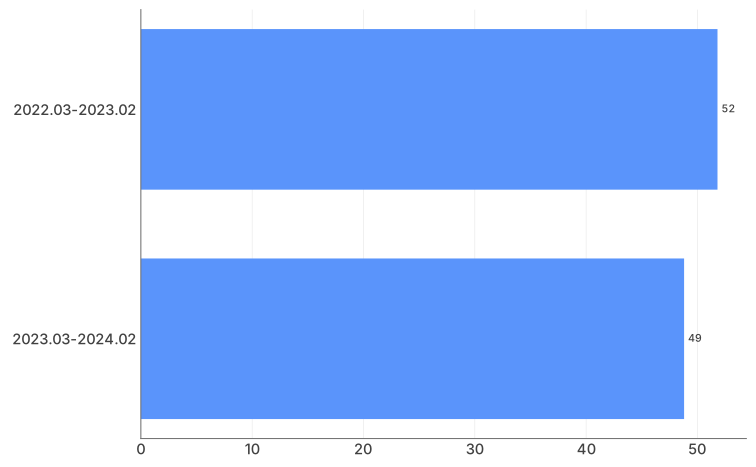
Mood-regulating probiotics are diffusing from their metropolitan base into China's lower-tier urban markets. Tier 1 city share declined from 51.8% to 48.8% (-3.0 percentage points), while Tier 2 through Tier 5 cities all gained share.
Tier 2 cities captured the largest incremental share, growing from 12.4% to 14.6% (+2.2 percentage points). More significant from a growth trajectory perspective, Tier 4 cities expanded from 3.4% to 4.9% (+44% proportional growth) and Tier 5 cities grew from 2.9% to 4.0% (+38% proportional growth). While lower tiers still represent small absolute shares, their growth rates dramatically outpace metropolitan markets.
This pattern mirrors the broader health & wellness category penetration trajectory: products initially concentrated in Tier 1 cities gradually diffuse through content platform algorithms and social commerce recommendations to lower-tier markets where health awareness rises but product awareness lags.
Tier 2-5 cities gained 3.0 percentage points collectively as mood-probiotic awareness diffuses
Symptom Landscape: Sleep, Stress, and a Breakthrough in Children's Focus#
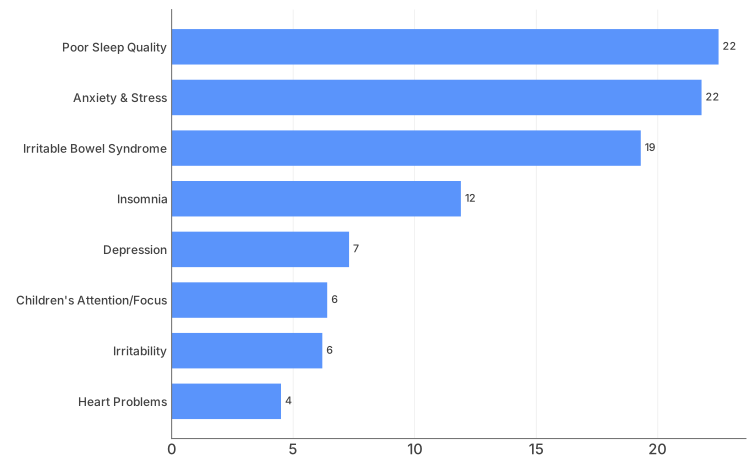
Poor sleep quality (22.5%) and anxiety/stress (21.8%) together represent the dominant symptom discussion at 44.3% combined share, establishing the category's core value proposition around stress-related wellness. Irritable Bowel Syndrome (IBS) ranked third at 19.3%, giving brands a recognised condition around which consumers already discuss the category.
The top four symptoms -- poor sleep, anxiety/stress, IBS, and insomnia (11.9%) -- account for 75.5% of all mentions, demonstrating a concentrated demand structure that brands can address with a focused product portfolio.
Sleep and stress dominate symptom discussions at 44.3% combined, while IBS ranks third at 19.3%
Children's Attention: The +16,000% Breakthrough#
The children's attention concept delivered the most extraordinary metric in the dataset: +16,000% year-on-year growth in social media mentions, representing a category transition from near-zero base to meaningful commercial scale. IBS-related concepts grew mentions by 1,000% YoY, while the focus concept saw +1,500% growth.
The growth hierarchy -- IBS (+1,000%), focus (+1,500%), children's attention (+16,000%) -- traces the conceptual chain from established medical condition through functional benefit to specific demographic application. Parents are extrapolating from adult mood-gut health research to children's cognitive development outcomes.
Focus/Attention Concept Mention Growth Reached +16,000%, Indicating Huge Growth Potential#
Children's attention concepts achieved +16,000% YoY growth in mentions, signaling an explosive emerging sub-segment
Symptom and efficacy attribute: social media mention growth vs. sales revenue growth
| Keyword | Social Media Mention YoY Growth | Sales Revenue YoY Growth | Notes |
|---|---|---|---|
| Irritable Bowel Syndrome | 1000% | - | High social media mention growth |
| Focus | 1500% | - | High social media mention growth |
| Children's Attention | 16000% | - | Extremely high social media mention growth |
Children's attention concepts achieved +16,000% YoY growth in mentions, signaling an explosive emerging sub-segment. The growth hierarchy from IBS to focus to children's attention traces an advancing consumer understanding of the gut-brain axis.
For brands, the children's attention opportunity carries both enormous upside and significant risk. The explosive growth signals unmet demand, but the regulatory environment around cognitive-performance claims for children's products remains stringent in China. Brands investing in clinical evidence supporting focus-related probiotic claims will build sustainable competitive positions.
Key Takeaways#
- Male mood-probiotic discussion share surged from 29.4% to 44.5% -- a +15.1 percentage point YoY increase
- Children's attention/focus concept achieved +16,000% YoY growth in mentions from a near-zero base
- Tier 1 city share declined from 51.8% to 48.8% as the category penetrates lower-tier markets
- Anxiety/stress (21.8%) and poor sleep (22.5%) dominate symptom discussions at 44.3% combined
- Brands that develop male-targeted and children's-focus products stand to capture early-mover advantages
More from This Report#
About the Data#
This analysis draws on Moojing Market Intelligence data covering March 2023 to February 2024. Moojing analyses brand and category performance across major Chinese e-commerce platforms. Social media data covers mainstream platforms including Weibo, Douyin, and Xiaohongshu, with extended coverage across Bilibili, Kuaishou, WeChat, and Zhihu. For full methodology and additional insights, see the complete Health & Wellness whitepaper.
This content adheres to Moojing's editorial standards .


