China's Snack Food Market Q3 2023: CN¥ 45.8B Online Sales Driven by Health Innovation
 By Jotham Lim
6 min read
By Jotham Lim
6 min read
Newer data: China Online Snack Sales Rose 9.5% in H1 2026 as Volume Fell
Executive Summary#
China's online snack market generated CN¥ 45.8 billion in sales across three leading Chinese marketplaces from January to July 2023, while the wider food and beverage industry was still recovering from the pandemic. The number of snack products on sale rose 24.7% YoY in 2022 as brands added health-oriented products, which we believe shows that the market responded to changing consumer priorities with new products. In 2023 seven trends were changing how Chinese consumers find, choose and justify their snack purchases, and in most of them health benefits were replacing pure indulgence as the main source of growth.
Download Full Report#
Get the complete analysis with additional data, methodology details, and brand-level insights.
Snack Market Performance and Product Innovation#
China's online snack market held up while the wider food and beverage industry was weak. The overall food and beverage market peaked at CN¥ 225.0 billion in 2021 and then fell 7.2% to CN¥ 208.7 billion in 2022, as pandemic lockdowns held back consumer spending.[1] Snack categories went against this trend on the strength of a large number of health-oriented product launches.
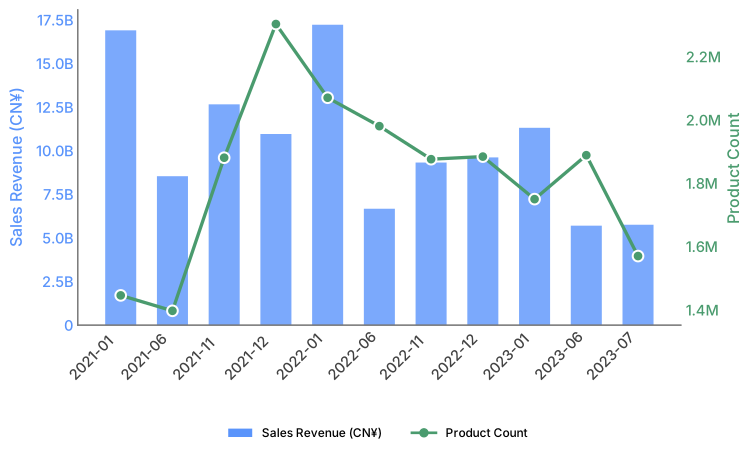
Product count data shows the difference clearly:
- Active snack SKUs rose from approximately 1.4 million in early 2021 to a peak of 2.3 million by December 2021
- The product count grew 24.7% YoY in 2022, even as total sales values softened
- By mid-2023 product counts had settled at 1.6-2.0 million, as weaker SKUs left the market and health-premium products gained share
Snack market sales reached CN¥ 45.8B while product count surged 24.7% YoY in 2022
Five Major Snack Categories#
Five snack categories, Nuts & Roasted Snacks, Bakery Pastries, Biscuits/Puffed Snacks, Candy and Rice Crackers, together account for over 50% of China's online food market sales, and their combined revenue from January 2021 through July 2023 totalled approximately CN¥ 147 billion.
Consumer Priorities: Health, Gifting and New Occasions#
In 2023 China's snack consumers showed three main changes in behaviour, as they compared prices across platforms, put nutritional value first and shared their snack experiences online.
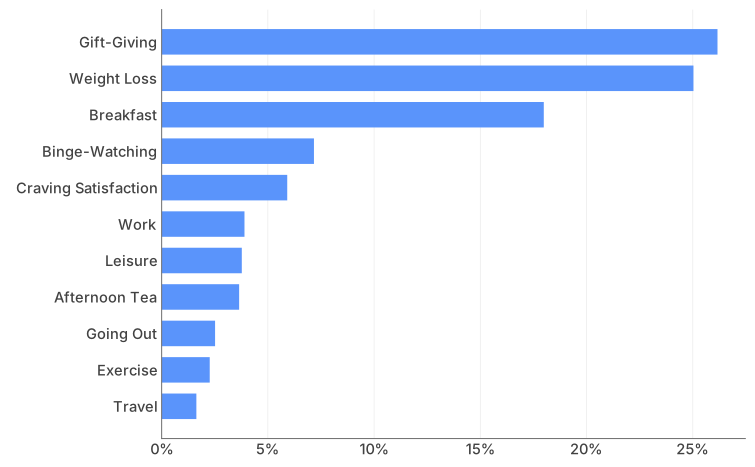
The data on consumption scenarios shows that most snack purchases are made for reasons other than the leisure snacking the word traditionally implies:
Gift-giving (26.2%) and weight loss (25.0%) lead snack consumption scenarios, surpassing leisure occasions
Seven Key Snack Market Trends#
The following seven trends are changing product development, channel strategy and brand positioning across China's snack market:
Trend 1: Dietary Health Focus. By 2023 nutritional value led purchasing decisions. Health-related social media discussion reached 68.8 million monthly mentions in December 2022, up 77.1% on November, and we believe this marks a lasting change in what consumers expect from snacks.
Trend 2: Premium Wellness Ingredients. Traditional Chinese wellness ingredients such as ginseng (人参), donkey-hide gelatin (阿胶) and bird's nest (燕窝) are moving from supplements into snack formats. Sales of ginseng-infused snacks grew 116% YoY on two leading Chinese marketplaces in 2022, with peak monthly sales of CN¥ 8.1 million in August 2022.
Trend 3: Compound Functionality. Young consumers want snacks that deliver several nutritional benefits at once. Products that combine enzymes, probiotics and dietary fibre, or lutein, vitamins and GABA, appeal to busy urban consumers who want to "get more in one bite".
Trend 4: Color-Coded Ingredients ("Five Black"). Sales of "Five Black" (五黑) snacks, made with black sesame, black rice, black oats, black beans and black goji berries, grew 3,359.3% YoY in 2022, from CN¥ 5.5 million to CN¥ 191.2 million for the year. Concern about hair loss among young professionals drove the demand, through the ingredients' associations in traditional Chinese medicine, and growth continued at 54.7% YoY in 2023.
Trend 5: Flavour Diversification. An analysis of consumer reviews from January to July 2023 found that sweet-and-sour accounted for 13.3% of all flavour mentions, the largest single flavour attribute. Sweet profiles together represent around 40.7% of mentions and spicy profiles around 28.1%, while numbing-spicy (Sichuan peppercorn), at 5.1%, is a distinct sub-segment.
Trend 6: Scenario Diversification. In 2023 consumption occasions included gifting, weight management, breakfast, camping, music festivals and home DIY as well as leisure. Each category is linked most closely to its own occasion: bakery to breakfast (46.4%), candy to weight loss (38.3%), nuts to gift-giving (25.9%) and rice crackers to binge-watching and exercise.
Trend 7: DIY Snack Making. Social media discussion of making snacks at home grew 383.6% YoY in 2022 across major Chinese social platforms, with one platform alone hosting more than 60,000 DIY snack posts. Mentions peaked at 13,828 in September 2022. Discussion has stayed at its 2022 level through 2023, which suggests that DIY snack making has become an established consumer hobby and was more than a passing effect of the pandemic.
Key Takeaways#
- China's online snack market generated CN¥ 45.8 billion from January to July 2023 while the wider food and beverage industry was weak, on the strength of health-oriented product innovation
- Nutritional value was the leading factor in snack purchases in 2023, ahead of taste and quality for the first time
- Gift-giving (26.2%) and weight loss (25.0%) are the two largest consumption occasions, and pure leisure snacking accounts for less than a quarter of purchases
- Sales of "Five Black" ingredient snacks grew 3,359.3% YoY in 2022 and demand stayed high through 2023, which shows the commercial appeal of colour-coded wellness ingredients
- The number of snack SKUs peaked at 2.3 million in December 2021 and grew 24.7% YoY in 2022, as brands kept investing in health-oriented products while sales softened
- Discussion of DIY snack making grew 383.6% YoY in 2022, which opens an opportunity for "snack kit" products that can win both earned media and demand for individual ingredients
About the Data#
This analysis draws on Moojing Market Intelligence data covering Q3 2023.
Market data covers three leading Chinese marketplaces, and consumer data is drawn from public social media posts and e-commerce reviews. For full methodology and additional insights, see the complete Snack Food Trends whitepaper.
This content adheres to Moojing's editorial standards .
Frequently Asked Questions
It held up while the industry around it did not. Online snack sales reached CN¥ 45.8 billion across January to July 2023, after the broader food and beverage market had contracted 7.2% from a CN¥ 225.0 billion peak in 2021 to CN¥ 208.7 billion in 2022. Snacks bucked that through aggressive health-oriented product launches rather than through price. Active listings tell the story. They rose from roughly 1.4 million in early 2021 to a 2.3 million peak by December 2021, and the product count then grew 24.7% through 2022 even as sales values softened. By mid-2023 listings had moderated to 1.6-2.0 million as weaker listings exited and health-premium products took share.
Not for snacking, mostly. Gift-giving leads consumption scenarios at 26.2% and weight loss follows at 25.0%, together more than half the market, while pure leisure occasions account for less than a quarter of purchases. Each category has its own scenario signature: bakery indexes on breakfast at 46.4%, candy on weight loss at 38.3%, nuts on gift-giving at 25.9%, and rice crackers on binge-watching and exercise. That means the category a brand competes in largely determines the occasion it must own, and a snack marketed on generic indulgence is speaking to the smallest of the available motivations.
Three, in ascending order of strangeness. Traditional wellness ingredients are migrating from supplement channels into snack formats, and ginseng-infused snacks grew 116% in 2022 with a peak month of CN¥ 8.1 million. Compound functionality is rising, with products stacking enzymes, probiotics and fibre, or lutein, vitamins and GABA, for a get-more-in-one-bite buyer. And the standout is colour-coded ingredients. "Five Black" snacks, made with black sesame, black rice, black oats, black beans and black goji, grew 3,359.3% in 2022, from CN¥ 5.5 million to CN¥ 191.2 million, on hair-loss concerns among young professionals drawn from traditional medicine associations. Growth continued at 54.7% in 2023. Health discussion volume peaked at 68.8 million monthly mentions in December 2022, up 77.1% on the month before.
Sweet-and-sour is the single largest flavour attribute, at 13.3% of mentions in reviews, with sweet profiles collectively around 40.7% and spicy around 28.1%, and numbing Sichuan-peppercorn heat a distinct sub-segment at 5.1%. Beyond flavour, the most interesting format signal is participation. Discussion of DIY snack-making grew 383.6% in 2022, with one platform alone hosting more than 60,000 DIY snack posts and a September 2022 peak of 13,828 monthly mentions, and it held at those levels through 2023. That persistence makes it a consumer hobby rather than a lockdown artefact, and it opens a snack-kit product opportunity that captures earned media and ingredient-level demand at the same time.


