Vans in China: Design Heritage and Consumer Insights
 By Jotham Lim
4 min read
By Jotham Lim
4 min read
Newer data: China's Online Sportswear Sales Hit CN¥ 168.3B in 2025
Executive Summary#
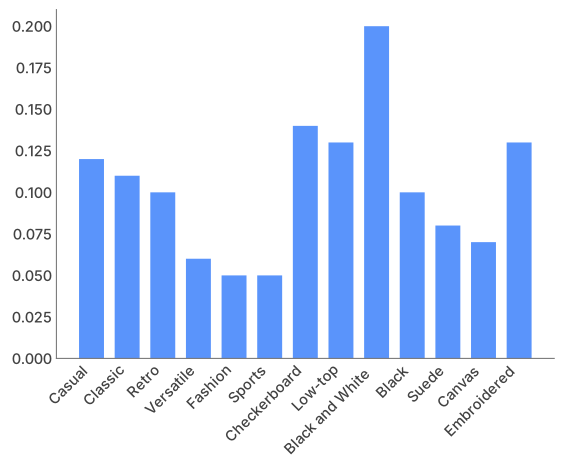
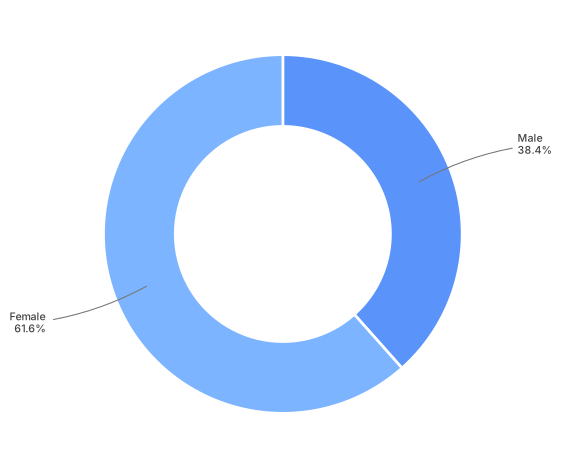
Consumers in China buy Vans mainly for the way it looks, with appearance and design the purchase driver mentioned most often in the brand's reviews at 16%. The black-and-white colourway (20%) and the checkerboard pattern (14%) are the features they name most often when they describe it. Its buyers are about 60% female and concentrated between the ages of 21 and 30. This case study sets out what China's sportswear consumers value in Vans, drawing on Moojing's consumer research for the MAT2023 period, and the lessons we believe it holds for international lifestyle sportswear brands selling to young Chinese consumers.
Download Full Report#
Get the complete analysis with consumer sentiment insights and further analysis across the major sportswear categories.
Download the Full Q2 2023 Sports Footwear & Apparel Whitepaper →
What Drives Vans Consumers to Buy#
Appearance and design have the highest mention rate in Vans consumer reviews, at 16%, which shows that consumers buy the brand primarily as a fashion item. Consumers praise the styling of the shoes and how easily they go with different kinds of outfits. Size and fit is the second most mentioned theme, with most reviewers reporting that the shoes are true to size. Comfort comes third, and here reviewers mention how wearable the shoes are, their thick soles and the fact that they do not rub.
The dimensions consumers mention when they explain a purchase are:
- Appearance and design (16% mention rate): good-looking, versatile, classic colour schemes, fashionable
- Size and fit: true to size, fits well, accurate sizing
- Comfort: comfortable shoes, thick soles, breathable, easy to put on and take off
- Emotional attachment: love the brand, satisfied, repeat purchases, long-time loyalty
- Value for money: cost-effective, good discounts during promotions
Design Heritage Defines How Consumers See Vans#
The classic black-and-white colourway reaches a 20% mention rate and the checkerboard pattern 14%, which makes these two design cues the features consumers most associate with Vans. Consumers describe the brand with keywords such as "casual", "classic", "retro" and "versatile", which together form a consistent picture of effortless everyday style. The low-top silhouette and embroidered details also appear often in their descriptions. We believe this consistency is the main asset of a heritage brand, because consumers name its signature designs in their own words. The lesson for other lifestyle brands is that a small number of recognisable design cues, kept stable over time, is what consumers remember and repeat.
Classic styling, checkerboard pattern, and black-white palette define Vans brand identity
A Young, Mostly Female Consumer Base#
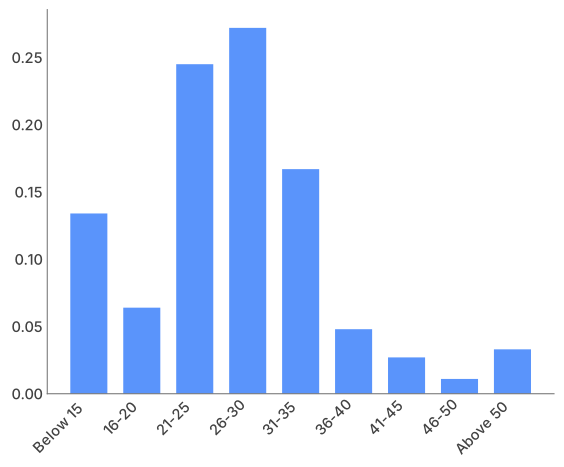
Vans purchasers are about 60% female and concentrate in the 21-30 age range, a group that values retro styling combined with fashion positioning and good perceived quality. The 21-25 age group accounts for 24.5% of Vans consumers and the 26-30 group for 27.2%, which makes these two cohorts the core of the brand's buyer base in China.
Core Vans consumers concentrate in the 21-30 age bracket
Female consumers drive 60% of Vans purchases
Comparative Demographic Data#
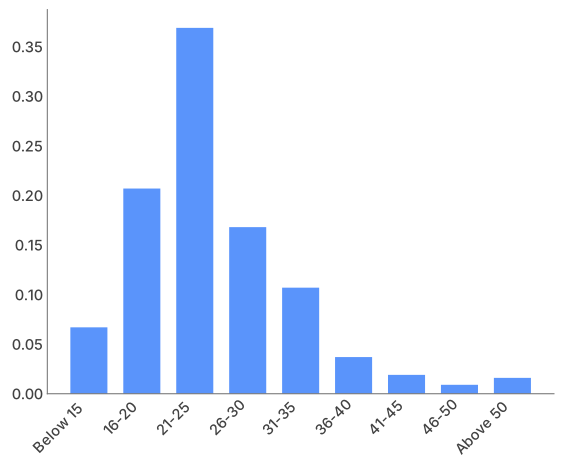
For comparison, the brand analysed in more depth in the full report has a younger buyer base, with its core demographic between 16 and 25 years old and female consumers accounting for over 78.3% of its buyers.
Students and young professionals aged 16-25 form the brand's core consumer base
Key Takeaways#
- Appearance and design are the purchase driver Vans consumers mention most often, at 16%, so the brand is bought mainly as a fashion item
- The black-and-white colourway (20% mention rate) and the checkerboard pattern (14%) are the design cues consumers most associate with the brand
- The core buyer base is about 60% female and concentrated in the 21-30 age range, with the 21-25 and 26-30 groups together accounting for just over half of consumers
More from This Report#
## About the Data
This analysis draws on Moojing Market Intelligence data covering the MAT2023 period (June 2022 to May 2023). Moojing analyses brand and category performance across major Chinese e-commerce platforms. For full methodology and additional insights, see the complete Sports Footwear and Apparel whitepaper.
This content adheres to Moojing's editorial standards .


