Screen Time Anxiety Drives 1.43M Vision Posts by Parents
 By Jessie Wang
4 min read
By Jessie Wang
4 min read
Executive Summary#
Chinese parents posted 1.43 million social media mentions about children's vision in 2024, generating over 50 million engagements across major platforms. The volume reflects a national myopia problem that affects 51.9% of children and adolescents, with rates reaching 81.2% among senior high school students. Electronic device usage triggers 52.3% of eye care supplement purchases, while myopia prevention (35.6%) and visual fatigue relief (30.7%) dominate expressed consumer needs. This analysis examines what social media conversations show about parental priorities, seasonal content patterns and brand positioning strategies in China's fast-growing children's eye care market.
Download Full Report#
Access the complete analysis with market sizing, brand strategies, product format breakdowns, and channel-level data.
Download the Full 2024 Infant & Child Health & Wellness Whitepaper →
Youth Myopia Sets the Stage#
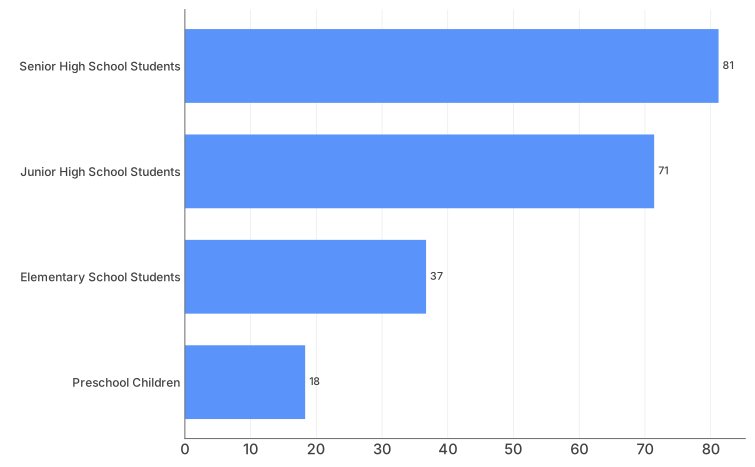
China's high rate of youth myopia is the structural source of demand behind the volume of social media conversation. The overall myopia rate among children and adolescents reached 51.9% in 2022, according to China's National Disease Control and Prevention Administration, with onset occurring at younger ages each year. Prevalence rises sharply as children move through the education system, so the number of concerned parents grows with each school stage.
Senior high school students face 81.2% myopia prevalence, with rates rising sharply from preschool to adolescence
Social Media Conversations Peak With the School Calendar#
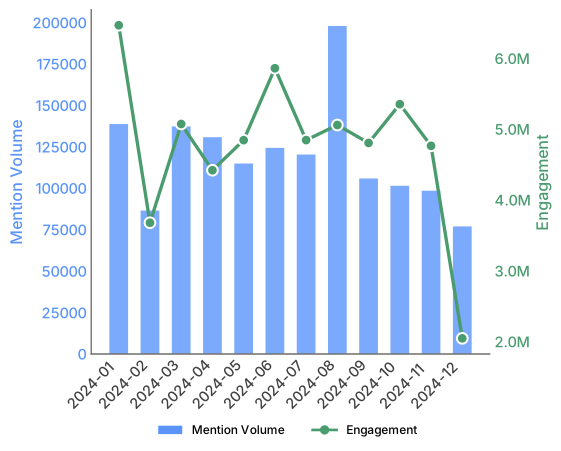
Parents' online discussions about children's vision follow a clear seasonal pattern tied to the academic calendar. August recorded the highest mention volume at 197,928 posts, driven by back-to-school health check-ups and vision screenings. January reached the peak engagement of 6.47 million interactions on lower volume, driven by New Year health resolutions and concerns about screen time over the winter break.
Children's vision discussions peak in August at 198K mentions, driven by back-to-school health awareness
Electronic Devices Drive Purchase Behavior#
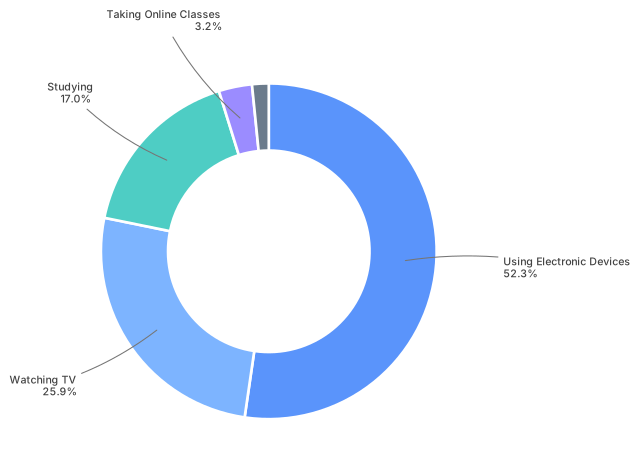
Purchase triggers show that parents' supplement decisions are closely connected to their children's digital lifestyles. Electronic device usage, which covers smartphones, tablets and computers, accounts for 52.3% of purchase occasions, followed by TV watching at 25.9% and studying at 17.0%.
Electronic device use drives 52.3% of eye care supplement purchases, with TV watching and studying as secondary triggers
Prevention Leads the Conversation#
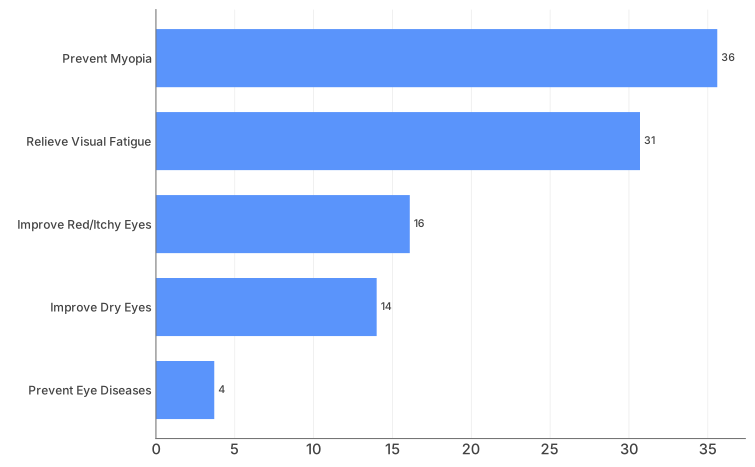
Social media data shows that parents tend to act before problems appear when it comes to their children's eye health. Myopia prevention leads consumer needs at 35.6%, closely followed by visual fatigue relief at 30.7%. Together the two account for two-thirds of all vision-related discussions.
Myopia prevention leads vision-related needs at 35.6%, followed by visual fatigue relief at 30.7%
Key Takeaways#
- Social media mentions of children's vision reached 1.43 million posts with 50+ million engagements in 2024, driven by myopia rates affecting 51.9% of children and adolescents
- Electronic device use triggers 52.3% of eye care supplement purchases, which links the lutein market directly to children's digital lifestyles
- Myopia prevention (35.6%) and visual fatigue relief (30.7%) dominate consumer needs, which shows that parents focus on prevention
- Content engagement peaks in January (46.6 interactions per mention) and August (198K mentions), following New Year health planning and the back-to-school cycle
- Scenario marketing and ingredient education are the most common content strategies among the brands in the conversation
More from This Report#
About the Data#
This analysis draws on Moojing Market Intelligence social listening data, covering consumer discussions across Weibo (微博), Douyin (抖音), and Xiaohongshu (小红书) throughout 2024. Myopia prevalence data references the National Disease Control and Prevention Administration's 2022 report. Moojing analyses brand and category performance across major Chinese e-commerce and social platforms. For full methodology, brand-level insights, and product format analysis, see the complete Infant & Child Health & Wellness whitepaper.
This content adheres to Moojing's editorial standards .


