CN¥ 130B Market Fuels China's Infant Nutrition Surge
 By Quan Wenjun
8 min read
By Quan Wenjun
8 min read
Executive Summary#
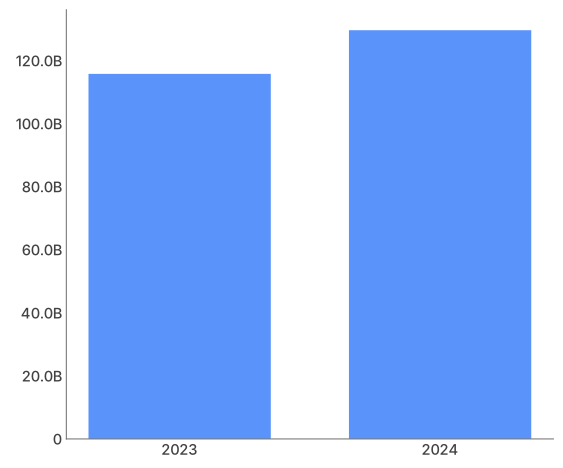
China's online dietary supplement market reached CN¥ 129.7 billion in 2024, growing 12.0% YoY and adding CN¥ 13.9 billion of demand in a single year. Within that market, infant nutrition stood out at CN¥ 14.9 billion (+26.3% YoY), growing more than twice as fast as the market it sits inside, and demand for lutein (+311.1% YoY) and calcium/iron/zinc supplements (+57.0% YoY) drove that growth. Alongside the growth, the way Chinese parents discover and buy children's health products changed in 2024, as education-led content moved to the front of a purchase journey that used to begin with a branded search.
Download Full Report#
Get the complete analysis with additional data, methodology details, and brand-level insights.
Dietary Supplements Reach CN¥ 129.7 Billion as Discovery Moves to Education-Led Channels#
China's online dietary supplement market grew 12.0% YoY to CN¥ 129.7 billion in 2024, up from CN¥ 115.8 billion, which added CN¥ 13.9 billion of annual demand. That growth was not distributed evenly across the routes consumers take into the category, and for infant and child brands the distribution matters more than the headline.
The clearest structural change is in discovery. Health education content, such as livestream sessions and short-form video featuring nutritionists, pediatricians and parenting experts, carried a large share of engagement and purchase intent in supplements in 2024. It carried disproportionately more of it in children's health, where parental trust is the gating factor. Demand that once began with a branded search increasingly begins with an explanation of why an ingredient matters.
The practical consequence is that supplement brands are operating three distinct commercial modes rather than one online channel, and the same product needs different treatment in each:
- Search-led marketplace demand: branded search, review depth and repeat-purchase behaviour do the work. This is where an established brand defends its base and where category leaders are hardest to displace.
- Fulfilment-led retail demand: delivery speed and verified authenticity are decisive. Parents buying supplements for children weight authenticity unusually heavily, which makes this mode a conversion channel rather than a discovery one.
- Content- and livestream-led demand: the sale starts with education rather than existing intent, and the asset that wins is a clear explanation of the ingredient.
Treating these as a single "online channel" is the most common planning error in the category: a listing optimised for search intent rarely converts an audience that did not know the ingredient existed ninety seconds earlier.
China's online dietary supplement market grew 12.0% to CN¥ 129.7 billion in 2024
Infant Nutrition Ranks Third Among Supplement Subcategories at CN¥ 14.9 Billion#
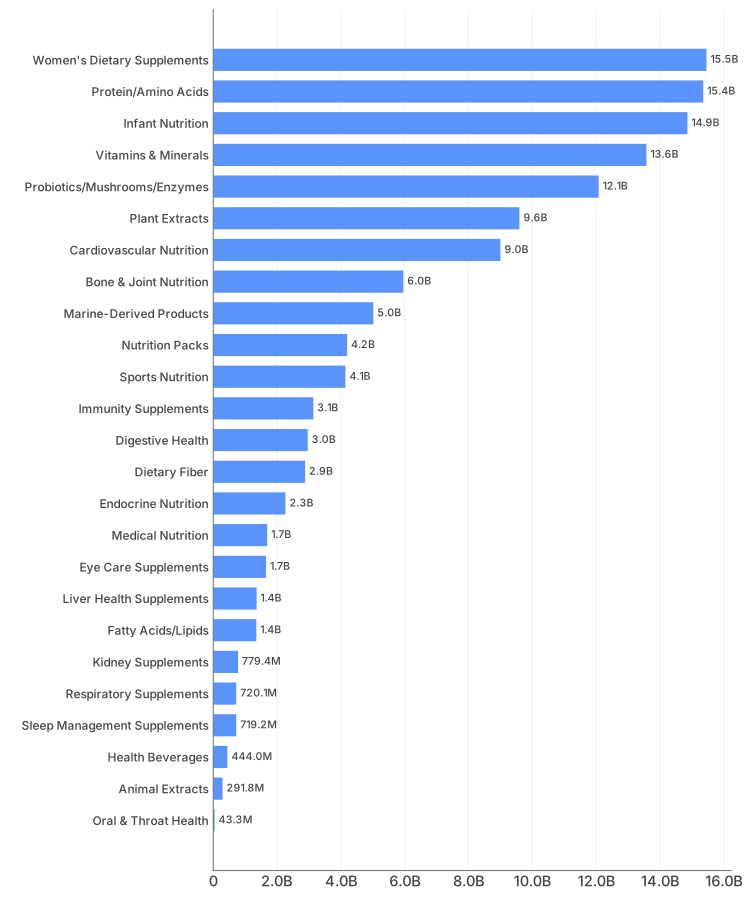
Infant nutrition is the only top-five dietary supplement subcategory where 100% of sales are pediatric-relevant, totaling CN¥ 14.9 billion. This positions it as the single largest pool of pediatric supplement spending, far exceeding the pediatric portions of vitamins and minerals (CN¥ 2.5 billion pediatric) and protein/amino acids (CN¥ 1.5 billion pediatric).
Several categories reveal significant hidden pediatric demand beyond the infant nutrition vertical. Fatty acids/lipids generated CN¥ 717 million in pediatric sales (53.1% of category total), reflecting strong DHA supplement demand for children's brain development. Bone and joint nutrition's pediatric component reached CN¥ 1.1 billion (18.4% of category total), driven by calcium supplements for growing children. Eye care supplements contributed CN¥ 313 million in pediatric sales (18.9% of category total), directly linking to the surging lutein market.
The fragmented pediatric supplement landscape, which spans at least 10 distinct subcategories, presents a clear opportunity for brands that can create integrated children's wellness product lines. The convergence of nutrition, eye care, bone health, and immunity into unified pediatric supplement portfolios represents a significant market development opportunity.
Infant nutrition ranks third at CN¥ 14.9 billion with 100% pediatric relevance, while women's supplements lead overall
Lutein Surges 311% as Parental Priorities Shift from Staples to Specialists#
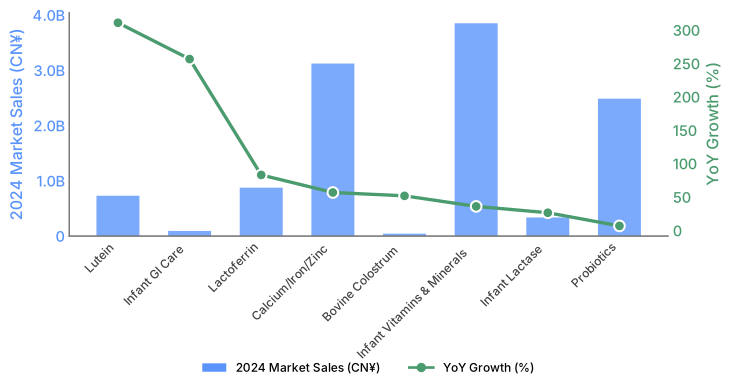
Lutein products grew 311.1% YoY to CN¥ 730 million, the fastest growth of any infant nutrition subcategory. That trajectory reflects a structural shift from commodity nutrition toward condition-specific supplementation, and not every ingredient shared in the segment's expansion. The growth is concentrated in products that answer a named parental concern, rather than in the general-purpose staples that originally built the category.
The divergence reveals two distinct health-awareness trends among Chinese parents. Lutein's rise connects directly to concerns about childhood myopia and screen time, topics that dominate parenting discussion on social media. Meanwhile, infant GI care products grew 256.8% to CN¥ 92.7 million, driven by parents' growing interest in gut health for their children's immunity and development.
Subcategories recording the strongest 2024 growth include:
- Lutein: +311.1% YoY to CN¥ 730 million, driven by concern about childhood myopia
- Infant GI Care: +256.8% YoY to CN¥ 92.7 million, as parents pay more attention to gut health
- Lactoferrin: +83.3% YoY to CN¥ 876 million, on immunity-focused positioning
- Calcium/Iron/Zinc: +57.0% YoY to CN¥ 3.1 billion, the second-largest subcategory by revenue
- Bovine Colostrum: +52.0% YoY to CN¥ 43.7 million, a small but fast-growing niche
- Infant Lactase: +26.7% YoY to CN¥ 337 million, addressing digestive tolerance
Scale and speed sit in different parts of the shelf. Infant vitamins and minerals remains the largest subcategory at CN¥ 3.85 billion and still grew 36.2%, and calcium/iron/zinc follows at CN¥ 3.1 billion (+57.0%). These foundational ingredients contribute most of the segment's absolute growth, even as the specialists post the higher percentages. The portfolio implication is a move away from bundled, general-purpose formats toward single-ingredient propositions tied to a specific parental concern, such as myopia, digestion, immunity or growth, each of which can be explained in a sixty-second video.
Lutein led 2024 infant nutrition growth at +311.1% YoY
Infant Nutrition Is Outgrowing the Wider Supplement Market by More Than Two to One#
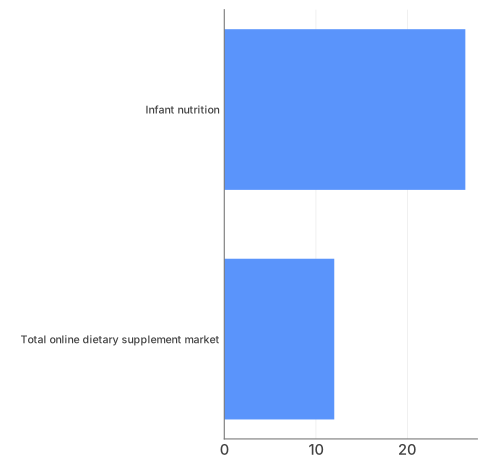
The infant nutrition segment grew 26.3% YoY, from CN¥ 11.8 billion to CN¥ 14.9 billion, adding CN¥ 3.1 billion of new demand, against 12.0% for the online dietary supplement market as a whole. Infant nutrition's share of that market rose from 10.2% to 11.5% in a single year, which is a large move for a vertical of its size over twelve months.
The gap is a demand-side story before it is a channel story. Parents research children's supplements more intensively than they research their own: they read ingredient explanations, seek professional or peer validation, and check authenticity before purchase. That longer journey is precisely what education-led formats serve well, and it is why the pediatric end of the supplement market is re-organising faster than the adult end.
For brands, the consequence is that an infant and child portfolio cannot inherit its go-to-market from the adult business. Adult supplement demand is largely intent-driven and defends well on search; pediatric demand has to be created through explanation and then converted somewhere that satisfies a parent's authenticity requirement. Those are usually two different surfaces, so the content investment and the conversion investment have to be planned together rather than owned by different teams. Lutein's 2024 trajectory shows that a new pediatric ingredient can reach scale within a year, but only where the education layer exists first.
Infant nutrition grew more than twice as fast as the overall supplement market in 2024
Key Takeaways#
- CN¥ 129.7 billion online dietary supplement market grew 12.0% YoY in 2024, adding CN¥ 13.9 billion of demand as discovery shifted toward education-led formats
- Infant nutrition reached CN¥ 14.9 billion (+26.3% YoY), the only top-five supplement subcategory with 100% pediatric relevance, lifting its share of the market from 10.2% to 11.5%
- Lutein grew 311.1% YoY to CN¥ 730 million, driven by childhood myopia concerns, with infant GI care (+256.8%) and lactoferrin (+83.3%) close behind
- Scale and speed sit in different places: infant vitamins and minerals (CN¥ 3.85 billion, +36.2%) and calcium/iron/zinc (CN¥ 3.1 billion, +57.0%) still carry most of the segment's absolute growth
- Parental priorities are shifting from general-purpose formats toward condition-specific products, so pediatric portfolios need to be built ingredient by ingredient rather than as bundles
About the Data#
This analysis draws on Moojing Market Intelligence data for 2024. The figures cover three leading Chinese online marketplaces and are not a measure of every channel in the market. Moojing analyses brand and category performance across major Chinese e-commerce platforms. For full methodology and additional insights, see the complete Infant & Child Health & Wellness whitepaper.
This content adheres to Moojing's editorial standards .


