China Smart Lock Market Surges +73% to CN¥ 13.7B
 By Quan Wenjun
5 min read
By Quan Wenjun
5 min read
Executive Summary#
China's online smart lock market reached CN¥ 13.71 billion in 2025, up +73.0% YoY, with volume climbing +66.0% to 12.23 million units. A new national cybersecurity standard effective April 2025 raised the industry's quality bar while AI-powered biometric features accelerated consumer adoption. The top 10 brands now command 68.0% market share -- up +17.4 percentage points year-on-year -- signaling rapid consolidation around technology leaders as smart locks transition from niche gadgets to household essentials[1].
Download Full Report#
Get the complete analysis with additional data, methodology details, and brand-level insights.
Market Size and Growth Drivers#
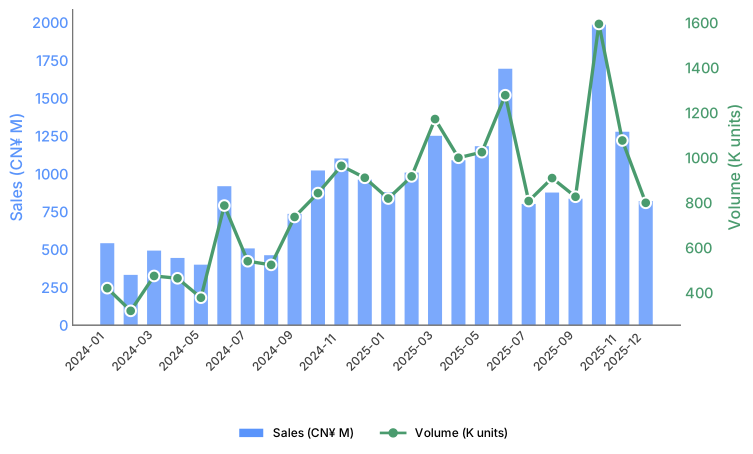
Smart locks posted the strongest category growth in China's entire home appliance sector in 2025. The market nearly doubled in sales value, reaching CN¥ 13.71 billion (+73.0% YoY), while unit volume surged to 12.23 million units (+66.0% YoY). Average Selling Price (ASP) rose +4.2% YoY, confirming that growth is driven by genuine demand upgrading rather than aggressive discounting alone.
Monthly data reveals pronounced promotional peaks during 618 (June) and Double 11 (October-November), with October 2025 recording the single highest month at CN¥ 1.99 billion. However, the market sustained strong baseline sales throughout the year, with every month in 2025 exceeding the prior year's corresponding figure.
Smart lock market doubles in 2025 with 618 and Double 11 driving seasonal peaks
Brand Competition: Technology Leaders Consolidate#
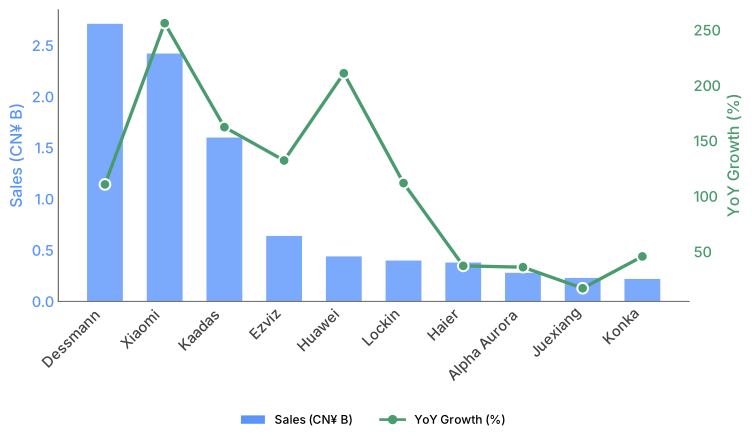
Dessmann (德施曼) leads the market at CN¥ 2.71 billion (+110.6% YoY), but the real competitive story is the breakout growth of technology ecosystem players. Xiaomi (小米) surged +256.1% to CN¥ 2.42 billion, closing the gap with the segment leader by leveraging its smart home ecosystem and aggressive pricing. Kaadas (凯迪仕) grew +162.3% to CN¥ 1.60 billion, while Huawei (华为) posted +210.9% growth to CN¥ 0.44 billion from a smaller base.
Dessmann leads while Xiaomi (+256.1%) and Kaadas (+162.3%) reshape competitive landscape
Price Segmentation: Entry Tier Dominates, Premium Accelerates#
The smart lock market exhibits a distinctive barbell structure, with volume concentrated at entry level and the fastest share gains occurring at the premium end:
- Entry tier (CN¥ 300-1,500): 49.5% market share, +0.75pp YoY -- anchored by renters and first-time buyers seeking affordable keyless convenience. Xiaomi's ecosystem pricing strategy is a major driver of this segment.
- Mid tier (CN¥ 1,500-2,500): 29.7% market share, -3.2pp YoY -- the mainstream family segment is being squeezed as consumers either trade down to capable entry products or trade up to feature-rich premium models.
- Premium tier (CN¥ 2,500+): 20.9% market share, +2.75pp YoY -- AI face recognition, 3D biometric systems, and proactive security features justify premium pricing. Dessmann and Kaadas lead this segment.
This polarization mirrors broader appliance trends across China: functional sufficiency at the bottom, technology differentiation at the top, and margin compression in between. The +4.2% ASP increase reflects premiumization gaining ground despite strong entry-tier volumes.
National Standard and Social Media Impact#
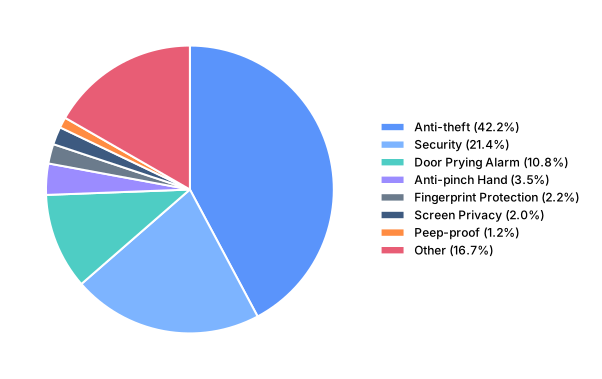
The April 2025 national cybersecurity standard for smart locks -- mandating encryption protocols, authentication standards, and vulnerability testing -- proved to be a catalytic regulatory event[1]. Social media discussion of smart lock security topics spiked to 10,424 mentions in April 2025 alone, as consumers evaluated whether their existing locks met the new benchmarks.
Anti-theft tops social media security discussion at 42.2% of feature mentions
Security Features and Consumer Priorities#
E-commerce review analysis reinforces the social media findings: security concerns lead consumer evaluation at 26.7% of review mentions, followed by durability (18.1%) and convenience (16.6%)[2]. Combined, security and durability account for 44.8% of consumer discussion -- nearly half of all review content focuses on whether the product will reliably protect the home over time.
This reliability-first mindset carries strategic implications for brands:
- Marketing should lead with security and durability proof points, not novelty features
- Warranty length and after-sales service quality are critical purchase decision factors
- AI and biometric features matter most when framed as security upgrades, not tech showcases
- The new national standard provides a credible trust signal that brands should actively reference in product listings and advertising
The gap between social media buzz (security 42.2% of feature discussion) and e-commerce reviews (security 26.7% of review mentions) suggests that consumers research security intensively before purchase but evaluate a broader range of attributes -- including convenience and build quality -- after living with the product.
Key Takeaways#
- Smart locks reached CN¥ 13.71 billion (+73.0% YoY) -- the fastest-growing home appliance category in China's 2025 e-commerce market
- The top 10 brands captured 68.0% market share (+17.4pp YoY), with Xiaomi (+256.1%), Huawei (+210.9%), and Kaadas (+162.3%) driving consolidation through ecosystem integration and AI features
- Premium tier (CN¥ 2,500+) grew +2.75pp to 20.9% share, while the mid tier lost -3.2pp, creating a barbell market structure
- The April 2025 national cybersecurity standard triggered a peak in consumer awareness and set a quality floor that benefits established brands
- Security and durability account for 44.8% of consumer review discussion -- reliability is the primary purchase driver[3]
More from This Report#
About the Data#
This analysis draws on Moojing Market Intelligence data covering January-December 2025. Moojing Market Intelligence (魔镜洞察) analyses brand and category performance across major Chinese e-commerce platforms. Social media analysis covers major platforms including Weibo, Xiaohongshu (小红书), Douyin (抖音), and Bilibili. For full methodology and additional category insights, see the complete 2025 Home Appliances whitepaper. Questions or corrections: [email protected].
[1] Ministry of Public Security, People's Republic of China. "Smart Door Lock Cybersecurity Technical Standard (GB/T XXXXX-2025)." Effective April 2025.
[2] Moojing Market Intelligence. Proprietary e-commerce transaction data covering major Chinese online platforms and an extensive brand set.
[3] China Intelligent Lock Industry Association. "2025 Smart Lock Market Development Report." Published October 2025.
This content adheres to Moojing's editorial standards .
Frequently Asked Questions
The market reached CN¥ 13.71 billion in 2025, up +73.0% year on year, with volume up +66.0% to 12.23 million units — the strongest growth of any home appliance category that year. Average selling prices rose +4.2% alongside it, and that matters: a market nearly doubling on discounting alone would show prices moving the other way. Promotional peaks are pronounced, with October 2025 the single highest month at CN¥ 1.99 billion, but every month of the year exceeded its prior-year equivalent, so the baseline moved as well as the peaks.
It functioned as a quality floor and a marketing event at once. A national cybersecurity standard for smart locks took effect in April 2025, mandating encryption protocols, authentication standards and vulnerability testing. Consumer reaction was immediate and measurable — social discussion of smart lock security spiked to 10,424 mentions in April 2025 as owners assessed whether their existing locks met the new benchmark. The practical consequence for a brand is that compliance is now a trust signal worth stating explicitly in listings and advertising, rather than an engineering detail assumed to be understood.
Into a barbell. The entry tier at CN¥ 300-1,500 holds 49.5% of sales and gained +0.75 percentage points, anchored by renters and first-time buyers who want keyless convenience cheaply. The premium tier above CN¥ 2,500 holds 20.9% and gained +2.75 points, justified by AI face recognition, 3D biometrics and proactive security features. The middle, CN¥ 1,500-2,500, is where ground is being lost — 29.7% and -3.2 points — as buyers either trade down to a capable entry product or up to a differentiated one. That is the same shape appearing across Chinese appliance categories: functional sufficiency at the bottom, technology differentiation at the top, compression between.
Reliability before novelty. In e-commerce reviews security leads at 26.7% of mentions, followed by durability at 18.1% and convenience at 16.6% — security and durability together account for 44.8%, close to half of all review content. Social discussion skews further that way, with anti-theft at 42.2% of feature mentions. The gap between the two is informative: buyers research security intensively before purchase, then assess a wider set of attributes once living with the product. So marketing should lead with security and durability proof points and warranty terms, and frame AI and biometric features as security upgrades rather than technology showcases.


