Amazon Botanicals in China: Zero Penetration, Maximum Opportunity
 By Jotham Lim
5 min read
By Jotham Lim
5 min read
Executive Summary#
Every major skincare brand in China is fighting over the same six ingredients. Centella Asiatica appears in 30%+ of soothing products. Niacinamide owns brightening. Hyaluronic Acid dominates moisturising. Meanwhile, Amazon rainforest botanicals -- Acai, Cupuacu, Buriti Oil, Andiroba Oil, Ucuuba Butter, Maracuja -- have 0% penetration in the Chinese skincare market. For brands with access to exotic botanical supply chains, this represents a differentiation moat that domestic competitors cannot replicate. But ingredient novelty alone is not enough -- the data shows that packaging sustainability, often bundled with botanical brands' eco-positioning, only converts Chinese consumers through transactional incentives, never environmental idealism.
Download Full Report#
Get the complete analysis with additional data, methodology details, and brand-level insights.
Download the Full China Clean Beauty & Sustainability Report -->
The CN¥ 6.8 Billion Market They All Want#
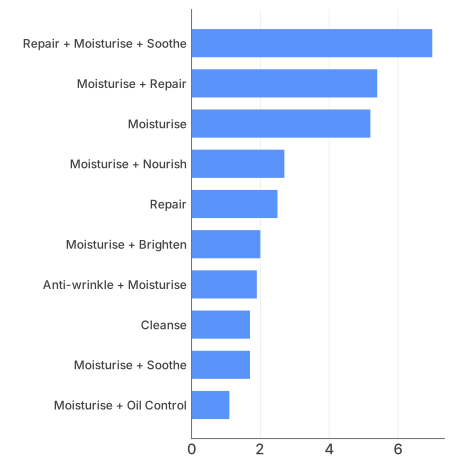
China's skincare efficacy landscape reveals where the money actually flows. Tmall filing data shows that "Repair + Moisturise + Soothe" commands the #1 position at CN¥ 6.8 billion and 7.0% market share. This is the cluster that aligns most directly with clean beauty's sensitive-skin audience -- consumers who respond to gentle, restorative formulations rather than aggressive anti-aging or brightening claims.
Repair + Moisturise + Soothe leads at CN¥ 6.8B and 7% share
The Botanical Gap: Six Ingredients at Zero#
Here is the central finding. China's mainstream skincare ingredient landscape is heavily saturated. Centella Asiatica appears in over 30% of soothing products. Niacinamide is the brightening default. Hyaluronic Acid is everywhere. Every domestic and international brand competes on the same ingredient shortlist.
In contrast, exotic botanical ingredients from the Amazon rainforest have zero penetration in Chinese skincare:
- Acai -- antioxidant superfruit
- Cupuacu Butter -- superior moisturiser to shea butter
- Buriti Oil -- richest natural source of beta-carotene
- Andiroba Oil -- anti-inflammatory
- Ucuuba Butter -- emollient
- Maracuja (passion fruit) -- nourishing oil
This is not a marginal gap. It is a completely untapped category. The combination of "exotic origin story" and "sustainability narrative" creates a positioning formula that domestic competitors fighting over the same six to eight ingredients cannot replicate. Brands with unique botanical supply chains hold a differentiation moat -- and first-mover advantage remains wide open.
Why This Matters for the Repair-and-Soothe Market#
The strategic fit is precise. The CN¥ 6.8 billion repair-and-soothe cluster is dominated by sensitive-skin consumers who want gentle, restorative ingredients. Amazon botanicals -- particularly Cupuacu Butter (deep moisturising), Andiroba Oil (anti-inflammatory), and Buriti Oil (skin repair via beta-carotene) -- map directly onto these efficacy claims.
A brand entering this space does not need to create demand. The demand already exists at CN¥ 6.8 billion. The play is to serve it with ingredients that competitors cannot source.
The Packaging Reality: Transactional, Not Ideological#
Brands with exotic botanical positioning often lead with sustainability narratives. In China, this approach needs careful calibration. Xiaohongshu data across five packaging sub-topics reveals that sustainable packaging adoption is driven by transactional and aesthetic motivations -- not environmental consciousness.
The numbers tell a clear story:
- Solid cleansers and handmade soap: 341 posts -- but driven by artisan hobby culture, not eco-awareness
- Empty bottle recycling: 214 posts with highest engagement-per-post -- because programmes like MAC's "Back to MAC" (6 empties = 1 free product) offer tangible transactional value
- Recyclable and eco-packaging: 151 posts
- Minimalist packaging: 86 posts
- Refill and replacement systems: 79 posts -- convert only at 25%+ discount below full-size
The implication for botanical brands is direct: lead with ingredient efficacy and exotic provenance. Layer the sustainability story on top. Eco-packaging should be positioned as a bonus, never the headline. And if offering refill systems, price them at a minimum 25% discount to full-size -- the eco-story alone will not convert.
Strategic Implications for Market Entry#
Three evidence-based principles emerge from the data:
1. Lead with "safe for you," not "good for the planet." Chinese consumers equate clean beauty with ingredient safety. Amazon botanicals should be positioned as rare, gentle, clinically effective ingredients for sensitive skin -- with the rainforest sustainability story as a secondary narrative layer.
2. Use exotic supply chains as a competitive moat. While competitors fight over Centella Asiatica, Niacinamide, and Hyaluronic Acid, unique botanical ingredients from supply chains competitors cannot access offer differentiation that domestic brands cannot replicate. This is a structural advantage, not a marketing trick.
3. Sequence packaging investments by proven ROI. If implementing sustainability initiatives alongside a botanical brand launch, start with empty bottle recycling programmes (proven model, immediate ROI), move to refill systems second (requires 25%+ price gap), and consider solid product lines third (position as artisanal, not eco).
Key Takeaways#
- Amazon botanicals (Acai, Cupuacu, Buriti Oil, Andiroba Oil, Ucuuba Butter, Maracuja) have 0% penetration in Chinese skincare
- Centella Asiatica sits at 30%+ presence in soothing products -- the market is saturated
- The CN¥ 6.8 billion repair-and-soothe cluster is the natural entry point for botanical brands
- Packaging is not in the top 10 purchase drivers across 18M+ Tmall reviews
- Empty bottle recycling drives highest engagement -- but only because consumers get free products
- Refill packs require a 25%+ price discount to convert -- eco-messaging alone fails
- Lead with ingredient efficacy and exotic provenance; layer sustainability on top
More from This Report#
About the Data#
This analysis draws on Moojing Market Intelligence data covering April 2025 to February 2026. Social data is sourced from Xiaohongshu (527 posts monitored over 11 months). E-commerce data covers Tmall skincare category filings and 18M+ consumer reviews. For full methodology and additional insights, see the complete China Clean Beauty & Sustainability report.
This content adheres to Moojing's editorial standards .


