Sleep Is The Clearest Opening In China's Snackable Wellness Market
 By Quan Wenjun
6 min read
By Quan Wenjun
6 min read
Executive Summary#
Get the Full Report: Download the complete analysis for detailed data, methodology, and pages of insights.
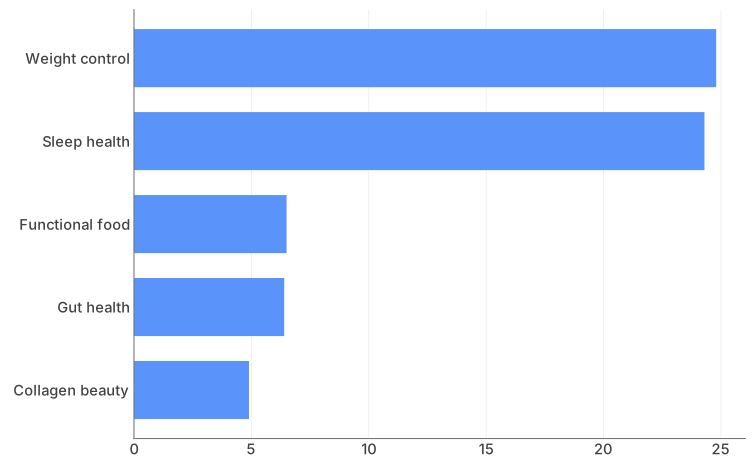
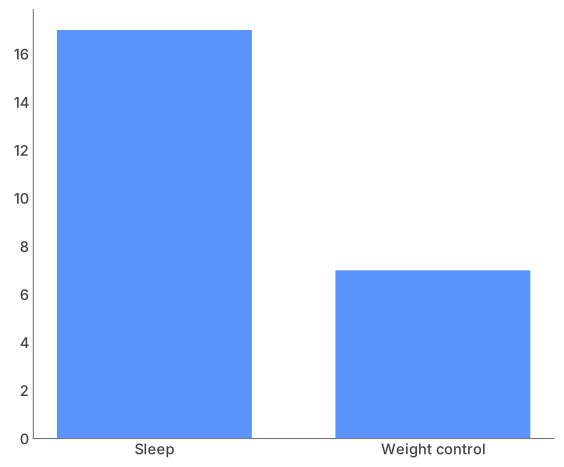
Sleep is the clearest 2026 opening in China's snackable wellness market because it combines scale with momentum. Moojing's social dataset shows 24.3M sleep-health posts in 2025, with the topic increasing 17% over the year.[1]
The appeal is straightforward: consumers already understand the problem. A sleep product does not need to explain why sleep matters. It needs to make bedtime use credible, simple and easy to repeat.
Sleep Has Both Volume And Momentum#
Many health topics are familiar. Gut health and collagen already have strong consumer vocabulary. Weight control has a very large conversation pool. Sleep is different because it brings together a large base, clear daily pain point and strong growth signal.
Sleep And Weight Control Are The Loudest Online Conversations
Sleep Is The Fastest-Growing Social Topic In The Dataset
Why Sleep Works For Snackable Wellness#
Sleep is a daily-life issue, not an abstract technical claim. The consumer knows the moment: evening, bedtime, travel, post-work stress, irregular schedules. That gives brands a natural use occasion to build around.
It also fits snackable formats. A bedtime gummy, drink, sachet or jelly stick is easier to understand than a technical supplement. The format can signal relaxation and routine before the ingredient story begins.
This does not mean brands should overpromise. Sleep is sensitive because consumers can quickly judge whether the product helped. Strong products should explain timing, dosage, routine and realistic expectations in plain language.
Weight Control Is Large But Needs Careful Framing#
Weight control remains a major demand area, with 24.8M posts in 2025. The opportunity is large, but the message has to be careful. Consumers are looking for support, not unrealistic promises.
The better framing is routine support: satiety, portion structure, lower-effort meal planning, fibre, protein and daily discipline. That language is easier to trust than dramatic outcome claims.
Mature Topics Still Matter#
Collagen and gut health should not be ignored just because the social-momentum chart favors sleep. They are familiar claim areas. Consumers already know the nouns, which lowers education cost and supports repeat purchase.
For mature topics, the job changes. Instead of broad education, brands need clearer differentiation: better taste, more convenient packaging, dosage clarity, bundle design and credible sourcing. A mature conversation can still be a strong business if the product experience is good.
How Brands Should Approach Sleep In 2026#
A sleep-led product should answer five questions quickly:
- When do I take it?
- What does it contain?
- How many days should I try it?
- What should I realistically expect?
- Why is this format easy enough to repeat?
If the product cannot answer those questions, the brand will rely too heavily on the headline claim. If it can answer them, sleep becomes one of the most accessible entries into snackable wellness.
The Product Experience Has To Match The Sensitivity Of The Need#
Sleep is emotionally important because consumers can feel the result quickly. That makes the opportunity attractive, but it also raises the standard for credibility. A brand should avoid vague relaxation language and instead explain the routine: when to take it, how it fits with dinner or bedtime, and what a reasonable first week of use looks like.
The strongest sleep products will likely feel calm, simple and low effort. Packaging, flavor and copy should reduce mental load. The consumer should not need to decode ingredient science at 11 p.m.; the product should make the next step obvious.
Why This Opens A Wider Wellness Door#
Sleep can also introduce consumers to the wider health-snack category. A consumer who starts with a bedtime gummy may later consider magnesium, protein, gut support or beauty nutrition if the first product feels useful and easy. That gives sleep products a role beyond their own lane: they can be an entry point into a broader routine.
For that reason, brands should design sleep products with extension in mind. The first product should be simple, but the routine can later expand into adjacent needs if trust is earned.
Key Takeaways#
- Sleep-health conversation reached 24.3M posts in 2025.
- Sleep increased 17%, ahead of weight control's 7% increase.
- The best sleep products will sell a clear bedtime routine, not just an ingredient.
- Mature topics such as gut health and collagen still matter, but they need retention-focused product design.
About the Data#
This article is based on Moojing Market Intelligence extracts from mainstream e-commerce, review and social datasets covering China healthy snacks, modern supplements and traditional tonic foods. The sales window covers December 2023 to March 2026 where available; full-year comparisons use 2024 and 2025. Public narrative aggregates source platforms into compliant language and does not present platform-level or brand-ranking claims.[1]
China's wider policy context also supports greater public attention to nutrition and healthy lifestyles. The State Council reported in March 2025 that the Food and Nutrition Development Guideline (2025-2030) sets targets to improve dietary habits and food supply quality by 2030.[2]
Published: 2026-05-31
[1] Moojing Market Intelligence, China's Healthy Snacks & Edibles Report 2026, based on mainstream e-commerce, review and social datasets, 2024-2026.
[2] State Council of the People's Republic of China, "Guideline aims to promote balanced nutrition, healthier lifestyles," 2025, https://english.www.gov.cn/policies/policywatch/202503/19/content_WS67da21e3c6d0868f4e8f0f6b.html
Download the Full Report#
Get the complete analysis with detailed charts, methodology and additional category-level implications.
For custom analysis, contact Moojing Market Intelligence at info@moojing-global.com or visit https://moojing-global.com. Follow us at https://linkedin.com/company/68588397/.
This content adheres to Moojing's editorial standards .
Frequently Asked Questions
Because it combines scale with momentum, which few health topics do at once. Sleep-health conversation reached 24.3M posts in 2025 and the topic grew 17% over the year, ahead of weight control's 7%. The commercial advantage is that consumers already understand the problem — a sleep product does not have to explain why sleep matters. It only has to make bedtime use credible, simple and easy to repeat. That removes the education cost that usually sits between a functional ingredient and a repeat purchase.
Because the use occasion is already fixed in the consumer's day. Evening, bedtime, travel, post-work stress and irregular schedules are moments people can name, so there is a natural routine to build around rather than an abstract claim to argue for. A bedtime gummy, drink, sachet or jelly stick is also easier to understand than a technical supplement — the format signals relaxation and routine before the ingredient story begins. The strongest products in this space feel calm, simple and low effort; nobody wants to decode ingredient science at 11 p.m.
That the consumer can judge it quickly. Sleep is emotionally important precisely because the result is felt within days, which makes the opportunity attractive and raises the credibility bar at the same time. A sleep product should answer five questions fast: when to take it, what it contains, how many days to try it, what to realistically expect, and why the format is easy enough to repeat. Vague relaxation language fails on all five. A brand that overpromises gets judged against the promise, and this category punishes that faster than most.
They still matter, but the job changes. Weight control is the larger conversation at 24.8M posts in 2025, though it grew more slowly at 7% and needs careful framing — consumers are looking for support rather than dramatic outcome claims, so satiety, portion structure, fibre, protein and daily discipline is the language that earns trust. Collagen and gut health are mature in a different way: consumers already know the nouns, which lowers education cost and supports repeat purchase. For those topics differentiation moves to taste, packaging convenience, dosage clarity, bundle design and credible sourcing rather than to broad education.


