China's Healthy Snacks Market Has Gone Mainstream
 By Jessie Wang
5 min read
By Jessie Wang
5 min read
Executive Summary#
Get the Full Report: Download the complete analysis for detailed data, methodology, and pages of insights.
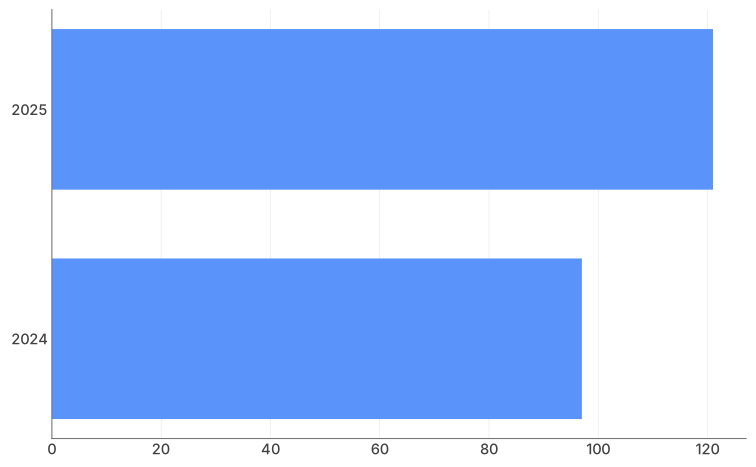
China's healthy snacks and edibles market has moved out of the specialist supplement aisle and into mainstream consumer life. Moojing Market Intelligence estimates researched 2025 sales at CN¥159.8B, up from CN¥125.5B in 2024 across mainstream e-commerce sources.[1]
The category is growing because it now serves more than one job. Modern supplements support daily routines; traditional tonic foods support family care and gifting; newer snack-like formats make health claims easier to repeat.
Sales Scale Has Changed The Category Conversation#
A market worth CN¥159.8B is no longer a narrow health-store niche. It sits in the same planning conversation as packaged beverages, beauty nutrition and personal care: large, repeatable, format-sensitive and shaped by everyday consumer habits.
The split is important. Modern supplements reached CN¥121.0B in 2025, while traditional tonic foods reached CN¥38.8B. That means roughly three-quarters of value sits in daily-use modern supplements, but a meaningful share still comes from culturally familiar tonic products bought for care, gifting and seasonal use.
Healthy Snacks And Supplements Reached CN¥159.8B In 2025
The Growth Was Broad Through 2025#
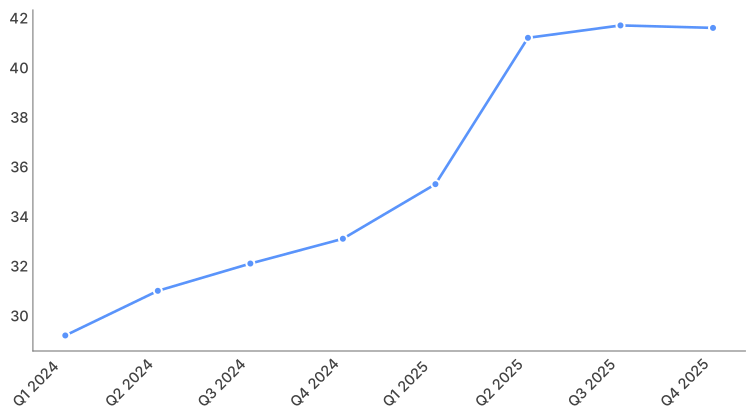
The category did not depend on one promotional moment. Every quarter in 2025 was larger than the comparable period in 2024. Sales moved above CN¥40B in Q2 2025 and then held that larger base through Q3 and Q4.
Every 2025 Quarter Was Larger Than The Year Before
Three Forces Are Pulling The Market Forward#
First, consumers understand more health needs in everyday language. Sleep, gut comfort, beauty nutrition, protein and weight control are no longer specialist topics for many shoppers. They are daily-life problems with obvious use occasions.
Second, formats are lowering effort. Gummies, sachets, powders and drinks make a benefit easier to start and easier to repeat. A product that feels like a snack, drink or simple routine has a lower adoption barrier than a medical-looking bottle.
Third, family-care products still matter. Traditional tonic foods remain culturally legible: they are easy to gift, easy to explain to older family members and easy to connect with care. That gives the category a second growth lane beyond personal daily supplements.
What Brands Should Do Next#
Brands should stop treating healthy snacks and edibles as one generic shelf. The market now needs separate strategies for daily modern supplements, family-care tonics and emerging snack-like wellness formats.
A useful planning frame is simple:
- Lead with the use occasion. Tell consumers when the product fits before explaining the ingredient.
- Make the format easy to repeat. Gummies, sachets and drinks work because they reduce effort.
- Use plain result language. Consumers want realistic expectations and clear instructions.
- Keep gifting separate from daily use. A family-care tonic needs different packaging and reassurance cues from a probiotic sachet.
The brands that win in 2026 will be the ones that combine a familiar health need with a format consumers can actually use, buy again and recommend.
How To Read The Opportunity#
The most useful way to read the market is by occasion, not by shelf label. A daily supplement purchase is usually personal, routine-led and sensitive to dosage clarity. A tonic-food purchase is often relational, presentation-led and sensitive to trust. A snackable wellness purchase sits between the two: it borrows the ease of food while still carrying a health-benefit promise.
That means category teams should not force one message across the whole market. The same consumer can buy a probiotic sachet for herself and a tonic gift box for a parent. The household is the same; the buying job is different.
Key Takeaways#
- China's healthy snacks and edibles market reached CN¥159.8B in 2025.
- Modern supplements are the larger base, but traditional tonic foods remain commercially meaningful.
- Quarterly momentum shows growth through both gifting periods and ordinary months.
- The category is becoming a routine-design market, not just a claims market.
About the Data#
This article is based on Moojing Market Intelligence extracts from mainstream e-commerce, review and social datasets covering China healthy snacks, modern supplements and traditional tonic foods. The sales window covers December 2023 to March 2026 where available; full-year comparisons use 2024 and 2025. Public narrative aggregates source platforms into compliant language and does not present platform-level or brand-ranking claims.[1]
China's wider policy context also supports greater public attention to nutrition and healthy lifestyles. The State Council reported in March 2025 that the Food and Nutrition Development Guideline (2025-2030) sets targets to improve dietary habits and food supply quality by 2030.[2]
Published: 2026-05-31
[1] Moojing Market Intelligence, China's Healthy Snacks & Edibles Report 2026, based on mainstream e-commerce, review and social datasets, 2024-2026.
[2] State Council of the People's Republic of China, "Guideline aims to promote balanced nutrition, healthier lifestyles," 2025, https://english.www.gov.cn/policies/policywatch/202503/19/content_WS67da21e3c6d0868f4e8f0f6b.html
Download the Full Report#
Get the complete analysis with detailed charts, methodology and additional category-level implications.
For custom analysis, contact Moojing Market Intelligence at info@moojing-global.com or visit https://moojing-global.com. Follow us at https://linkedin.com/company/68588397/.
This content adheres to Moojing's editorial standards .
Frequently Asked Questions
CN¥159.8B in 2025, up from CN¥125.5B in 2024. The split matters more than the total: modern supplements reached CN¥121.0B and traditional tonic foods CN¥38.8B, so roughly three-quarters of value sits in daily-use modern supplements while a meaningful share still comes from culturally familiar tonic products bought for care, gifting and seasonal use. At that scale the category is no longer a health-store niche — it belongs in the same planning conversation as packaged beverages, beauty nutrition and personal care.
Structural. Every quarter of 2025 was larger than the comparable period in 2024, and sales moved above CN¥40B in Q2 2025 and then held that larger base through Q3 and Q4 — the category did not depend on a single promotional moment. Three forces sit behind it: consumers now describe health needs in everyday language, so sleep, gut comfort, beauty nutrition, protein and weight control are daily-life problems with obvious use occasions rather than specialist topics; formats have lowered the effort of starting and repeating; and family-care tonic products retain a cultural pull of their own.
Because it decides whether a benefit gets repeated. Gummies, sachets, powders and drinks make a claim easier to start and easier to sustain — a product that feels like a snack, a drink or a simple routine carries a far lower adoption barrier than a medical-looking bottle. That is the whole mechanism behind the category's move out of the supplement aisle. It also changes what the product has to communicate: lead with the use occasion before the ingredient, keep result language plain and realistic, and make dose and timing obvious rather than technical.
By occasion rather than by shelf label, because the same household buys against different jobs. A daily supplement purchase is personal, routine-led and sensitive to dosage clarity. A tonic-food purchase is relational, presentation-led and sensitive to trust. A snackable wellness purchase sits between them, borrowing the ease of food while still carrying a health promise. One message across the whole market will therefore fall short on all three: the same consumer can buy a probiotic sachet for herself and a tonic gift box for a parent, and gifting needs different packaging and reassurance cues from daily use.


