Clean Beauty in China: What Consumers Actually Mean
 By Jessie Wang
4 min read
By Jessie Wang
4 min read
Executive Summary#
In China, "clean beauty" means "safe for me" -- not "good for the planet." Sensitive-skin language outweighs cruelty-free language 25:1 on Xiaohongshu (小红书).
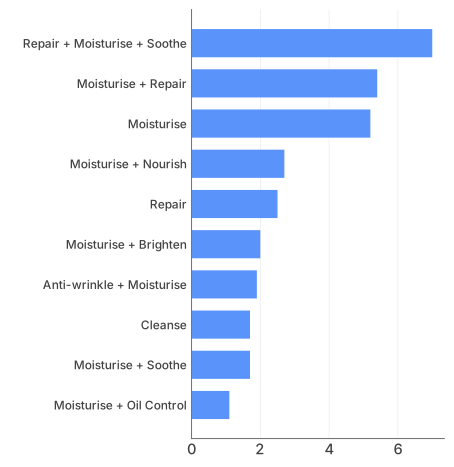
Analysis of 527 Xiaohongshu posts over 11 months (April 2025 -- February 2026) reveals a clean beauty market defined by personal safety rather than environmental consciousness. The top keyword after "clean beauty" itself is "sensitive skin" (敏感肌) at 298 mentions, while "cruelty-free" (零残忍) registers just 12 mentions -- a ratio of 25:1. Meanwhile, the skincare efficacy landscape confirms this consumer priority: the "Repair + Moisturise + Soothe" cluster commands CN¥ 6.8 billion and 7.0% market share on Tmall (天猫), aligning directly with the sensitive-skin audience driving clean beauty demand.
For brands entering China's clean beauty space, the strategic implication is clear: lead with ingredient safety and personal benefit. Layer the sustainability narrative on top -- never as a substitute for functional excellence.
Download Full Report#
This article draws from three sections of our comprehensive China Clean Beauty & Sustainability Market Analysis. The full report includes sustainable packaging consumer attitudes, Amazon rainforest botanical opportunity mapping, and competitive brand strategy frameworks.
Download the Full Report (PDF)
The Social Buzz: How Chinese Consumers Define "Clean Beauty"#
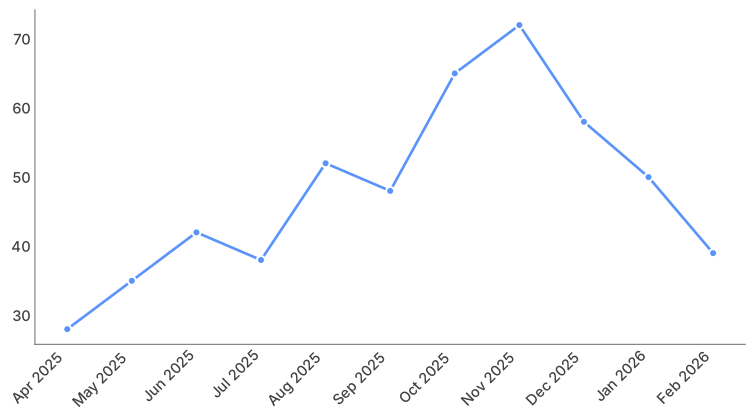
Clean beauty remains a niche conversation on Xiaohongshu -- approximately 48 posts per month across the monitoring period -- but sentiment is overwhelmingly positive. More importantly, the content reveals exactly what Chinese consumers mean when they say "clean beauty."
Chinese consumers interpret clean beauty through four lenses, in order of conversational dominance:
- Ingredient safety -- no additives, no fragrance, paraben-free
- Sensitive and pregnancy-safe formulations -- gentle, non-irritating
- Natural and botanical ingredients -- plant extracts, organic
- Environmental and eco-concerns -- sustainability, recycling (ranked last)
The keyword data makes the gap unmistakable:
- "Sensitive Skin" (敏感肌): 298 mentions
- "Pregnancy-safe" (孕妇可用): 198 mentions
- "No Additives" (无添加): 176 mentions
- "Sustainable" (可持续): 38 mentions
- "Eco-friendly" (环保): 28 mentions
- "Cruelty-free" (零残忍): 12 mentions
- "Carbon Neutral" (碳中和): 5 mentions
The bottom line: personal safety language dominates by an order of magnitude. "Pregnancy-safe" alone outscores the entire environmental vocabulary combined.
Buzz Volume: Seasonal Spikes Reveal Promotional Dependency#
Clean beauty buzz peaks in October–November, driven by Double 11 content
The Efficacy Landscape: What Clean Beauty Consumers Actually Buy#
Social conversation is one signal. Purchase behaviour is another. Tmall skincare efficacy filing data confirms the link between clean beauty interest and specific functional claims.
Repair + Moisturise + Soothe leads at CN¥ 6.8B and 7% share
Brand Sustainability Positioning: Who Owns the Space?#
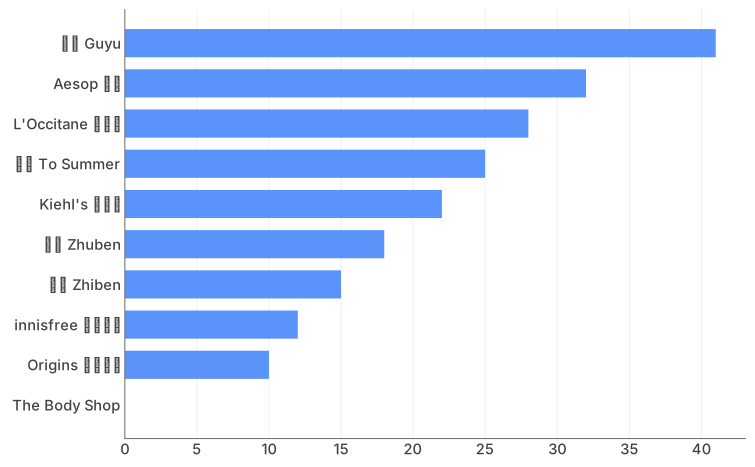
Which brands have successfully built sustainability equity in China? Xiaohongshu mentions in sustainability context reveal a landscape dominated by domestic brands and select internationals -- with some surprising absences.
Guyu leads sustainability perception; The Body Shop has zero presence
Four Sustainability Strategies in Play#
Brands approach sustainability in China through four distinct strategies:
- Natural ingredients cluster (largest): Guyu, L'Occitane, To Summer, Zhuben, Origins -- emphasising plant and botanical origins
- Minimalist formulation cluster: Aesop, Zhiben, Kiehl's -- focusing on clean ingredient lists, few additives, transparency
- Eco-packaging: Near-empty space -- almost no brand owns this territory, representing a significant first-mover opportunity
- Cruelty-free and vegan: The biggest white space of all -- only 12 mentions across 11 months
Key Takeaways#
- "Clean beauty" in China means ingredient safety, not environmental sustainability. Lead with "safe for you," layer eco on top
- Sensitive skin outweighs cruelty-free 25:1 on Xiaohongshu -- personal safety is the entry point
- "Pregnancy-safe" (198 mentions) alone outscores all environmental keywords combined -- the maternal safety angle is a powerful market entry vector
- Repair + Moisturise + Soothe is the #1 efficacy cluster at CN¥ 6.8B -- the commercial bridge between clean beauty sentiment and purchase behaviour
- Purchase hierarchy: texture > efficacy > appearance > scent -- sustainability is absent from review drivers
- Guyu (谷雨) owns sustainability perception (#1 at 41 mentions); The Body Shop has zero presence
- Cruelty-free is the largest white space in China beauty -- 12 mentions in 11 months represents a massive first-mover opportunity
- Clean beauty buzz is seasonal, not organic -- brands need always-on content strategies beyond Double 11
Related Insights#
About the Data#
This article draws on data from our China Clean Beauty & Sustainability Market Analysis covering April 2025 to February 2026 (11 months). Social data was collected from 527 Xiaohongshu posts using 40+ keyword variants including 纯净美妆, clean beauty, 可持续美妆, 天然护肤, 环保包装, 替换装, and 空瓶回收. E-commerce data was sourced from Tmall skincare category (cid 1801) efficacy filings and review analysis. All data collected and analysed via Moojing CMI platform.
This content adheres to Moojing's editorial standards .
Frequently Asked Questions
Safe for me, not good for the planet. Across 527 social posts over eleven months to February 2026, the top keyword after clean beauty itself is "sensitive skin" at 298 mentions, while "cruelty-free" registers just 12 — a ratio of 25:1. The full ordering makes the gap unmistakable: pregnancy-safe at 198, no-additives at 176, then sustainable at 38, eco-friendly at 28, cruelty-free at 12 and carbon neutral at 5. "Pregnancy-safe" alone outscores the entire environmental vocabulary combined. Consumers interpret the term through four lenses in this order: ingredient safety, sensitive and pregnancy-safe formulation, natural and botanical ingredients, and environmental concerns last.
Yes, which is the useful confirmation — social sentiment and buying behaviour are separate signals and they point the same way here. The "repair, moisturise and soothe" efficacy cluster leads skincare filings at CN¥ 6.8 billion and 7.0% of the market, aligning directly with the sensitive-skin audience driving clean beauty interest. That cluster is the commercial bridge between the sentiment and the till. Review drivers reinforce it: the purchase hierarchy runs texture, then efficacy, then appearance, then scent — and sustainability does not appear in it at all.
Lead with ingredient safety and personal benefit; layer sustainability on top, never as a substitute for functional excellence. A clean beauty proposition that opens on recycling or carbon will be speaking a vocabulary that carries 5 to 38 mentions in a corpus where the safety vocabulary carries 176 to 298. The maternal-safety angle is the strongest single entry vector available — pregnancy-safe positioning reaches a consumer with an unusually high tolerance for paying more and an unusually low tolerance for ambiguity about ingredients.
Two, and both are unusually empty. Eco-packaging is near-vacant — almost no brand owns that territory, which makes it a genuine first-mover position rather than a crowded claim. Cruelty-free and vegan is emptier still, at 12 mentions across eleven months, the largest white space in the category. The brand landscape splits into a large natural-ingredients cluster emphasising plant and botanical origins and a smaller minimalist-formulation cluster focused on short ingredient lists and transparency, with a domestic brand leading sustainability perception at 41 mentions. One caution on timing: clean beauty buzz is seasonal rather than organic, peaking around the November festival, so an always-on content strategy is what converts the interest that already exists.


