China's CN¥ 90 Billion Perfume Market: A 4.2x Price Gap Splits Demand by Channel
 By Quan Wenjun
6 min read
By Quan Wenjun
6 min read
Executive Summary#
China's total addressable perfume and fragrance market is estimated at CN¥ 90 billion (~$12.5 billion) annualised, growing +14-21% year-over-year and ranking among the fastest-expanding fragrance markets globally. Measured online sales across two major online sales channels totalled CN¥ 4.48 billion ($622 million) over six months (October 2025 -- March 2026), with the two channels producing nearly identical GMV but serving fundamentally different consumer segments. The premium marketplace channel operates as the brand-building route to market at an average price of CN¥ 306 ($42), while the content-commerce channel functions as the mass-market volume engine at CN¥ 72 ($10) -- a 4.2x price differential that shapes everything from brand strategy to product packaging.
Download Full Report#
Get the complete analysis covering brand-level findings, consumer psychology, social media trends, and strategic recommendations across both channels.
Two Channels, Two Economies#
China's online perfume market is split between two channel archetypes that serve entirely different roles. The premium marketplace channel is the brand-building route to market, where international heritage houses hold unchallenged dominance and shoppers arrive with a purchase already in mind. The content-commerce channel is the mass-market volume route, where discovery is editorial rather than intentional and lower barriers to entry let newer brands reach an audience. Despite producing nearly identical total GMV (~$300 million each over six months), the two channels serve entirely different market segments.
The scale of divergence is striking. The premium channel sells 7.17 million units at CN¥ 306 average; the content channel sells 31.85 million units at CN¥ 72 average -- a 4.4x volume differential driven by the 4.2x price gap. The premium channel hosts 1,551 active brands across 1,887 stores, while the content channel's lower barriers to entry produce 3,821 stores despite having fewer brands (1,041). The higher store count reflects the prevalence of resellers, distributors and third-party storefronts that characterise content-led commerce.
Seasonal Rhythms: Monthly Revenue Trends#
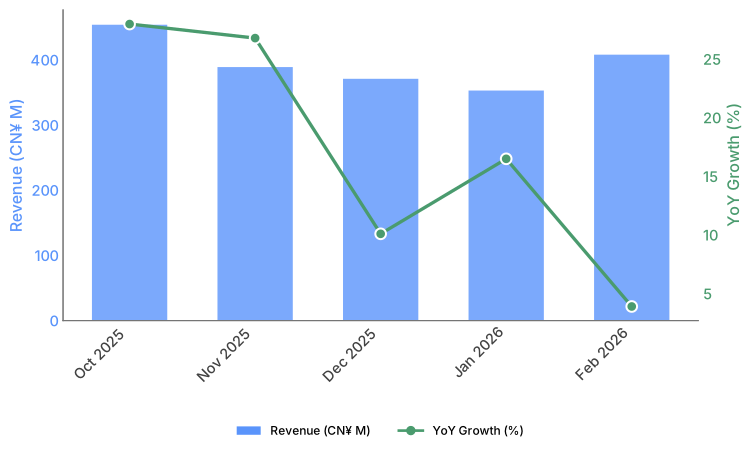
The premium channel shows consistent YoY growth, though the rate is moderating (from +28% in October to +3.9% in February), likely reflecting a maturing base effect rather than softening demand. The content channel is far more variable, with revenue concentrated into promotional peaks. January average prices peak in both channels (CN¥ 324 and CN¥ 85 respectively), driven by Chinese New Year gifting season. February volume surges coincide with Valentine's Day and the Lantern Festival.
Several seasonal patterns are worth noting for brands planning their calendar:
- October-November: the premium channel's strongest growth window (+28% and +26.8% YoY), coinciding with the Singles' Day (11.11) promotional run-up
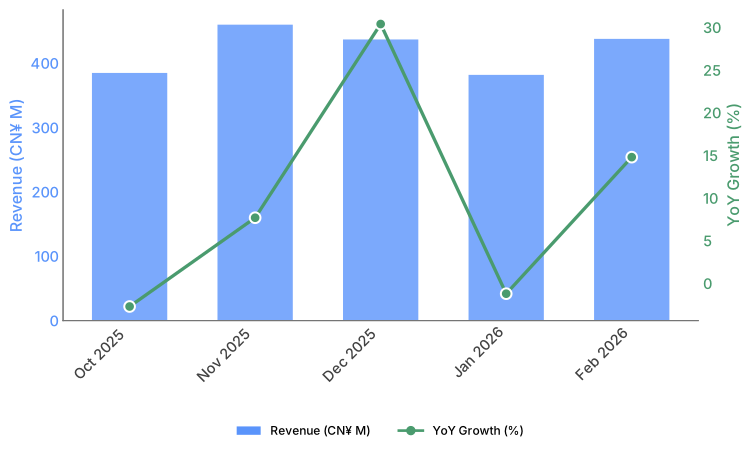
- December: the content channel surges to +30.4% YoY growth, likely driven by year-end campaign pushes and holiday gifting
- January: prices peak in both channels as Chinese New Year gift sets dominate the product mix
- February: volume rebounds post-holiday, with Valentine's Day and Lantern Festival creating a secondary gifting occasion
Premium-channel revenue consistently above CN¥ 350M; growth moderating from a high base
Why the Content Channel Moves to a Different Rhythm#
The content channel's monthly performance follows a different rhythm. Where the premium channel's trajectory is a steady moderation from a high base, the content channel swings sharply from month to month -- December alone grew +30.4% YoY. That variability is structural: revenue there depends heavily on individual promotional events and campaign flights rather than steady, intent-driven demand.
The content channel exhibits higher volatility with promotional spikes
The Price Architecture: Where the Money Actually Is#
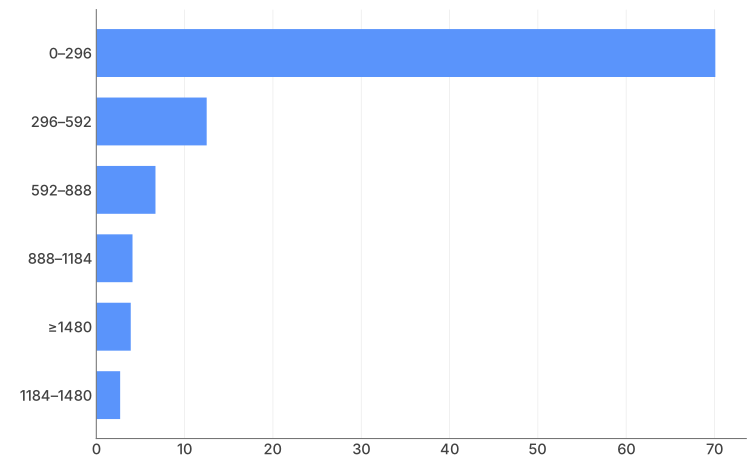
The premium channel's sweet spot is CN¥ 592--1,184 ($82--$164). This band captures only 10.8% of units sold but a commanding 42% of total revenue (CN¥ 1.05 billion over six months). Products priced below CN¥ 296 account for 70% of volume but only 16% of revenue, dominated by samples and dupes. This distribution reveals a market where the vast majority of transactions are low-value discovery purchases, but the actual profit pool sits in the premium full-size segment.
The CN¥ 592–1,184 sweet spot captures 42% of premium-channel revenue
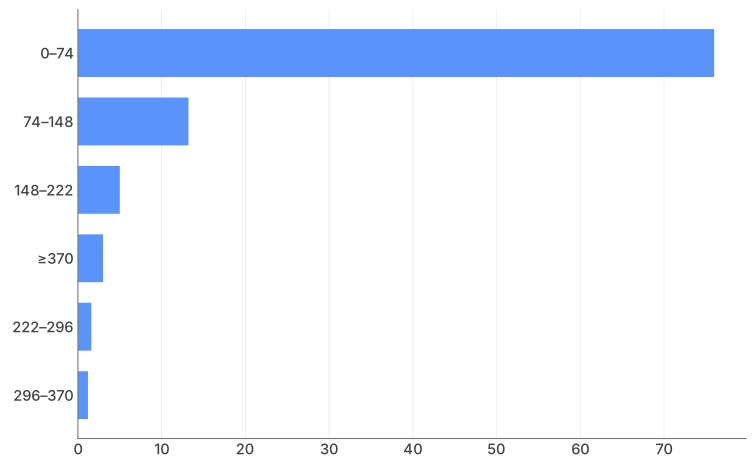
Content-channel bifurcation — ultra-low volume, premium revenue
What Actually Sells: Top Products Reveal Channel DNA#
The premium channel's best sellers are all full-size, premium-priced products from established or high-end niche houses. A niche-house full-size fragrance at CN¥ 1,747 ($243) ranking among the top five signals strong consumer willingness to pay ultra-premium prices for differentiated scents. Three of the top five slots go to a single heritage luxury house, underscoring the enduring pull of established prestige in this channel.
The content channel's best sellers illustrate its bifurcation in action: a CN¥ 48 bundle moved 1.37 million units, while a CN¥ 1,550 luxury gift box proves premium products thrive when packaged as gifting occasions. The coexistence of a CN¥ 39 dupe and a CN¥ 1,376 designer gift box in the same top five confirms the barbell dynamic -- middle-tier products are conspicuously absent.
For international brands in the content channel, premium products require gifting-occasion framing (bundled sets, luxury packaging, holiday exclusives) rather than the everyday-purchase positioning that works in the premium marketplace channel.
Key Takeaways#
- CN¥ 90 billion total market, CN¥ 4.48 billion measured online: the two channels together generated $622 million in six months, with the premium channel growing at +21% YoY and the content channel at +14%, signalling a sustained consumer trade-up trend.
- Identical GMV, opposite economics: the premium channel sells 7.17 million units at CN¥ 306 average; the content channel sells 31.85 million units at CN¥ 72 -- a 4.4x volume differential that demands completely different go-to-market strategies.
- The CN¥ 592--1,184 sweet spot is the profit pool: this price band captures 42% of premium-channel revenue from just 10.8% of units, making it the primary monetisation zone for international full-size fragrances.
- The content channel's barbell market has no middle: 76% of its volume is under CN¥ 74, but 27% of revenue comes from products over CN¥ 370. Brands must choose mass or premium -- mid-tier positioning fails.
- Seasonality is structural, not incidental: Chinese New Year and Singles' Day create predictable price and volume peaks that brands must plan around, particularly in the content channel where December growth hit +30.4%.
About the Data#
This analysis draws on Moojing Market Intelligence data covering October 2025 -- March 2026, with statistics on sales performance in two major online sales channels in China. The dataset does not span every online sales channel in the market. Data includes GMV, unit sales, average selling prices, brand-level findings and price distribution for both channels. All currency figures are in Chinese Yuan (CN¥) with USD equivalents at approximately CN¥ 7.2 = $1. For the complete methodology, brand-level findings, consumer psychology analysis and strategic recommendations, download the full whitepaper.
This content adheres to Moojing's editorial standards .
Frequently Asked Questions
The total addressable perfume and fragrance market is estimated at CN¥ 90 billion annually, growing +14-21% year on year and ranking among the fastest-expanding fragrance markets globally. Measured online sales across the two dominant channels totalled CN¥ 4.48 billion over the six months to March 2026. What makes the market unusual is not the size but the split: the two channels produce nearly identical revenue while serving fundamentally different consumers, which means a single national strategy fits neither of them.
By an order of magnitude on unit economics. The marketplace channel is the premium brand-building route, selling 7.17 million units at a CN¥ 306 average, where international heritage brands hold unchallenged position. The content-led channel is the mass-market volume engine, selling 31.85 million units at CN¥ 72 — a 4.2x price differential producing a 4.4x volume differential. Store counts tell the same story from another angle: the marketplace hosts 1,551 brands across 1,887 stores, while the content channel has fewer brands at 1,041 but 3,821 stores, reflecting the resellers, distributors and livestream storefronts that characterise short-video commerce.
In a narrow premium band, not in the volume. On the marketplace channel the CN¥ 592–1,184 band captures only 10.8% of units sold but 42% of total revenue — CN¥ 1.05 billion over six months. Below CN¥ 296 sits 70% of volume but just 16% of revenue, dominated by samples and dupes. So the vast majority of transactions are low-value discovery purchases while the profit sits in premium full-size product. The content channel is barbelled rather than graded: 76% of its volume is under CN¥ 74, yet 27% of its revenue comes from products above CN¥ 370. In both, the middle tier is where the money is not.
Around two gifting peaks and one structural difference in volatility. January is when average prices peak in both channels, at CN¥ 324 and CN¥ 85 respectively, driven by Chinese New Year gift sets; February volume rebounds on Valentine's Day and the Lantern Festival as a secondary gifting occasion; and the October-November run-up to the November festival is the marketplace channel's strongest growth window at +28% and +26.8%. The content channel behaves differently — swinging between contraction and +30.4% growth in December, because its revenue depends on individual livestream events rather than steady branded search traffic. Premium products can work there, but they need gifting-occasion framing rather than everyday positioning.


