Electric Stew Pots Surge 9.5% on Premium Demand
 By Jessie Wang
4 min read
By Jessie Wang
4 min read
Executive Summary#
China's electric stew pot market reached CN¥ 1.40 billion (+9.5% YoY) while volume held steady at +0.8%[1], which shows that consumers increasingly put product quality and functionality ahead of price. Emerging brands such as Puriton and Coati have grown through differentiated design and products built for particular uses, while competition in the middle of the market has become more homogeneous, which puts pressure on margins there. This analysis looks at the premiumisation of the category, at how brands compete and at the consumer preferences that are changing what people buy.
Download Full Report#
Get the complete analysis with additional data, methodology details, and brand-level insights across all four kitchen appliance categories.
Download the Full Kitchen Appliances & Cookware Whitepaper ->
Premiumisation Driven by Average Prices#
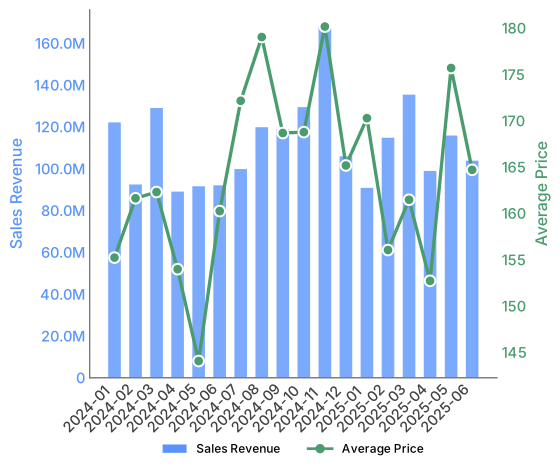
The electric stew pot market is a clear example of the pattern of rising prices and stable volumes that is spreading across China's kitchen appliances. Over the twelve months to June 2025, the category generated CN¥ 1.40 billion in sales revenue (+9.5% YoY) from 8.33 million units (+0.8%). The gap between the two growth rates points to a structural shift, in which the average selling price (ASP) is rising as consumers trade up while unit demand has levelled off in the entry-level segment.
Electric stew pot ASP climbs steadily as revenue outpaces volume growth
Brand Competition: Differentiation Drives Growth#
Competition among brands is changing quickly, as established names and newer entrants compete for consumers who are willing to pay more. Emerging brands such as Puriton and Coati have grown by designing products for specific situations and consumer groups. We believe that differentiation of this kind, more than scale, is what wins growth in the category, now that products in the middle of the market have come to look much like one another.
Consumer Segments: Beyond a Simple Cooking Tool#
The electric stew pot is now used for much more than its original purpose. Social media listening data from Moojing's MoListening platform identifies four distinct consumer segments:
- Young mothers: Mothers with infants aged 0-3 who treat stew pots as "childcare assistants" and want worry-free operation, a baby rice mode and reservation timing
- Wellness enthusiasts: Home cooks focused on traditional slow-stewing techniques, who prefer purple sand liners and modernised versions of traditional cooking methods
- Middle-aged and elderly users: Health-conscious consumers who look for automatic heat preservation, double-boiler stewing and simple operation
- Urban aesthetics seekers: Women who treat stew pots as lifestyle accessories and want quiet operation, a Nordic-style appearance and a look that suits the lifestyle content they share on social media
Healthy Materials Drive Preference#
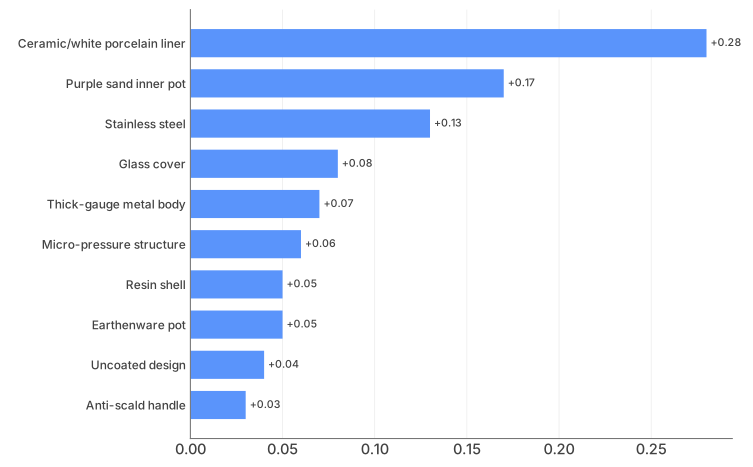
Consumer preferences show two trends at once, toward products specialised for particular uses and toward healthy materials. Ceramic and white porcelain liners are the most preferred, at 28%, which reflects consumers' wish for cooking that is "clean and odorless" as well as their concern for the safety of the materials that touch their food.
Ceramic and white porcelain liners lead material preferences at 28%
Key Takeaways#
- Electric stew pots reached CN¥ 1.40 billion (+9.5% YoY), driven by rising average prices as consumers trade up
- Emerging brands such as Puriton and Coati have grown through innovation for specific uses and consumer groups
- Products in the middle of the market have become more alike, which puts pressure on margins there
- Ceramic and white porcelain liners are the most preferred material, at 28%, which reflects health-conscious demand
- Young mothers and urban aesthetics seekers represent the highest-growth consumer segments
More from This Report#
About the Data#
This analysis draws on Moojing Market Intelligence data covering MAT 2025 (July 2024 to June 2025). Moojing analyses brand and category performance across major Chinese e-commerce platforms. For full methodology and additional insights, see the complete Kitchen Appliances & Cookware whitepaper.
This content adheres to Moojing's editorial standards .


