China Kitchen Appliances: Design Outranks Function
 By Jessie Wang
5 min read
By Jessie Wang
5 min read
Executive Summary#
China's kitchen appliance and cookware market is going through a clear structural shift, as appearance design now outranks cooking performance as the main purchase driver in each of the four categories studied[1]. Cookware grew 24.6% year-on-year (YoY) to CN¥ 22.19 billion while rice cookers grew only 1.3%, which shows that consumer spending increasingly favours high-frequency cooking tools designed for specific uses over commodity appliances. This analysis looks at how the categories compare, how emerging brands are positioning themselves, and the material trends that are changing China's kitchen market.
Download Full Report#
Get the complete analysis with additional data, methodology details, and brand-level insights across all four kitchen appliance categories.
Download the Full Kitchen Appliances & Cookware Whitepaper ->
Four Categories Growing at Different Rates#
The data for the twelve months from July 2024 to June 2025 shows four categories growing at quite different rates:
- Cookware: CN¥ 22.19 billion (+24.6% YoY), with volume growth of 42.3%, the only category with double-digit gains in both value and volume
- Micro steamer-grills: CN¥ 1.26 billion (+16.0% YoY), driven by strong premiumisation, with the average selling price (ASP) rising from CN¥ 839 to CN¥ 1,803
- Electric stew pots: CN¥ 1.40 billion (+9.5% YoY), growing mainly through higher ASPs while volume grew 0.8%
- Rice cookers: CN¥ 9.23 billion (+1.3% YoY), growing slowly as a mature market despite volume growth of 7.7%
We believe these differences show that Chinese consumers are spending more of their discretionary kitchen budget on versatile, well-designed cookware than on commodity appliances. Brands which combine good design with functional innovation are, in our view, well placed to win a large part of the growth.
Appearance Design Is Now a Basic Requirement#
Across electric stew pots, micro steamer-grills, cookware and rice cookers, appearance design is consistently the attribute that consumers praise most often in their reviews, and the pattern holds regardless of how mature the category is or what it costs.
Rice Cookers: Design Overtakes Cooking Texture#
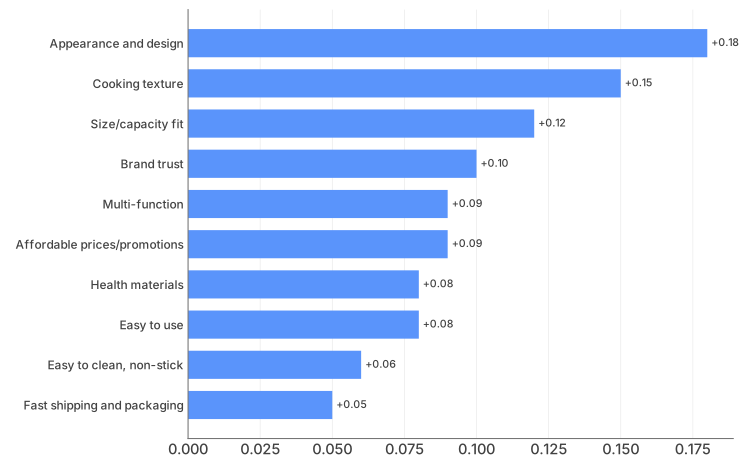
The shift is most striking in rice cookers, which are China's most mature kitchen category. Appearance and design overtook cooking texture as the most important purchase driver, at 18% against 15%, the first time that appearance has outranked core cooking performance in this staple appliance.
Appearance value surpasses cooking texture as the top rice cooker purchase driver at 18%
Emerging Brands Build Positions Through Niche Positioning#
Several emerging brands have built their positions by targeting consumer segments that existing products serve poorly, for example:
- Puriton in electric stew pots, with products positioned for preparing baby food
- Mijia in micro steamer-grills, through Xiaomi's smart home ecosystem
- Amazing Rise in cookware, through material innovation
- Hemisphere in rice cookers, by reaching consumers in lower-tier markets
These brands share a common approach that combines innovation for specific cooking needs with differentiated materials and digital-native distribution. Products in the middle of the market that look much like their competitors face pressure on margins, which suggests that scale alone no longer secures a brand's position.
Consumers Want Healthy Materials#
Material safety has become a theme across categories. In cookware, uncoated iron skillets are the most preferred material at 23%, which reflects growing concern about coatings wearing off. In rice cookers, only 2% of consumers now prefer traditional non-stick coating, while 28% prefer stainless steel and 22% ceramic, so healthy, coating-free surfaces have moved from a premium feature to a basic expectation.
This concern about materials gives brands pricing power, as brands that credibly certify material safety charge ASP premiums of 30-50% over generic alternatives, particularly in baby food preparation and products for the wellness of elderly people. The trend is consistent with research published in the Journal of Food Safety & Quality, which indicates that the safety of food contact materials has been a top-three concern for urban Chinese consumers since 2023[2].
Key Takeaways#
- Appearance design is the attribute consumers praise most in all four kitchen appliance categories, ahead of core functional performance
- Cookware grew fastest, reaching CN¥ 22.19 billion (+24.6% YoY), while rice cookers grew 1.3%
- Emerging brands are building positions by targeting specific cooking needs and through material innovation
- Only 2% of consumers prefer traditional non-stick coating in rice cookers, as preference moves to materials seen as healthier
- Products in the middle of the market without a clear innovation story face pressure on margins
About the Data#
This analysis draws on Moojing Market Intelligence data covering MAT 2025 (July 2024 to June 2025). Moojing analyses brand and category performance across major Chinese e-commerce platforms. For full methodology and additional insights, see the complete Kitchen Appliances & Cookware whitepaper.
This content adheres to Moojing's editorial standards .


